Perthes Disease

REQUEST AN APPOINTMENT OR BOOK A CONSULANT – Sargam.dange.18@gmail.com

Legg-Calvé-Perthes disease (LCPD) is an idiopathic juvenile avascular necrosis of the femoral head in a skeletally immature patient, i.e. children. Legg-Calvé and Perthes discovered this disease approximately 100 years ago. The disease affects children from ages of two to fourteen. The disease can lead to permanent deformity and premature osteoarthritis

Perthes disease is a rare childhood condition that affects the hip. It occurs when the blood supply to the rounded head of the femur (thighbone) is temporarily disrupted. Without an adequate blood supply, the bone cells die, a process called avascular necrosis.

Although the term “disease” is still used, Perthes is really a complex process of stages that can last several years. As the condition progresses, the weakened bone of the head of the femur (the “ball” of the “ball-and-socket” joint of the hip) gradually begins to collapse. Over time, the blood supply to the head of the femur returns and the bone begins to grow back.

Treatment for Perthes focuses on helping the bone grow back into a more rounded shape that still fits into the socket of the hip joint. This will help the hip joint move normally and prevent hip problems in adulthood.

The long-term prognosis for children with Perthes is good in most cases. After 18 to 24 months of treatment, most children return to daily activities without major limitations.

Description

Perthes disease — also known as Legg-Calve-Perthes, named for the three individual doctors who first described the condition — typically occurs in children who are between 4 and 10 years old. It is five times more common in boys than in girls, however, it is likely to cause more extensive damage to the bone in girls. In 10% to 15% of all cases, both hips are affected.

Epidemiology /Etiology

LCPD is an idiopathic disease, but a variety of theories about the underlying cause have been proposed since its discovery over a century ago, ranging from congenital to environmental and from traumatic to socio-economic causes. LCPD has been associated with thrombosis, fibrinolysis, and abnormal growth patterns of the bone. It has also been associated with an abnormality in the Insulin-like Growth Factor-1 Pathway, repeated mircotrauma or mechanical overloading related to hyperactivity of the child or a very low birth weight or short body length at birth.

Some studies suggest a genetic factor, i.e. a type II collagen mutation, and other studies report maternal smoking during pregnancy as well as other prenatal and perinatal risk factors.

It may be be that LCPD requires a set or subset of the aforementioned causes. As of yet it is hard to discern which are determining or merely contributing factors to the onset of the disease.

Pathogenesis

The pathogenesis of osteonecrosis is becoming better understood. Most research suggests either a single infarction event with subsequent mechanical loading that further injures and/or compresses the vessels during the repair process or multiple episodes of infarction are required to produce LCPD.

The key pathological event associated with the initiation of the development of LCPD is disruption of the blood supply to the capital femoral epiphysis. Subsequently ischaemic necrosis occurs in the bone, marrow and cartilage of the femoral head which results in a cessation of endochondral ossification and decreased mechanical strength (fig.2). When mechanical loading surpasses the weakened head’s capacity, deformity is initiated and progresses due to resorption of the necrotic bone and asymmetric restoration of endochondral ossification.

There are four stages in Perthes disease:

  • Initial / necrosis. In this stage of the disease, the blood supply to the femoral head is disrupted and bone cells die. The area becomes intensely inflamed and irritated and your child may begin to show signs of the disease, such as a limp or different way of walking. This initial stage may last for several months.
  • Fragmentation. Over a period of 1 to 2 years, the body removes the dead bone beneath the articular cartilage and quickly replaces it with an initial, softer bone (“woven bone”). It is during this phase that the bone is in a weaker state and the head of the femur is more likely to collapse into a flatter position.
  • Reossification. New, stronger bone develops and begins to take shape in the head of the femur. The reossification stage is often the longest stage of the disease and can last a few years.
  • Healed. In this stage, the bone regrowth is complete and the femoral head has reached its final shape. How close the shape is to round will depend on several factors, including the extent of damage that took place during the fragmentation phase, as well as the child’s age at the onset of disease, which affects the potential for bone regrowth.

Cause

The cause of Perthes disease is not known. Some recent studies indicate that there may be a genetic link to the development of Perthes, but more research needs to be conducted.

Symptoms

One of the earliest signs of Perthes is a change in the way your child walks and runs. This is often most apparent during sports activities. Your child may limp, have limited motion, or develop a peculiar running style, all due to irritability within the hip joint. Other common symptoms include:

  • Pain in the hip or groin, or in other parts of the leg, such as the thigh or knee (called “referred pain.”).
  • Pain that worsens with activity and is relieved with rest.
  • Painful muscle spasms that may be caused by irritation around the hip.

Depending upon your child’s activity level, symptoms may come and go over a period of weeks or even months before a doctor visit is considered.

Doctor Examination

After discussing your child’s symptoms and medical history, your doctor will conduct a thorough physical examination.

  • Physical examination tests. Your doctor will assess your child’s range of motion in the hip. Perthes typically limits the ability to move the leg away from the body (abduction), and twist the leg toward the inside of the body (internal rotation).
  • X-rays. These scans provide pictures of dense structures like bone, and are required to confirm a diagnosis of Perthes. X-rays will show the condition of the bone in the femoral head and help your doctor determine the stage of the disease.

A child with Perthes can expect to have several x-rays taken over the course of treatment, which may be 2 years or longer. As the condition progresses, x-rays often look worse before gradual improvement is seen.

Treatment

The goal of treatment is to relieve painful symptoms, protect the shape of the femoral head, and restore normal hip movement. If left untreated, the femoral head can deform and not fit well within the acetabulum, which can lead to further hip problems in adulthood, such as early onset of arthritis.

There are many treatment options for Perthes disease. Your doctor will consider several factors when developing a treatment plan for your child, including:

  • Your child’s age. Younger children (age 6 and below) have a greater potential for developing new, healthy bone.
  • The degree of damage to the femoral head. If more than 50% of the femoral head has been affected by necrosis, the potential for regrowth without deformity is lower.
  • The stage of disease at the time your child is diagnosed. How far along your child is in the disease process affects which treatment options your doctor will recommend.

Nonsurgical Treatment

Observation. For very young children (those 2 to 6 years old) who show few changes in the femoral head on their initial x-rays, the recommended treatment is usually simple observation. Your doctor will regularly monitor your child using x-rays to make sure the regrowth of the femoral head is on track as the disease runs its course.

Anti-inflammatory medications. Painful symptoms are caused by inflammation of the hip joint. Anti-inflammatory medicines, such as ibuprofen, are used to reduce inflammation, and your doctor may recommend them for several months. As your child progresses through the disease stages, your doctor will adjust the dosage or discontinue the medication.

Limiting activity. Avoiding high-impact activities, such as running and jumping, will help relieve pain and protect the femoral head. On occasion, your doctor may also recommend crutches or a walker to prevent your child from putting too much weight on the joint.

Physical therapy exercises. Hip stiffness is common in children with Perthes disease and physical therapy exercises are recommended to help restore hip joint range of motion. These exercises often focus on hip abduction and internal rotation. Parents or other caregivers are often needed to help the child complete the exercises.

  • Hip abduction. The child lies on his or her back, keeping knees bent and feet flat. He or she will push the knees out and then squeeze the knees together. Parents should place their hands on the child’s knees to assist with reaching a greater range of motion.
  • Hip rotation. With the child on his or her back and legs extended out straight, parents should roll the entire leg inward and outward.

Casting and bracing. If range of motion becomes limited or if x-rays or other image scans indicate that a deformity is developing, a cast or brace may be used to keep the head of the femur in its normal position within the acetabulum.

Petrie casts are two long-leg casts with a bar that hold the legs spread apart in a position similar to the letter “A.” Your doctor will most likely apply the initial Petrie cast in an operating room in order to have access to specific equipment.

  • Arthrogram. During the procedure, your doctor will take a series of special x-ray images called arthrograms to see the degree of deformity of the femoral head and to make sure he or she positions the head accurately. In an arthrogram, a small amount of dye is injected into the hip joint to make the shape of the femoral head even easier to see.
  • Tenotomy. In some cases, the adductor longus muscle in the groin is very tight and prevents the hip from rotating into the proper position. Your doctor will perform a minor procedure to release this tightness — called a tenotomy — before applying the Petrie casts. During this quick procedure, your doctor uses a thin instrument to make a small incision in the muscle.

After the cast is removed, usually after 4 to 6 weeks, physical therapy exercises are resumed to restore motion in the hips and knees. Your doctor may recommend continued intermittent casting until the hip enters the final stage of the healing process.

REQUEST AN APPOINTMENT OR BOOK A CONSULANT – Sargam.dange.18@gmail.com

Surgical Treatment

Your doctor may recommend surgery to re-establish the proper alignment of the bones of the hip and to keep the head of the femur deep within the acetabulum until healing is complete. Surgery is most often recommended when:

  • Your child is older than age 8 at the time of diagnosis. Because the potential for deformity during the reossification stage is greater in older children, preventing damage to femoral head is even more critical.
  • More than 50% of the femoral head is damaged. Keeping the femoral head within the rounded acetabulum may help the bone grow into a functional shape.
  • Nonsurgical treatment has not kept the hip in correct position for healing.

The most common surgical procedure for treating Perthes disease is an osteotomy. In this type of procedure, the bone is cut and repositioned to keep the femoral head snug within the acetabulum. This alignment is kept in place with screws and plates, which will be removed after the healed stage of the disease.

In many cases, the femur bone is cut to realign the joint. Sometimes, the socket must also be made deeper because the head of the femur has actually enlarged during the healing process and no longer fits snugly within it. After either procedure, the child is usually placed in a cast for several weeks to protect the alignment.

After the cast is removed, physical therapy will be needed to restore muscle strength and range of motion. Crutches or a walker will be necessary to reduce weightbearing on the affected hip. Your doctor will continue to monitor the hip with x-rays through the final stages of healing.

Outcomes

In most cases, the long-term prognosis for children with Perthes is good and they grow into adulthood without further hip problems.

If there is deformity remaining in the shape of the femoral head, there is more potential for future problems; however, if the deformed head still fits into the acetabulum, problems may be avoided. In cases where the deformed head does not fit well into the acetabulum, hip pain or early onset of arthritis is likely in adulthood.

Differential Diagnosis

Listed are some other disorders that should be included in the differential diagnosis for LCPD: All diseases which induce necrosis of the head or those resembling them are questioned in a differential diagnosis[27] :

  • Septic arthritis or infectious arthritis: this is an infection of the joint.
  • Sickle cell-Osteonecrosis of the hip can be a result of this disease
  • Spondyloepiphyseal Dysplasia Tarda: this disease typically affects the spine and the larger more proximal joints
  • Gaucher Disease:  An autosomal recessive inherited genetic disorder of metabolism in which a dangerous level of a fatty substance called glucocerebroside collects in the liver, spleen, bone marrow, lungs, and at times in the brain
  • Transient Synovitis of the hip is a self-limiting condition in which there is an inflammation of the inner lining (the synovium) of the capsule of the hip joint.
  • Hip Labral Disorders: The hip labrum is a dense fibrocartilagenous structure, mostly composed of type 1 collagen that is typically between 2-3mm thick that outlines the acetabular socket and attaches to the bony rim of the acetabulum. Hip labral disorders are pathologies of this structure.
  • Chondroblastoma: Chondroblastoma refers to a benign bony tumour that is caused by the rapid division of chondroblast cells which are found in the epiphysis of long bones. They have been described as calcified chondromatous giant cell tumours.
  • Juvenile Rheumatoid Arthritis : a chronic inflammatory disorder that occurs before the age 16 and can occur in all races.
  • Multiple epiphyseal dysplasia – This is a disorder of cartilage and bone development primarily affecting the ends of the long bones in the arms and legs.

Diagnostic Procedures

A MRI is usually obtained to confirm the diagnosis; however x-rays can also be of use to determine femoral head positioning.

Since LCPD has a variable end result, an imaging modality that can predict outcome at the initial stage of the disease before significant deformity has occurred is ideal.

The extent of femoral head involvement depicted by non-contrast and contrast MRI showed no correlation at the initial stage of LCPD, indicating that they are assessing two different components of the disease process. In the initial stage of LCPD, contrast MRI provided a clearer depiction of the area of involvement.

To quantify femoral head deformity in patients with LCPD novel three dimensional (3D) magnetic resonance imaging (MRI) reconstruction and volume based analysis can be used. The 3D MRI volume ratio method allows accurate quantification and demonstrated small changes (less than 10 percent) of the femoral head deformity in LCPD. This method may serve as a useful tool to evaluate the effects of treatment on femoral head shape.

Outcome Measures

The questionnaires below can be used to assess the initial function of a person and progress and outcome of operative as well as non-operative treatments. The surveys test the patient on a functional level are useful to provide a baseline and monitor functional progress in the patient’s activities.

  • Lower Extremity Functional Scale.
  • Harris Hip ScoreThe total score reliability was excellent for physicians (r = 0.94) and physiotherapists (r = 0.95). The physiotherapist and the orthopaedic surgeon showed excellent test–retest reliability in the domains of pain (r = 0.93 and r = 0.98, respectively) and function (r = 0.95 and r = 0.93, respectively). The calculations were done with Pearson’s and Spearman’s correlation coefficients. The inter-rater correlations were good to excellent (0.74–1.0)
  • Hip Disability and Osteoarthritis Outcome Score (HOOS). The HOOS is suggested to be valuable for younger and more active people due to the subscales.

As for the difference in outcome for non-operative and operative treatments, a meta-analysis performed in 2012 suggests that operative treatment is more likely to yield a spherical congruent femoral head than non-operative methods among six-year-olds or older. For patients who are younger than the age of six, operative and non-operative methods have the same likelihood to yield a good outcome. Children who were six years or older who were treated operatively had the same likelihood of a good radiographic outcome regardless of surgical intervention with a femoral or pelvic procedure. Patients younger than six had a greater benefit from pelvic procedures than femoral procedures.

Examination

Gait

Is usually antalgic. It is possible that the child has a Trendelenburg gait (a positive Trendelenburg sign on the affected side)

Trendelenburg gait.jpg

The child can also have a Duchenne gait, which is marked by a trunk lean toward the stance limb with the pelvis level or elevated on the unloaded side.

15942029 1486244001394534 1848988098 n.png

There is insufficient evidence and lack of reliability and validity to support use of the observational gait assessment tools with this population.

Range of movement

The restriction of hip motion is variable in the early stages of the disease. Many patients, may only have a minimal loss of motion at the extremes of internal rotation and abduction. At this stage there usually is no flexion contracture. Loss of hip ROM in patients with early LCPD without intra-articular incongruity is due to pain and muscle spasm. This is why, if the child is examined for instance after a night of bed rest, the range will be much better then later in the day.

Further into the disease process, children with mild disease may maintain a minimal loss of motion at the extremes only and there after regain full mobility. Those with more severe disease will progressively lose motion, in particular abduction and internal rotation. Late cases may have adduction contractures and very limited rotation, but the range of flexion and extension is only seldom compromised.

Pain

Pain occurs during the acute disease. The pain may be located in the groin, anterior hip area, or around the greater trochanter. Referral of pain to the knee is common.

It’s recommended that pain is assessed using the Numerical Rating Scale (NRS).

Atrophy

In most cases there is atrophy of the gluteus, quadriceps and hamstring muscles, depending upon the severity and duration of the disorder.

Medical Management

The approach to treatment is controversial. Prior to evaluating if a surgical intervention is necessary, there has to be a clear understanding of the disease prognosis.

Approaches to treatment can be divided in conservative or operative treatments.

Medications include non-steroidal anti-inflammatories (NSAIDs) for pain and/or inflammation.

Psychological factors are also considered. Persons with a history of LCPD are 1.5 times more likely to develop attention deficit disorders compared to their peers. They also have a higher risk of developing depression.

Physical Therapy Management

There is no consensus concerning the possible benefits of physiotherapy in LCPD, or in which phase of the development of the health problem it should be used.

Some studies mention physiotherapy as a pre- and/or postoperative intervention, while others consider it a form of conservative treatment associated with other treatments, such as skeletal traction, orthesis, and plaster cast.

In studies comparing different treatments, physiotherapy was applied in children with a mild course of the disease. The characteristics of the patients were:

  • Children with less than 50% femoral head necrosis (Catterall groups 1 or 2)
  • Children with more than 50% femoral head necrosis, under six years, whose femoral head cover is good (>80%)
  • Herring type A or B
  • Salter Thompson type A

For patients with a mild course, physiotherapy can produce improvement in articular range of motion, muscular strength and articular dysfunction. The physiotherapeutic treatment included:

  • Passive mobilisations for musculature stretching of the involved hip.
  • Straight leg raise exercises, to strengthen the musculature of the hip involved for the flexion, extension, abduction, and adduction of muscles of the hip.
  • They started with isometric exercises and after eight session, isotonic exercises.
  • A balance training initially on stable terrain, and later on unstable terrain.

For children over 6 years at diagnosis with more than 50% of femoral head necrosis, proximal femoral varus osteotomy gave a significantly better outcome than orthosis and physiotherapy.

There is an evidence-based care guideline concerning post-operative management of LCPD in children for age 3 to 12 and an evidence-based care guideline for conservative management of LCPD in children age 3 to 12. These studies are mostly based on ‘local consensus’ of the members of the LCPD team from Cincinnati Children’s Hospital Medical Center. These guidelines express the evidence regarding physical therapy (PT) treatment pathways, post-operatively and conservative management (see appendix 3 about evidence levels) . The following recommendations are made:

REQUEST AN APPOINTMENT OR BOOK A CONSULANT – Sargam.dange.18@gmail.com

Conservative management

Physical therapy interventions have been shown to improve ROM and strength in this patient population (3).

Individuals who participate in supervised clinic visits demonstrate greater improvement in muscle strength, functional mobility, gait speed, and quality of exercise performance than those who receive a home exercise program alone or no instruction at all (2).

Individuals who receive regular positive feedback from a physical therapist are more likely to be compliant with a supplemental home exercise program. (4)

It is recommended that supervised physical therapy is supplemented with a customized written home exercise program in all phases of rehabilitation. (2)

Improve ROM: (see appendix 1 for exercise prescription)

  • Static stretch for lower extremity musculature (2)
  • Dynamic ROM (2)
  • Perform AROM and AAROM (active assistive range of motion) following passive stretching to maintain newly gained ROM (2)

Improve strength:

  • Begin with isometric exercise and progress to isotonic exercises in a gravity lessened position with further progression to isotonic exercises against gravity. It is appropriate to include concentric and eccentric contractions (3).
  • Begin with 2 sets of 10 to 15 repetitions of each exercise (2), with progression to 3 sets of each exercise to be used (2)
  • Local consensus would also do exercises to improve balance and gait and interventions to reduce pain.

The hip overloading pattern should be avoided in children with LCPD. Gait training to unload the hip might become an integral component of conservative treatment in children with LCPD.

Non-surgical treatment with a brace is a reliable alternative to surgical treatment in LCPD between 6 and 8 years of age at onset with Herring B involvement. However, they could not know whether the good results were influenced by the brace or stemmed from having good prognosis of these patients.

Post-operative management

The rehabilitation is described with reference to the various stages of rehabilitation.

  • Initial Phase (0-2 weeks post-cast removal)

Goals of the Initial Phase

  • Minimize pain
  1. Hot pack for relaxation and pain management with stretching (2)
  2. Cryotherapy (5)
  3. Medication for pain (5)
  4. Optimize ROM of hip, knee and ankle (see appendix 1 for exercises)
  5. Passive static stretch (2) (A hot pack may be used, based on patient preference and comfort (2))
  6. Dynamic ROM (2)
  7. Perform AROM and AAROM following passive stretching to maintain newly gained ROM (2)
  • Increase strength for hip flexion, abduction, and extension and knee and ankle (see appendix 2 for exercises)
  1. Begin with isometric exercises at the hip and progress to isotonic exercises in a gravity lessened position (3)
  2. Begin with isometric exercises at the knee and ankle, progressing to isotonic exercises in a gravity lessened position with further progression to isotonic exercises against gravity (3)
  3. Begin with 2 sets of 10 to 15 repetitions of each exercise with progression to 3 sets of each exercise to be used (2)
  • Improve gait and functional mobility
  1. Follow the referring physician’s guidelines for WB status (5)
  2. Transfer training and bed mobility to maximize independence with ADL’s (5)
  3. Gait training with the appropriate assistive device, focusing on safety and independence (5).
  • Improving skin integrity
  1. Scar massage and desensitization to minimize adhesions (5)
  2. Warm bath to improve skin integrity following cast removal, if feasible in the home environment (5)
  3. Warm whirlpool may be utilized if the patient is unable to safely utilize a warm bath for skin integrity management (5)

PT is supervised at a frequency of 2-3 time per week (weekly) (5)

  • Intermediate Phase (2-6 weeks post-cast removal)

Goals of the Intermediate Phase

  • Minimize pain (see ‘initial phase’)
  1. Normalize ROM of the knee and ankle and optimize ROM of hip in all directions
  2. See ‘initial phase’ and see appendix 1 for exercises
  • Increase strength of the knee and hip (see appendix 2 for exercises)
  1. Isotonic exercises of the hip in gravity lessened positions and advancing to against gravity positions (3)
  2. Isotonic exercises of the knee and ankle in gravity lessened and against gravity positions (3)
  • Maintain independence with functional mobility maintaining WB status and use of appropriate assistive devices (5)
  • Improving gait and functional mobility (5)
  1. Follow the referring physician’s guidelines for WB status (5)
  2. Continue gait training with the appropriate assistive device focusing on safety and independence (5)
  3. Begin slow walking in chest deep pool water with arms submerged (5)
  • Improving Skin Integrity
  • Continue with scar massage and desensitization (5)

PT is supervised at a frequency of 2-3 time per week (weekly) (5)

It is recommended that activities outside of PT are restricted at this time due to WB status. If the referring physician allows, swimming is permitted (5)

  • Advanced Phase (6-12 weeks post-cast removal)

Goals

  • Minimize pain (see ‘initial phase’)
  1. optimize ROM and flexibility of the hip, knee, and ankle
  2. see ‘initial phase’ and see appendix 1 for exercises
  • Increase strength of the knee and hip, except for hip abductors, to at least 70% of the uninvolved lower extremity and increase strength of the hip abductors to at least 60% of the uninvolved lower extremity due to mechanical disadvantage (4 + 5) (see appendix 2 for exercises)
  1. Isotonic exercises of the hip, knee, and ankle in gravity lessened and against gravity positions, including concentric and eccentric contractions (3)
  2. WB and non-weight bearing (NWB) activities can be used in combination based on the patient’s ability (4) and goals of the treatment session (5)
  3. Begin upper extremity supported functional dynamic single limb activities (e.g. step ups, side steps) (5)
  4. Continue with double limb closed chain exercises with resistance, progressing to single limb closed chain exercises with light resistance if WB status allows (5)
  5. Use of a stationary bike in an upright or recumbent position keeping the hip in less than 90 degrees of flexion (5)
  • Ambulation without use of an assistive device or pain (5)
  • Negotiate stairs independently using step to pattern with upper extremity (UE) support (5)
  • Improve balance to greater than 69% of the maximum Pediatric Balance Score (39/56) or single limb stance of the uninvolved side (5)
  • Improving gait and functional mobility (5)

PT is supervised at a frequency of 1-2 time per week (weekly) (5)

It is recommended that activities outside of PT are limited to swimming if the referring physician allows (5).

Note: Running and jumping activities are restricted at this time (5).

  • Pre-Functional Phase (12 weeks to 1+ year post-cast removal)

Goals

  • Minimize pain (see ‘initial phase’)
  • Optimize ROM and flexibility of the hip, knee, and ankle
  1. Static stretch (2)
  • Increase strength of the knee and hip, except for hip abductors, to at least 80% of the uninvolved lower extremity and increase strength of the hip abductors to at least 75% of the uninvolved lower extremity due to mechanical disadvantage (4 + 5)
  • see ‘advanced phase’ and see appendix 1 for exercises
  • Negotiate stairs independently with reciprocal pattern an upper extremity support (5)
  • Improve balance to 80% or greater of the maximum Pediatric Balance Score (at least 45/56) or single limb stance of the uninvolved side (5)
  • Non-painful gait pattern with minimal deficits and normal efficiency (5)

PT is supervised at a frequency of 1-2 time per week (weekly) (5)

It is recommended that activities outside of PT include swimming and bike riding as guided by the referring physician (5).

Note: Running and jumping activities are restricted at this time (5).

  • Functional phase

Goals

  • Reduce pain to 1/10 or less (see ‘initial phase’)
  • Normalizing ROM: Increase ROM to 90% or greater of the uninvolved side for the hip, knee, and ankle, except for hip abduction (5) and Increase hip abduction ROM to 80% or greater due to potential bony block (4)
  1. Static stretch (2)
  • Normalizing strength: Increase strength of the knee and hip, except for hip abductors, to 90% or greater of the uninvolved lower extremity (5) and Increase strength of the hip abductors to at least 85% of the uninvolved lower extremity due to mechanical disadvantage (4+5)
  1. Progress isotonic exercises of the hip, knee, and ankle and include concentric and eccentric contractions (3).
  2. WB and NWB activities used in combination based on the patient’s ability (4) and goals of the treatment session.
  3. Functional dynamic single limb activities (e.g. step ups, side steps) with upper extremity support as needed for patient safety (5)
  4. Progress single leg closed chain exercises with resistance (4)
  5. Use of a stationary bike in an upright or recumbent position keeping the hip in less than 90 degrees of flexion
  • Ambulation with a non-painful limp and normal efficiency (5)
  • Negotiation of stairs independently using a reciprocal pattern without UE support (5)
  • Improve balance to 90% or greater of the maximum score on the Pediatric Balance Scale (at least 51/56) or single limb stance of the uninvolved side (5) It is recommended that progression to the Functional Phase occur when the physician has determined there is sufficient re-ossification of the femoral head based on radiographs (5). Note: Jumping and other impact activities are still limited and only progressed per instruction from the physician based on healing and progression of the disease process

REQUEST AN APPOINTMENT OR BOOK A CONSULANT – Sargam.dange.18@gmail.com

Disorders of the hip : coxa vara/ coxa valga

REQUEST AN APPOINTMENT OR BOOK A CONSULANT – Sargam.dange.18@gmail.com

Definition/Description

Coxa valga is defined as the femoral neck shaft angle being greater than 139 °

Coxa vara is as a varus deformity of the femoral neck. It is defined as the angle between the neck and shaft of the femur being less than 110 – 120 ° (which is normally between 135 ° – 145 °) in children.

Coxa vara is classified into several subtypes:

  • Congenital coxa vara, which is present at birth and is caused by an embryonic limb bud abnormality.
  • Developmental coxa vara occurs as an isolated deformity of the proximal femur. It tends to go unnoticed until walking age is reached, when the deformity results in a leg length difference or abnormal gait pattern.
  • Acquired coxa vara is caused by an underlying condition such as fibrous dysplasia, rickets, or traumatic proximal femoral epiphyseal plate closure.

Clinically Relevant Anatomy

Congenital coxa vara results in a decrease in metaphyseal bone as a result of abnormal maturation and ossification of proximal femoral chondrocyte. As a result of congenital coxa vara, the inferior medial area of the femoral neck may be fragmented. A progressive varus deformity might also occur in congenital coxa vara as well as excessive growth of the trochanter and shortening of the femoral neck.

A review on the development of coxa vara by Currarino et al showed an association with spondylometaphyseal dysplasia, demonstrating that stimulated corner fractures were present in most instances.

Ashish Ranade et al also showed that a varus position of the neck is believed to prevent hip subluxation associated with femoral lengthening. An associated dysplastic acetabulum can lead to a hip subluxation. In this case study, the acetabulum is abnormal in coxa vara. Acetabular index (AI) and sourcil slope (SS) are significantly different than in the normal acetabulum.

Epidemiology /Etiology

Femoral neck fractures, less than 1 % of all pediatric fractures in children, are associated with a high incidence of complications. The most serious ones with high and long term morbidity being osteonecrosis and coxa vara.

A retrospective study of femoral neck fractures in children show the following complications:
1) avascular necrosis (14.5%)
2) limb shortening in seven (11.3%)
3) coxa vara (8%) and premature epiphysis fusion (8%)
4) coxa valga (3.2%), arthritic changes (3.2%).
5) non-union in one (1.6%)

Premature epiphyseal closure is described as one of the ethiological factors of coxa vara. Incidences of premature physeal closure reported in the literature range from 6 % to 62 %. Another possible explanation for the high occurrence of coxa vara is the loss of reduction after initial fracture reduction of implant failure in unstable fractures. Developmental coxa vara is a rare condition with an incidence of 1 in 25 000 live births. Incidence of coxa vara can be decreased by using internal fixation such as pins or screws.

Characteristics/Clinical Presentation

Clinically, the condition presents itself as an abnormal, but painless gait pattern. A Trendelenburg limp is sometimes associated with unilateral coxa vara and a waddling gait is often seen when bilateral coxa vara is present. Patients with coxa vara often show:

  • Limb length discrepancy
  • Prominent greater trochanter
  • Limitation of abduction and internal rotation of the hip.

Patients may also show femoral retroversion or decreased anteversion.

Diagnostic Procedures

Radiography (AP view of the pelvis) can be utilised to determine the HEA (Hilgenreiner Epiphyseal Angle). Signs to look out for are as follows:

  • The neck; shaft angle is less than 110 – 120°.
  • The greater trochanter may be elevated above the femoral head.
  • A growth plate with an overly vertical orientation.

MRI can be used to visualise the epiphyseal plate, which may be widened in coxa vara.
CT can be used to determine the degree of femoral anteversion or retroversion.  

REQUEST AN APPOINTMENT OR BOOK A CONSULANT – Sargam.dange.18@gmail.com

Examination

AP radiographs in standing are taken, usually of both hips in a neutral position. Measuremenst are then taken: the Acetabular Index and the Sourcil Slope (the angle formed by a line joining the 2 ends of the sourcil with the horizontal line). Subluxation in children is measured by the Migration Index and the Centre edge Angle.

Medical Management

The objective of medical interventions is to restore the neck-shaft angle and realigning the epiphysial plate to decrease shear forces and promote ossification of the femoral neck defect. This is achieved by performing a valgus osteotomy, with the valgus position of the femoral neck improving the action of the gluteus muscles, normalising the femoral neck angle, increasing total limb length and improving the joint congruence.

The following are indications for surgical intervention:

  • Neck: shaft angle less than 90 °.
  • Progressive development of deformity.
  • Vertical physis and a significant limb.

Other indications are based on the HE angle;

  • HE angle > 60 ° is an indication for surgery.
  • HE angle 45 – 60 ° warrants close follow up.
  • HE angle < 45 ° warrants spontaneous resolution

Except when the neck/shaft angle is less than 110°, progression of the varus angulation takes place, gait pattern abnormalties or degenerative changes take place.  

Physical Therapy Management

Literature is lacking, but surgical management appears to be the accepted treatment protocol for this condition.

Clinical Bottom Line

Due to the low incidence of coxa vara and even lower for coxa valga, there is little literature currently available. There are 3 types Coxa Vara, acquired, congenital and developmental, usually displaying greater acetabular dysplasia and an abnormal acetabulum. Surgery is the most effective treatment protocol. In the case of acquired coxa vara from a fracture, the proximal femur and femoral neck need accurate reduction and rigid fixation to avoid potential serious complications.

REQUEST AN APPOINTMENT OR BOOK A CONSULANT – Sargam.dange.18@gmail.com

Deformities of the spine

REQUEST AN APPOINTMENT OR BOOK A CONSULANT – Sargam.dange.18@gmail.com

When viewed from the side, a normal spine stands upright and curves slightly inward near the top, then outward, then inward again near the bottom. This “S” shape enables the spine to provide excellent support and balance to the body while also offering shock absorption to distribute the force of everyday activities like walking.

Spinal deformity is an abnormal alignment or curve of the bony vertebral column. Adult scoliosis and kyphosis can be caused by age-related wear and tear on the back or complications from past surgeries. Moderate deformity occurs when the facet joints and discs deteriorate over time and are no longer able to support the spine’s normal posture. Pain results from stressed joints and pinched nerves, not the abnormal curve. Treatment can include medications, physical therapy, injections, or surgery.

Anatomy of the spine

The spine is a column of 24 moveable bones called vertebrae that are connected to one another by ligaments. The bones are separated by discs, which act as shock absorbers and give the spine flexibility. Each vertebra has a three-joint complex with a large disc in the front and two facet (pronounced fah-CETTE) joints in the back. This strong, tripod design keeps the bones connected and aligned, one on top of the other, while allowing our spine to bend and twist.

Illustration, Front and side views of the body show normal alignment of the spine bones and the natural curves

Figure 1. Front and side views of the body show normal alignment of the spine bones and the natural curves.

When viewed from the front the spine is perfectly straight, but from the side it has three curves (Fig. 1). This curvature absorbs the shock of footsteps and positions our head naturally over the pelvis and hip. At the neck, or cervical level, the normal spine arches slightly inward toward the jaw in a curvature called lordosis. The spine arches out slightly at the chest level (kyphosis), and it curves inward again (lordosis) at lumbar level, or lower back.

What is spinal deformity?

Spinal alignment and curvature can be altered in many ways. They can occur as a result of a birth defect, a child’s growth, aging, injury, or previous spine surgery. The most common type of spinal deformity in adults is degenerative scoliosis.

Illustration, Types of spinal deformities

Figure 2. Types of spinal deformities: a side-to-side curve is called scoliosis; a forward curve (kyphosis) shifts the center of balance in front of the hip; a concave lower back (lordosis) thrusts the hips forward.

Scoliosis

Scoliosis is a side-to-side curvature of the spine that can develop in adults when their facet joints and discs begin to deteriorate (Fig. 2). The facet joints give the spine flexibility, enabling us to twist, stretch, or curl up on the couch. When these joints deteriorate, the spine bones can tilt and begin to shift to one side.

Kyphosis

Kyphosis is an abnormal forward rounding (more than 50 degrees of curvature) of the spine. In the upper (thoracic) back, kyphosis is commonly due to osteoporotic compression fractures. It can also occur in the lower (lumbar) spine. It limits function and results in a common complaint among older people: “I can’t stand up straight.” Another common scenario is a patient who has previously had one or more spine surgeries. These patients can develop what is called “flat back syndrome,” which means they have lost some of the natural lordosis (inward curvature) of their lower spine. A patient who has had a previous lumbar fusion may develop a junctional kyphosis. In this situation, the spine has weakened right above the fusion, causing the patient’s posture to bend forward.

Lordosis

Also called swayback, lordosis is a condition in which the spine curves significantly inward at the lower back, giving a backward leaning appearance.

REQUEST AN APPOINTMENT OR BOOK A CONSULANT – Sargam.dange.18@gmail.com

causes

As you get older, your bones undergo degenerative changes that are part of the natural aging process. When joints deteriorate, arthritis can develop and the spinal column can shift sideways. Other conditions that might cause degeneration include:

  • Arthritis from degenerative discs and facet joint syndrome, resulting in the loss of normal vertebral alignment (Fig. 3).
  • Osteoporosis (loss of bone mass) and vertebral compression fractures.
  • Previous spine surgery (adjacent level disease). The passage of time after a spine surgery is a leading cause of spinal deformity.

The aging of joints, combined with a fracture at a level above a previous fusion, can also cause a significant deformity. Simply removing material from the spine can cause a problem down the road. It may reduce or eliminate pain in the near term, but symptoms can return later because of instability of the spine. Think of the game, Jenga. When you remove a block from the tower, other blocks can be affected. Like the Jenga tower, what goes on globally in the spinal balance and pathology is important.

The spine can become deformed for many reasons, including damage to the vertebrae or intervertebral discs and disease processes like osteoporosis. A person also can be born with an abnormally curved spine (called a congenital spinal deformity) due to a malfunction of the genes that regulate spinal development in the embryo. In some cases, spine abnormalities show up later as the child grows and develops. Despite this genetic link, researchers have not established a single inherited trait that makes a person more susceptible to being born with a deformed spine.

Both males and females may be born with a spinal deformity, and older adults are at higher risk of developing a deformed spine due to medical conditions or wear-and-tear.

In some cases, a spinal deformity is deemed “idiopathic,” which means no cause can be identified.

Some of the more common causes of spinal deformity are:

  • Accidents, such as falls, that result in spinal fracture (one or more vertebrae)
  • Genetic defects that lead to abnormal spine development such as fused vertebral segments
  • Infectious diseases like spinal tuberculosis that destroy the bones and other structures of the spine
  • Inflammatory diseases, such as arthritis, which can cause bone spurs to develop and push the vertebrae out of alignment
  • Neuromuscular diseases like muscular dystrophy that lead to weakness in the muscles that support the spine
  • Osteoporosis, which can cause the vertebrae to collapse and result in a hunched back
  • Poor posture including poor body mechanics when lifting, which can displace vertebrae or spinal discs

symptoms

Scoliosis is not a single disease. It falls along a spectrum, from mild to moderate to severe. Symptoms include pain or stiffness in the mid-to-lower back, and numbness or weakness in the legs or feet. Not all adults with degenerative scoliosis experience pain. When pain does occur, a pinched nerve is typically the cause, not the curvature.

In more severe cases, scoliosis can cause shooting pain down the leg (sciatica), an inability to stand up straight, and an inability to walk more than a short distance. Symptoms of severe, progressive scoliosis are similar to those of stenosis, but with visible spinal imbalance. This imbalance can result in strain on the hips and knees, the inability to walk a straight line, and falls.

Patients with kyphosis have lost their ability to stand up straight. Hunched over while standing, they may become quickly fatigued and have difficulty talking to others or maintaining eye contact. They also may have difficulty lying flat.

The signs and symptoms of a spinal deformity depend on the severity and location of the abnormal spine segment. Many types of spinal deformity do not cause any symptoms beyond a visible abnormality of the spine’s alignment.

Common symptoms of spinal deformity

The most common possible symptoms of any type of spinal deformity are:

  • Loss of sensation in the extremities
  • Pain to any degree
  • Visible misalignment of the spine, either when viewed with the naked eye or on an X-ray film
  • Weakness of the legs or arms

Because some types of spinal deformity can occur due to a coexisting condition like muscular dystrophy, you should seek prompt medical attention for any type of spine symptoms. Early diagnosis and treatment offers the best hope for correcting spinal misalignment because the misalignment is easier to correct in the initial stages.

diagnosis

Diagnostic tests include a physician examination, x-rays, CT scan, MRI, or myelogram.

X-rays create images of the bones in your spine and show whether any of them are too close together or whether you have arthritic changes, bone spurs, fractures, or slippage of the vertebrae. Special flexion and extension x-rays will be taken to measure misalignment of the bones and curve progression (Fig. 4).

Computed Tomography (CT) scan is a noninvasive test that uses an x-ray beam and a computer to make 2-dimensional images of your spine. It may or may not be performed with a dye (contrast agent) injected into your bloodstream. It is useful for viewing changes in bony structures.

Magnetic resonance imaging (MRI) scan is a noninvasive test that uses a magnetic field and radiofrequency waves to give a detailed view of the soft tissues of your spine. Unlike an x-ray, nerves and discs are clearly visible. It may or may not be performed with a dye (contrast agent) injected into your bloodstream. MRI is useful in evaluating soft-tissue damage to the ligaments and discs, and assessing spinal cord injury.

Myelogram is a specialized X-ray where contrast dye is injected into the spinal canal. A fluoroscope then records the images formed by the dye. Myelograms can show a nerve being pinched by a disc, bony overgrowth or stenosis. The dye gives a picture of the spinal canal, spinal cord, and nerves in detail. A CT scan follows the test.

REQUEST AN APPOINTMENT OR BOOK A CONSULANT – Sargam.dange.18@gmail.com

risk factors

The most common risk factors include:

  • Activities or occupations with a higher-than-average exposure to spinal injury
  • Younger and older age. Young children may be more susceptible to such diseases as spinal tuberculosis that can lead to a spinal deformity, while older adults are at higher risk for spinal deformity due to such conditions as osteoporosis.
  • Female gender for some types of spinal deformity such as spondylolisthesis
  • Inadequate calcium or vitamin D levels leading to bone loss
  • Personal history of neuromuscular or inflammatory disease processes
  • Poor body mechanics when lifting
  • Sedentary lifestyle

Reducing your risk of spinal deformity

You may be able to lower your risk of developing a spinal deformity by:

  • Avoiding contact sports or other activities that expose you to a risk of back injury
  • Exercising regularly including strength training to maintain good bone health and muscle mass
  • Taking calcium or Vitamin D, if your doctor advises it to avoid osteoporosis
  • Using good body mechanics when sitting, lifting or standing

If you suspect a spinal misalignment in your child, your pediatrician can perform a spinal screening and refer you to an orthopedic spine specialist if necessary. Many spinal deformities respond well to early treatment in children. Adults with multiple risk factors for spinal deformity should discuss with their doctor how to reduce their risk or treat any symptoms that arise.

potential complications of a spinal deformity

A mild spinal deformity may cause no complications at all, while a serious deformity could lead to paralysis. A deformed spine can also press on other organs, such as the lungs. The types and degrees of complications depend greatly on the cause, severity and location of the spinal deformity.

Potential complications of spinal deformity include:

  • Difficulty breathing due to severe curvature of the mid-back (kyphosis)
  • Inability to perform activities of daily living, such as walking or dressing, due to postural problems from a curved spine
  • Loss of sensation in the legs, incontinence, or reduced sexual function due to nerve compression in the lower back
  • Pain due to compressed spinal nerves or muscle spasms

All types of spinal deformity should be monitored by a doctor in order to slow or avoid progression of the abnormal curvature and retain motor functions in the limbs.

treatments

Treatment for mild to moderate spine deformity in adults is determined by the severity of the symptoms, not the size of the curve. It begins with a trial period of pain management, physical therapy, and nonsurgical options. If pain is caused by inflammation of the facet joints, treatment involves facet joint therapy. If the curvature is mild, the deformity is not treated. If the curvature is severe, complex spinal surgery may be recommended. Barring serious “red flags,” such as a neurologic impairment, conservative care is used for 3 to 6 months before surgery is considered.

Self care: Using correct posture and keeping your spine in alignment are the most important things you can do for your back. The lower back (lumbar curve) bears most of your weight, so proper alignment of this section can prevent injury to your vertebrae and discs. You may need to make adjustments to your daily standing, sitting, and sleeping habits. You may also need to learn proper ways to lift and bend. If you smoke or are overweight, you may be able to reduce your symptoms by quitting smoking and/or achieving a healthy weight appropriate for your body frame.

Bone density: Because good bone density reduces the risk of fractures in aging adults, you may be asked to undergo a bone-density scan to determine the strength of your bones. If osteoporosis is detected, your risk of a fracture to your spine is increased because your bones have weakened and become more brittle. Your doctor may prescribe a medication that slows bone loss.

Physical therapy

Exercise and strengthening exercises are key elements to your treatment and should become part of your life-long fitness. Physical therapists can instruct you on proper lifting and walking techniques, and they will work with you to strengthen your back, leg, and stomach muscles. They will also encourage you to stretch and increase the flexibility of your spine and legs. Check with your doctor before you begin any new exercise program and be sure to see a physical therapist who specializes in spine rehabilitation.

Medication: Over-the-counter and prescription medications can help you cope with back pain.

  • Nonsteroidal anti-inflammatory drugs (NSAIDs), such as aspirin, naproxen (Aleve, Naprosyn), and ibuprofen (Motrin, Nuprin, Advil) are used to reduce inflammation and relieve pain.
  • Analgesics, such as acetaminophen (Tylenol), can relieve pain but do not have the anti-inflammatory effects of NSAIDs. Long-term use of analgesics and NSAIDs may cause stomach ulcers as well as kidney and liver problems.
  • Steroids reduce the swelling and inflammation of the nerves. They are taken orally (as a Medrol dose pack) in a tapering dosage over a 5-day period. They have the advantage of providing pain relief within a 24-hour period.
  • Epidural steroid injection (ESI): This minimally invasive procedure involves an injection of corticosteroid and an analgesic-numbing agent into the epidural space of the spine to reduce the swelling of the spinal nerves. Many patients have some relief after an ESI, although the results tend to be temporary. If injections are helpful, they can be repeated.
  • Facet injection: This minimally invasive procedure involves an injection of corticosteroid and an analgesic-numbing agent into the painful facet joint.

Bracing: Wearing a brace is often used for childhood scoliosis, but it will not straighten the adult spine. A brace may help reduce pain in the short-term, but it also will allow the muscles to get weaker, eventually leading to more back pain.

Chiropractic care: Chiropractors apply pressure to an area to align bones and return joints to a more normal motion. Patients with spinal deformity might benefit from tissue massage for a muscle spasm, traction for a pinched nerve, or ultrasound for tight muscles. Dry needling or acupuncture might also prove helpful. But most patients with spinal deformity are not candidates for a high-velocity spinal adjustment (a back crack). Such adjustments (by x-ray criteria) do not result in a measureable change of spinal alignment. Anyone with a major spinal deformity who is considering chiropractic treatment should consult with a neurosurgeon first to determine whether it is safe.

Surgery: Surgical options vary depending on the severity of the symptoms, the number of levels affected, and the type of deformity. A combination of different fusion and instrumentation techniques are used to treat the patient’s specific condition.

  • Decompression: If the scoliosis is mild and is causing a pinched nerve at one level, only that level is treated with a laminectomy.
  • Fusion: A patient suffering from foraminal stenosis and scoliosis usually requires a fusion to restore disc height when a vertebra has collapsed on a nerve. Fusion makes the vertebrae square in relation to each other and restores proper alignment. It involves joining two vertebrae with a bone graft (Fig. 5), which is held together with hardware that could include plates, rods, hooks, pedicle screws, or cages. The goal of the bone graft is to join the vertebrae above and below to form one solid piece of bone. Creating a solid fusion may take several months or longer.
  • Minimally invasive fusion: A lateral lumbar interbody fusion (LLIF) surgery is an option for some patients with scoliosis (Fig. 6). The surgeon operates through a tube incision at the waist and avoids cutting the back muscles.
  • Spinal reconstruction: Complex deformities and kyphosis often require the cutting of bone (osteotomy) and stabilization with long rods and screws in staged operations.

REQUEST AN APPOINTMENT OR BOOK A CONSULANT – Sargam.dange.18@gmail.com

Fracture shaft of femur & tibia (floating knee)

REQUEST AN APPOINTMENT OR BOOK A CONSULANT – Sargam.dange.18@gmail.com

The term ‘floating’ has been used quite vaguely in the literature to describe various injury patterns /surgical procedures and even congenital anomalies. When the term is used to describe an injury pattern, it commonly implies that a joint/bone has lost its continuity at adjacent ends either as a result of fractures, fracture dislocations or pure dislocations and hence has become ‘floating’ 


Blake and McBryde initially described this injury. Floating knee is a flail knee joint resulting from fractures of the shafts or adjacent metaphyses of the femur and ipsilateral tibia. Floating knee injuries may include a combination of diaphyseal, metaphyseal, and intra-articular fractures.


The fractures range from simple diaphyseal to complex articular types. This complex injury has increased in proportion to population growth, number of motor vehicles on the road, and high speed traffic. Although the exact incidence of the floating knee is not known, it is an uncommon injury.

Epidemiology

  • Most of the patients are in their third decade
  • Preponderance of males.

Etiology

Road traffic accident (RTA) accounts for majority of the cases and this is followed by fall from height (FFH) 

Presentation

  • The ‘floating knee’ is a serious injury.
  • Floating knee injuries must be included in assessment and treatment protocols for patients with polytrauma. 
  • Damage to the vessels (mainly the popliteal and posterior tibial arteries) and lesions of the nerves (eg, peroneal nerve) are common. Vascular injury is common and may be limb threatening if not recognized and addressed. Often, the vascular injury is to the anterior tibial artery and does not result in ischemia and is not treated with vascular repair or reconstruction. However, vascular status needs to be assessed and addressed as appropriate. Traction usually causes neurapraxia, which often resolves, but complete resolution cannot always be anticipated.
  • The incidence of open fractures is high, approaching 50-70%, at 1 or both fracture sites. The most common combination is a closed femoral fracture with an open tibial fracture.
  • Simultaneous skeletal disruption of two strong bones of the body almost always occurs following high-velocity impact. The ipsilateral femoral and tibial shaft fractures and knee ligament injury appear to be part of a continuum of combined injuries resulting from complex, high-energy forces. The most common pattern is an open tibia and closed femur fracture.
  • This injury may be associated with multiple remote organ damage that may  range from head injury to foot fractures.
  • The soft tissue trauma is usually immense and most of the patients are hemodynamically compromised.
  • A well-documented finding is injury to the knee ligaments that occur in association with ipsilateral femoral and tibial fractures. Anterolateral rotatory instability is the most common pattern of instability. Knee ligament injury is not always suspected, and joint swelling due to hemarthrosis should not be mistaken for a sympathetic effusion. 
  • In skeletally immature patients, floating knee is uncommon. Few studies of this injury have been conducted in children. Data from available studies show that findings observed in children are comparable to those in adults in terms of the mechanism of fracture, the incidence of associated major injuries, and the complexity of treatment.

REQUEST AN APPOINTMENT OR BOOK A CONSULANT – Sargam.dange.18@gmail.com

 Complications

  • Epiphyseal injury can adversely affect open growth plates, predisposing a child to limb-length discrepancy and angular deformities.
  • Rates of infection, nonunion, malunion, and stiffness of the knee are relatively high. These complications can lead to functional impairment and frequently cause unsatisfactory results.

Management 

Early reports favored a non-operative regime. Floating knee is a complex multisystem injury and soft tissue damage to the affected limb is extensive. The need for early mobilization was recognized, but the fixation techniques did not provide the desired stability to do so predictably. The surgeons preferred life over limb.

The current recommendation for floating knee is surgical stabilization of both the fractures. There are a number of methods to do this and there is no single ideal technique.The surgical sequence should be individualized for each patient and each fracture should be addressed according to its personality.The chosen method depends on the fracture pattern, location of the fractures, the soft tissue injury, available resources, surgical capability and preference. The impact of the osteosynthesis technique on the overall physiology of the patient should be kept in mind.

Rehabilitation 

  • After surgical stabilization of the fractures, the knee should be examined for range of motion and stability.
  • Collateral ligament laxity is best managed by bracing for 6 weeks.
  • Reconstruction of the injured ligaments is usually delayed until adequate rehabilitation of the skeletal injury.
  • The patient should have regained a good range of knee movement.
  • Adequate pain control in the early postoperative phase by an epidural catheter or systemic opioid infusion is mandatory.
  • Weight bearing is delayed in Type I pattern till callus is visible on the radiograph.
  • In Type II variants, weight bearing is permitted only after 10 weeks to guard against subsidence of the articular fragments. Regardless of the injury pattern, the probability of optimum outcome is dependent on early mobilization  of the knee. This is even more imperative with an intra-articular fracture.
  • The benefit of early motion on cartilage and periarticular tissues health is well documented in the literature. Salter’s
    work was pioneering in this field

Conclusion

Floating knee injury is an indicator of severe trauma. Damage to remote organs should be suspected and systematically sought for. Following standardized resuscitation protocols, early stabilization of the fractures and aggressive postoperative rehabilitation offer the best chance of an optimum outcome.

REQUEST AN APPOINTMENT OR BOOK A CONSULANT – Sargam.dange.18@gmail.com

Fracture neck of femur

REQUEST AN APPOINTMENT OR BOOK A CONSULANT – Sargam.dange.18@gmail.com

Femoral neck fractures and peritrochanteric fractures are equally prevalent and make up over 90 percent of proximal femur fractures.

The femoral neck is the most common location for a hip fracture. Your hip is a ball and socket joint where your upper leg meets your pelvis. At the top of your femur (which is your thigh bone) is the femoral head. This is the “ball” that sits in the socket. Just below the femoral head is the femoral neck.

Femoral neck fractures are intracapsular fractures. The capsule is the area that contains the fluid that lubricates and nourishes the hip joint. Fractures in this area are categorized based on the location of the fracture along the femoral neck:

  • subcapital is the femoral head and neck junction
  • transcervical is the mid portion of femoral neck
  • basicervical is the base of femoral neck

Though anyone can fracture their femoral neck, it’s considerably more common in elderly adults who have poor bone density. More than 90 percent Trusted Source of these fractures occur in people older than 50. They are more common in women.

A femoral neck fracture can tear the blood vessels and cut off the blood supply to the femoral head. If the blood supply to the femoral head is lost, the bone tissue will die (a process called avascular necrosis), leading to the eventual collapse of the bone. Fractures that occur in places where the blood supply is not disrupted have a better chance of healing.

For these reasons, treatment for an elderly patient with displaced femoral fractures will depend upon the location of the break and the quality of the blood supply.

The standard of care for a displaced fracture where the blood supply is disrupted involves replacing the femoral head (hemiarthroplasty or a total hip arthroplasty). If there’s no displacement, then surgically stabilizing the fracture with screws or other hardware may be done. However, there’s still the risk that the blood supply may be disrupted.

fractured neck of femur (broken hip) is a serious injury, especially in older people.  It is likely to be life changing and for some people life threatening.  It occurs when the top part of the femur (leg bone) is broken, just below the ball and socket joint.

types

There are two main types of hip fracture, intracapsular and extracapsular.

Intracapsular Fracture 

In this injury the ball on the top of the femur has broken off at its junction with the neck of the upper thigh bone, within the hip joint.

Occasionally, it is possible to re-attach the ball, but it is usually removed and replaced with half a hip replacement (called a hip hemiarthroplasty) or a total hip replacement, if appropriate.

Extracapsular Fracture

This break is further down the femur, outside the hip joint and is fixed using metal work. The surgeon will explain which type of fracture you have. 

causes

Trauma is the most common cause of femoral neck fractures. Being over the age of 50 or having a medical condition that weakens your bones, such as osteoporosis, increases your risk of a fracture in the femoral neck. Having bone cancer is also a risk factor.

Falls are the most common cause of femoral neck fractures in older adults. In younger people, these fractures most often result from high-energy trauma, such as a vehicle collision or fall from a great height.

Femoral neck fractures are rare in children. Along with high-energy trauma, they can also be caused by low bone mineral density, such as osteopenia or osteoporosis, or by other conditions like cerebral palsy or muscular dystrophy.

REQUEST AN APPOINTMENT OR BOOK A CONSULANT – Sargam.dange.18@gmail.com

Femoral neck fracture symptoms

The most common symptom of a femoral neck fracture is pain in the groin that gets worse when you put weight on the hip or try to rotate the hip. If your bone is weakened by osteoporosis, cancer, or another medical condition, you might experience groin pain leading up to the time of the fracture.

With a femoral neck fracture, your leg may appear shorter than your uninjured leg, or your leg may be externally rotated with your foot and knee turned outward.

Diagnosing a hip fracture

Often your doctor can determine that you have a hip fracture based on your symptoms and the abnormal position of your hip and leg. An X-ray usually will confirm that you have a fracture and show where the fracture is.

If your X-ray doesn’t show a fracture but you still have hip pain, your doctor might order an MRI or bone scan to look for a hairline fracture.

Most hip fractures occur in one of two locations on the long bone that extends from your pelvis to your knee (femur):

  • The femoral neck. This area is situated in the upper portion of your femur, just below the ball part (femoral head) of the ball-and-socket joint.
  • The intertrochanteric region. This region is a little farther down from the hip joint, in the portion of your upper femur that juts outward.

A doctor can usually determine if you have a hip fracture based on the position of your hip and leg, along with your symptoms. After a physical examination, your doctor will use an X-ray to confirm you have a fracture and determine which part of the hip is affected.

Small hairline fractures or incomplete fractures may not show up on an X-ray. If your fracture can’t be seen in the images and you still have symptoms, your doctor may recommend a CT scan, or an MRI or bone scan for a more detailed look.

Treatment

Treatment for hip fracture usually involves a combination of surgery, rehabilitation and medication.

Surgery

The type of surgery you have generally depends on the where and how severe the fracture is, whether the broken bones aren’t properly aligned (displaced), and your age and underlying health conditions. The options include:

  • Internal repair using screws. Metal screws are inserted into the bone to hold it together while the fracture heals. Sometimes screws are attached to a metal plate that runs down the femur.
  • Total hip replacement. Your upper femur and the socket in your pelvic bone are replaced with artificial parts (prostheses). Increasingly, studies show total hip replacement to be more cost-effective and associated with better long-term outcomes in otherwise healthy adults who live independently.
  • Partial hip replacement. If the ends of the broken bone are displaced or damaged, your surgeon might remove the head and neck of the femur and install a metal replacement. Partial hip replacement might be recommended for adults who have other health conditions or cognitive impairment or who no longer live independently.

Your doctor might recommend partial or total hip replacement if the blood supply to the ball part of your hip joint was damaged during the fracture. That type of injury, which occurs most often in older people with femoral neck fractures, means the bone is less likely to heal properly.

Rehabilitation

Your care team will likely get you out of bed and moving on the first day after surgery. Physical therapy will initially focus on range-of-motion and strengthening exercises. Depending on the type of surgery you had and whether you have help at home, you might need to go from the hospital to an extended care facility.

In extended care and at home, you might work with an occupational therapist to learn techniques for independence in daily life, such as using the toilet, bathing, dressing and cooking. Your occupational therapist will determine if a walker or wheelchair might help you regain mobility and independence

Treating a femoral neck fracture

Treatment of femoral neck fractures usually involves surgery, medication, and rehabilitation.

Pain medication provides short-term relief from pain. This may include over-the-counter (OTC) pain medication, such as nonsteroidal anti-inflammatory drugs (NSAIDs), or prescription drugs, such as opioids.

Your doctor may prescribe bisphosphonates and other osteoporosis medications to help reduce your risk of another hip fracture, depending on your age. These medications help strengthen your bones by increasing your bone density.

Emergency surgery is usually recommended for hip fractures to relieve pain and restore mobility as soon as possible. There are different types of surgery used to treat femoral neck fractures. The type of surgery required will depend on the severity of your fracture, your age, and underlying medical conditions.

Whether your fracture has caused damage to the blood supply to your femoral head will also help determine which type of surgery will be needed.

Internal fixation

Internal fixation uses metal pins or screws to hold your bone together so the fracture can heal. The pins or screws are inserted into your bone, or the screws may be attached to a metal plate that runs along your femur.

Partial hip replacement

This procedure is used if the end of the bones is damaged or displaced. It involves removing the head and neck of the femur and replacing it with a metal prosthesis.

Partial hip replacement may also be recommended for adults with other serious medical conditions, rather than a total hip replacement.

Total hip replacement

Total hip replacement involves replacing your upper femur and socket with a prosthesis. Based on research, this type of surgery has the best long-term outcomes in otherwise healthy people who live independently. It’s also the most cost-effective because it often eliminates the need for more surgery later on.

Femoral neck fracture recovery time

How long it takes you to recover from a femoral neck fracture will depend on the severity of your fracture, your overall state of health, and the type of surgery used. Recovery varies from person to person.

Rehabilitation will be required once you’re discharged from the hospital. Depending on your age and condition, you may be sent home or to a rehabilitation facility.

You’ll need physical therapy to help you regain your strength and ability to walk. This can take up to three months. Most people who have hip surgery to repair a fracture regain most, if not all of their mobility following treatment.

REQUEST AN APPOINTMENT OR BOOK A CONSULANT – Sargam.dange.18@gmail.com

Pelvic Fractures

REQUEST AN APPOINTMENT OR BOOK A CONSULANT – Sargam.dange.18@gmail.com

The pelvis is a ring of bone at hip level, made up of several separate bones. A pelvic fracture is a break in any one of those bones. Some pelvic fractures involve breaking more than one of the bones, and these are particularly serious as the bones are more likely to slip out of line.

The pelvis is the sturdy ring of bones located at the base of the spine. Fractures of the pelvis are uncommon—accounting for only about 3% of all adult fractures.

Most pelvic fractures are caused by some type of traumatic, high-energy event, such as a car collision. Because the pelvis is in proximity to major blood vessels and organs, pelvic fractures may cause extensive bleeding and other injuries that require urgent treatment.

In some cases, a lower-impact event—such as a minor fall—may be enough to cause a pelvic fracture in an older person who has weaker bones.

Treatment for a pelvic fracture varies depending on the severity of the injury. While lower-energy fractures can often be managed with conservative care, treatment for high-energy pelvic fractures usually involves surgery to reconstruct the pelvis and restore stability so that patients can resume their daily activities.

types of pelvic fracture

Because the pelvis is a ring of bones, when forceful injury causes a fracture in one part of the structure, there is often a matching fracture at the opposite point in the ring. There are several common patterns, which depend upon the direction and severity of the trauma.

Stable and unstable fractures

Perhaps the most important way of classifying pelvic fractures is into stable or unstable fractures. Most pelvic fractures are stable:

Stable fracture: the broken bones are still properly lined up, so that the ring has kept its shape. Usually only one bone is affected, with a single fracture.

Common fracture patterns include: breaks across the top of one ilium, cracks to the pubic ramus on one side, or cracks in the sacrum. In each of these cases the other bones are intact and will keep the bony ring of the pelvis together. Pelvic avulsion fractures (in which a fragment of bone is broken off by the pull of a muscle) and pelvic stress fractures (hairline cracks which do not extend all the way across the bone) are also types of stable pelvic fractures.

Unstable fracture: this usually occurs when there are two or more breaks in the pelvic ring and the ends of the broken bones move apart. This type of fracture is more likely to occur after high-impact injury and there may, therefore, be other associated injuries.

These injuries involve much more bleeding than stable fractures, as the separation of the broken bones allows them to bleed much more freely. They may also involve direct damage to the internal organs.

There are some typical patterns of unstable fractures. These include ‘open book’ fractures, when the pelvis is broken at the front and the back by severe force from the front, and lateral (or sideways) force fractures which often fracture the pubic rami and the sacroiliac joints, sometimes also involving the hip socket.

Open and closed fractures

Pelvic fractures, whether stable or unstable, can also be divided into ‘open’ fractures, in which injuries to the skin mean that the broken bones are visible, or ‘closed’ fractures, in which the skin is not broken. Open fractures are more serious because infection can easily reach the wound, which may already be contaminated from the injury.

Description

Because the pelvis is a ring-like structure, a fracture in one part of the structure is often accompanied by a fracture or damage to ligaments at another point in the structure. Doctors have identified several common pelvic fracture patterns. The specific pattern of the fracture depends upon the direction in which it was broken and the amount of force that caused the injury.

In addition to being described by the specific fracture pattern, pelvic fractures are often described as “stable” or “unstable,” based on how much damage has occurred to the structural integrity of the pelvic ring.

Stable fracture. In this type of fracture, there is often only one break in the pelvic ring and the broken ends of the bones line up adequately. Low-energy fractures are often stable fractures. Stable pelvic fracture patterns include:Illustrations of illiac wing and sacrum fractures

Types of stable pelvic fractures: (Left) Iliac wing fracture. (Right) Sacrum fracture.Superior and inferior pubic ramus fracture

Superior and inferior pubic ramus fracture

Unstable fracture. In this type of fracture, there are usually two or more breaks in the pelvic ring and the ends of the broken bones do not line up correctly (displacement). This type of fracture is more likely to occur due to a high-energy event. Unstable pelvic fracture patterns include:Anterior-posterior compression and lateral compression fractures pelvic fractures

Types of unstable pelvic fractures: (Left) Anterior-posterior compression fracture. (Right) Lateral compression fracture. In this fracture, the pelvis is pushed inward.Illustration of vertical shear fracture

Vertical shear fracture. In this fracture, one half of the pelvis shifts upward.

Both stable and unstable pelvic fractures can also be divided into “open” fractures, in which the bone fragments stick out through the skin, or “closed” fractures, in which the skin is not broken. Open fractures are particularly serious because, once the skin is broken, infection in both the wound and the bone can occur. Immediate treatment is required to prevent infection.

Cause

Major pelvic fractures are caused by major trauma such as road traffic accidents, crush injuries (for example, being run over by a car or rolled on by a horse) and falls from height. Pelvic fractures caused by high-force or high-speed injuries are often unstable and they need urgent hospital treatment.

Less severe fractures which involve undisplaced fractures can occur after falls or trips, particularly if the bones are ‘thin’ (osteoporosis). For this reason painful but stable fractures are more common in elderly people who tend to have ‘thinner’ bones, and who are sometimes prone to falls.

REQUEST AN APPOINTMENT OR BOOK A CONSULANT – Sargam.dange.18@gmail.com
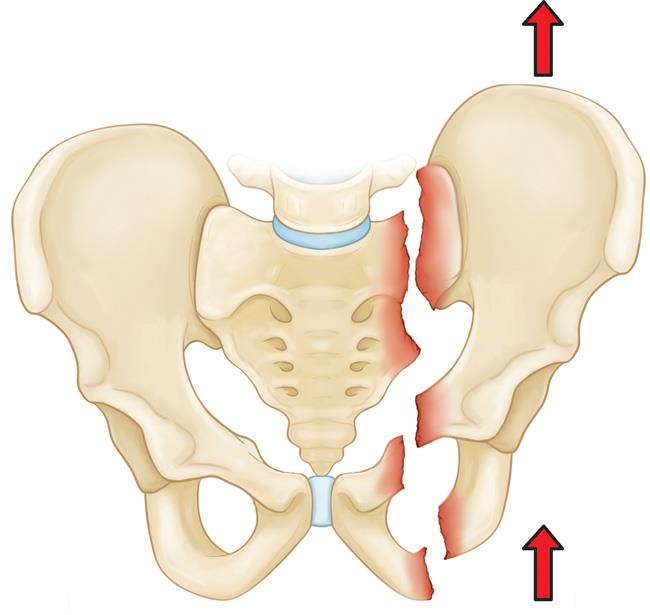
A pelvic avulsion fracture occurs when the tendon of a muscle comes away from the bone, taking a small chip of bone with it. This most commonly occurs at bottom of the ischium where the big hamstring muscles are attached, or on the front of the ilium where one of the large quadriceps muscles attaches.

These types of fractures typically occur during sports that involve speed and sudden stops, particularly in young people who are still growing. Examples are hurdling, sprinting, long-jumping, and soccer (particularly miskicks that hit the ground). A pelvic avulsion fracture may also be caused by a car accident.

Pelvic stress fractures are caused by repeated stresses to the bone, usually due to sport. They usually affect the pubic bone and cause exercise-related pain which gets gradually worse, but they do not usually prevent exercise. Sports involving repeated impact, such as running or jumping, carry the highest risk. Stress fractures often occur in those who suddenly increase their training distance or activity level, including sedentary people who suddenly start to exercise. They are uncommon in the pelvis, although more common in women and those with ‘thinning’ of the bones (osteoporosis).

Significant pelvic fractures can occur in anyone who experiences a major trauma. Less severe, stable fractures are most commonly seen in elderly people, particularly those with ‘thinner’ bones (osteoporosis). Avulsion fractures are particularly common in sporty teenagers. Stress fractures are typically seen in runners, although they more commonly affect other sites than the pelvis.

High-Energy Trauma

A pelvic fracture may result from a high-energy force, such as that generated during a:

  • Car or motorcycle collision
  • Crush accident
  • Fall from a significant height (such as a ladder)

Depending on the direction and magnitude of the force, these injuries can be life-threatening and require surgical treatment.

Bone Insufficiency

A pelvic fracture may also occur due to weak or insufficient bone. This is most common in older people whose bones have become weakened by osteoporosis. In these patients, a fracture may occur even during a fall from standing or a routine activity such as getting out of the bathtub or descending stairs. These injuries are typically stable fractures that do not damage the structural integrity of the pelvic ring, but may fracture an individual bone.

Other Causes

Less commonly, a fracture may occur when a piece of the ischium bone tears away from the site where the hamstring muscles attach to the bone. This type of fracture is called an avulsion fracture and it is most common in young athletes who are still growing. An avulsion fracture does not usually make the pelvis unstable or injure internal organs.

Symptoms

A fractured pelvis is almost always painful. This pain is aggravated by moving the hip or attempting to walk. Often, the patient will try to keep his or her hip or knee bent in a specific position to avoid aggravating the pain. Some patients may experience swelling or bruising in the hip area.

A pelvic avulsion fracture occurs when the tendon of a muscle comes away from the bone, taking a small chip of bone with it. This most commonly occurs at bottom of the ischium where the big hamstring muscles are attached, or on the front of the ilium where one of the large quadriceps muscles attaches.

These types of fractures typically occur during sports that involve speed and sudden stops, particularly in young people who are still growing. Examples are hurdling, sprinting, long-jumping, and soccer (particularly miskicks that hit the ground). A pelvic avulsion fracture may also be caused by a car accident.

Pelvic stress fractures are caused by repeated stresses to the bone, usually due to sport. They usually affect the pubic bone and cause exercise-related pain which gets gradually worse, but they do not usually prevent exercise. Sports involving repeated impact, such as running or jumping, carry the highest risk. Stress fractures often occur in those who suddenly increase their training distance or activity level, including sedentary people who suddenly start to exercise. They are uncommon in the pelvis, although more common in women and those with ‘thinning’ of the bones (osteoporosis).

Significant pelvic fractures can occur in anyone who experiences a major trauma. Less severe, stable fractures are most commonly seen in elderly people, particularly those with ‘thinner’ bones (osteoporosis). Avulsion fractures are particularly common in sporty teenagers. Stress fractures are typically seen in runners, although they more commonly affect other sites than the pelvis.

A stable pelvic fracture is almost always painful. Pain in the hip or groin is usual and is made worse by moving the hip or trying to walk – although walking may still be possible. Some patients find if they try to keep one hip or knee bent this can ease the pain.

Other symptoms will vary with the severity. They may include:

  • Pain and tenderness in the groin, hip, lower back, buttock or pelvis.
  • Bruising and swelling over the pelvic bones.
  • Numbness or tingling in the genital area or in the upper thighs.
  • Pain which may also be present on sitting and when having a bowel movement.

There may also be visible signs of bleeding. Bleeding can track out to the skin in several places, some of which are more likely to be visible than others. They include:

  • Bruising over the pelvic bones themselves.
  • Bruising or a tender lump in the groin or on the perineum.
  • Bruising in the small of the back.
  • Vaginal bleeding in women, and bruising to the scrotum in men.
  • Blood in the urine or coming from the back passage.

Note: after significant trauma, such as a road accident, serious pelvic fracture is quite likely, even in patients who are initially walking around. It is really important if assisting at the scene of an accident, therefore, to keep survivors still and warm until emergency services arrive. This will reduce risk of dangerous bleeding and may save lives.

Major and unstable pelvic fractures are likely to cause severe pain and shock. Pain may be in the pelvis, groin, back, tummy (abdomen), or down the legs.

The pelvic bones are large and have a rich blood supply, so when broken they will bleed heavily and the bleeding will not stop quickly. Whilst the blood may not be visible, because it is on the inside of your tummy, this level of blood loss will cause a sudden drop in your blood pressure. Affected people will be pale, clammy and seriously unwell, perhaps even unconscious.

It is sometimes possible to move around and attempt to walk immediately after a major unstable pelvic fracture – particularly after road accidents. This is because shock can initially prevent you from feeling pain. 

Pelvic avulsion fractures are mainly seen in young, active sportspeople who are still growing. Symptoms are usually of sudden pain during a sudden powerful movement. The pain is often in the bottom, in the crease of the buttock, or at the bony part on the front of the hip. Afterwards the athlete will feel weakness and pain when doing the movements which use the affected tendon and muscle. Bruising and swelling are likely.

REQUEST AN APPOINTMENT OR BOOK A CONSULANT – Sargam.dange.18@gmail.com

Stress fractures – where there is a fine crack in the bone which does not extend all the way through – are one of the mildest sorts of stable fracture. Stress fractures of the pelvis are easy to miss as the pain may be quite hard to locate. Symptoms typically consist of a dull pain that is difficult to localise at first. This may get better as exercise continues but be worse afterwards

Doctor Examination

Emergency Stabilization

Patients with high-energy fractures will almost always go or be brought to an urgent care center or emergency room for initial treatment due to the severity of their symptoms.

These patients may also have additional injuries to the head, chest, abdomen, or legs. If their injuries cause significant blood loss, it could lead to shock—a life-threatening condition that can result in organ failure.

The care of patients with high-energy pelvic fractures requires a multidisciplinary approach with input from a number of medical specialists. In some cases, doctors must address airway, breathing, and circulatory problems before treating the fracture and other injuries.

Physical Examination

Your doctor will carefully examine your pelvis, hips, and legs. He or she will also check for nerve injury by assessing whether you can move your ankles and toes and feel sensation on the bottom of your feet.

Your doctor will also carefully examine the rest of your body to determine if you have sustained any other injuries.

Imaging Studies

X-rays. These studies provide images of dense structures, such as bones. All pelvic fractures require x-rays—usually from a number of different angles—to help the doctor determine how displaced place the bones are.

Computed tomography (CT) scans. Because of the complexity of this type of injury, a CT scan is commonly ordered for pelvic fractures. A CT scan will provide a more detailed, cross-sectional image of the pelvis. Your doctor will use this information to better determine the specific pattern and extent of your injury, look for associated injuries, and aid in preoperative planning.

Magnetic resonance imaging (MRI) scans: In rare cases, your doctor may order an MRI scan to discover a fracture that cannot be seen on x-ray or CT scan.

in the case of major injuries, such as road traffic accidents, where pelvic fracture is likely and must be excluded, X-rays will be performed urgently to assess the state of the pelvic bones. A pelvic fracture is also suspected if you have had a lesser injury but there is pelvic bone tenderness, difficulty walking or any loss of sensation in the lower part of the body.

X-ray will show most pelvic bone injuries, although it will not show details of injuries to organs inside the pelvis. X-rays provide images of bones and in the case of the pelvis, they are usually taken from a number of different angles, so that doctors can check whether (and how much) the bones are out of line.

A computerised tomography (CT) scan involves multiple X-rays in ‘slices’ down through the pelvis in order to build up a three-dimensional image of the injuries. This will be done in complicated cases to get a better picture of the fractures and to look for associated injuries.

A magnetic resonance image (MRI) scan is an alternative to CT and may give a clearer picture of damage. This is not usually necessary, except in the case of stress fractures, which can show up well on MRI scanning but which commonly are not visible on X-ray or CT.

Ultrasound scans and contrast studies (where a radioactive dye is injected to create pictures to enable doctors to check on internal organs and structures) may be needed to assess internal organs.

Radioisotope bone scans are sometimes used to look for stress fractures, particularly in patients who cannot have an MRI scan (for example, if they have a pacemaker).

If your fracture happened unusually easily, and your doctor thinks there is a possibility that you have underlying ‘thinning’ of the bones (osteoporosis), you may be offered a bone scan to check your bone density. This scan is called dual-energy X-ray absorptiometry (DXA – formerly DEXA).

Other investigations may include blood tests to assess the degree of blood loss and the function of the liver and kidneys, and testing of the urine to look for damage to the bladder.

First aid in pelvic fracture

Until help arrives a person with a suspected pelvic fracture should be covered with a blanket or jacket and should not be moved by non-trained personnel, especially if there is severe pain.

If you are at a serious road accident and a person is walking around, get them to sit still. Ask if there is any pain anywhere, particularly in their chest, tummy (abdomen) or hips. If there is pain anywhere near the pelvis they could have a major pelvic fracture, and you should assume they are seriously injured and keep them still and warm until emergency services arrive. It is well known that sometimes people walk around with severe pelvic fractures immediately after road accidents, as shock can prevent them from initially feeling much pain.

Treatment

Treatment is based on a number of factors, including:

  • The specific pattern of the fracture
  • How much the bones are displaced
  • Your overall condition and associated injuries

Nonsurgical Treatment

Your doctor may recommend nonsurgical treatment for stable fractures in which the bones are nondisplaced or minimally displaced.

Nonsurgical treatments may include:

Walking aids. To avoid bearing weight on your leg, your doctor may recommend that you use crutches or a walker for up to three months—or until your bones are fully healed. If you have injuries above both legs, you may need to use a wheelchair for a period of time so that you can avoid bearing weight on either leg.

Medications. Your doctor may prescribe medication to relieve pain, as well as an anti-coagulant, or blood thinner, to reduce the risk of blood clots forming in the veins of your legs and pelvis.

Surgical Treatment

Patients with unstable pelvic fractures may require one or more surgical procedures.

External fixation. Your doctor may use external fixation to stabilize your pelvic area. In this operation, metal pins or screws are inserted into the bones through small incisions into the skin and muscle. The pins and screws project out of the skin on both sides of the pelvis where they are attached to carbon fiber bars outside the skin. The external fixator acts as a stabilizing frame to hold the broken bones in proper position.

In some cases, an external fixator is used to stabilize the bones until healing is complete. In patients who are unable to tolerate a lengthy, more complicated procedure, an external fixator may be used as a temporary treatment until another procedure can be performed.

Skeletal traction. Skeletal traction is a pulley system of weights and counterweights that helps realign the pieces of bone. Skeletal traction is often used immediately after an injury and removed after surgery. Occasionally, acetabular fractures can be treated with skeletal traction alone. This is rare, however, and will be a decision made jointly with input from your doctor.

During skeletal traction, metal pins are implanted in the thighbone or shinbone to help position the leg. Weights attached to the pins gently pull on the leg, keeping the broken bone fragments in as normal a position as possible. For many patients, skeletal traction also provides some pain relief.

Open reduction and internal fixation. During this operation, the displaced bone fragments are first repositioned (reduced) into their normal alignment. They are then held together with screws or metal plates attached to the outer surface of the bone.

External pelvic fixation

This involves long screws inserted into the bones from the sides and a large external frame. It is done in the operating theatre, under anaesthetic. It helps prevent further blood loss by holding the bones together. The metal pins or screws are inserted into the bones through small incisions into the skin and muscle. They project out of the skin on both sides of the pelvis where they are attached to carbon fibre bars. The external fixator acts as a stabilising frame to hold the bones in proper position.

Traction

This involves a pulley system of external pins in the bones, with weights and counterweights. It helps line up the pieces of bone. Skeletal traction is sometimes used as a temporary treatment, and it often provides some pain relief. Occasionally, pelvic fractures are treated with skeletal traction alone but this is unusual.

Internal pelvic fixation

A few patients require internal fixation to keep the bones in place. This is open surgery, performed under anaesthetic. The bone fragments are repositioned, then held together with screws or metal plates which are left permanently in place. Getting the pelvis fixed and stable is very important both for pain control and for the long-term results of your treatment. It is more likely to be necessary if there are multiple fractures.

Management of pain

Pain is managed using painkillers and by stabilising an unstable pelvis. Strong painkillers and local anaesthetics may initially be needed. You may at first have an epidural anaesthetic to help manage the initial pain.

Blood clots

Doctors usually prescribe ‘blood thinners’ (anticoagulants) to reduce the risk of blood clots forming in the veins of your legs and pelvis. Pelvic fractures are known to increase the risk of blood clots.

Bed rest

Initial treatment is with pain relief and bed rest, followed by mobilisation. Doctors will want to get you moving as soon as possible, as this is better for your long-term recovery, and also reduces the risk of blood clots forming (deep vein thrombosis). However, you are likely to need to use crutches or a walker for around three months, or until your bones are fully healed. If you have injuries above both legs, you may need to use a wheelchair for a period of time so that you can avoid putting any weight on either leg.

Physiotherapy

You will be seen regularly by physiotherapists who will try to help you keep muscle strength and joint mobility whilst you are not able to weight bear.

Once you start to weight bear, physiotherapy will still be needed to strengthen your muscles and help you regain your balance, as you may find this is much less good when you first start walking again.

With a stable fracture, the most common treatment is bed rest and prescribed painkillers.

Surgical treatment is not usually needed for stable fractures. Crutches and walking aids are likely to be used as part of your recovery, and physiotherapy will be an essential part of your treatment.

Treatment of pelvic avulsion fractures is with rest. These fractures usually heal by themselves over 4-6 weeks. Initially, applying ice can help pain and inflammation.

Occasionally, surgery is needed to re-attach the bone and tendon to the pelvis; however, this is mainly reserved for unusually large avulsion fractures.

Following the rest period, a gradual rehabilitation programme can be commenced which aims to regain full strength and movement at the hip.

Pelvic stress fractures can cause lingering, worsening pain and may become full-thickness fractures, so rest from the activity which caused them is very important. A gradual reintroduction to running can begin after a few weeks, once the athlete is pain-free.

Some specialists now suggest treatment with an infusion of pamidronate, a drug more commonly used to treat ‘thinning’ of the bones (osteoporosis). This treatment appears to be fairly effective in speeding the healing of stress fractures, even in patients without osteoporosis.

Complications

There are risks associated with any surgical procedure. Before your surgery, your doctor will discuss each of these risks with you and will take specific measures to help avoid potential complications.

Possible complications include:

  • Wound healing problems, including infection
  • Damage to nerves or blood vessels
  • Blood clots
  • Pulmonary embolism—a blood clot in the lungs

REQUEST AN APPOINTMENT OR BOOK A CONSULANT – Sargam.dange.18@gmail.com

dislocation of hip

REQUEST AN APPOINTMENT OR BOOK A CONSULANT – Sargam.dange.18@gmail.com

This article addresses hip dislocation that results from a traumatic injury. To learn about pediatric developmental hip dislocation, please read Developmental Dislocation (Dysplasia) of the Hip (DDH). To learn about dislocation after total hip replacement, please read Total Hip Replacement.

A traumatic hip dislocation occurs when the head of the thighbone (femur) is forced out of its socket in the hip bone (pelvis). It typically takes a major force to dislocate the hip. Car collisions and falls from significant heights are common causes and, as a result, other injuries like broken bones often occur with the dislocation.

A hip dislocation is a serious medical emergency. Immediate treatment is necessary.

Description

When there is a hip dislocation, the femoral head is pushed either backward out of the socket, or forward.

  • Posterior dislocation. In approximately 90% of hip dislocation patients, the thighbone is pushed out of the socket in a backwards direction. This is called a posterior dislocation. A posterior dislocation leaves the lower leg in a fixed position, with the knee and foot rotated in toward the middle of the body.
  • Anterior dislocation. When the thighbone slips out of its socket in a forward direction, the hip will be bent only slightly, and the leg will rotate out and away from the middle of the body.

When the hip dislocates, the ligaments, labrum, muscles, and other soft tissues holding the bones in place are often damaged, as well. The nerves around the hip may also be injured.

Symptoms

A hip dislocation is very painful. Patients are unable to move the leg and, if there is nerve damage, may not have any feeling in the foot or ankle area.

Cause

Motor vehicle collisions are the most common cause of traumatic hip dislocations. The dislocation often occurs when the knee hits the dashboard in a collision. This force drives the thigh backwards, which drives the ball head of the femur out of the hip socket. Wearing a seatbelt can greatly reduce your risk of hip dislocation during a collision.

A fall from a significant height (such as from a ladder) or an industrial accident can also generate enough force to dislocate a hip.

With hip dislocations, there are often other related injuries, such as fractures in the pelvis and legs, and back, abdominal, knee, and head injuries. Perhaps the most common fracture occurs when the head of the femur hits and breaks off the back part of the hip socket during the injury. This is called a posterior wall acetabular fracture-dislocation.

REQUEST AN APPOINTMENT OR BOOK A CONSULANT – Sargam.dange.18@gmail.com

Diagnosis

To diagnose a dislocated hip or other source of hip pain, an orthopedist will conduct a physical exam and order imaging of the hip in the form of an X-ray, MRI and/or CT scan.

Doctor Examination

A hip dislocation is a medical emergency. Call for help immediately. Do not try to move the injured person, but keep him or her warm with blankets.

In cases in which hip dislocation is the only injury, an orthopaedic surgeon can often diagnose it simply by looking at the position of the leg. Because hip dislocations often occur with additional injuries, your doctor will complete a thorough physical evaluation.

Your doctor may order imaging tests, such as x-rays, to show the exact position of the dislocated bones, as well as any additional fractures in the hip or thighbone.

Complications

A hip dislocation can have long-term consequences, particularly if there are associated fractures.

  • Nerve injury. As the thighbone is pushed out of the socket, particularly in posterior dislocations, it can crush and stretch nerves in the hip. The sciatic nerve, which extends from the lower back down the back of the legs, is the nerve most commonly affected. Injury to the sciatic nerve may cause weakness in the lower leg and affect the ability to move the knee, ankle and foot normally. Sciatic nerve injury occurs in approximately 10% of hip dislocation patients. The majority of these patients will experience some nerve recovery.
  • Osteonecrosis. As the thighbone is pushed out of the socket, it can tear blood vessels and nerves. When blood supply to the bone is lost, the bone can die, resulting in osteonecrosis (also called avascular necrosis). This is a painful condition that can ultimately lead to the destruction of the hip joint and arthritis.
  • Arthritis. The protective cartilage covering the bone may also be damaged, which increases the risk of developing arthritis in the joint. Arthritis can eventually lead to the need for other procedures, like a total hip replacement.

Recovery

It takes time—sometimes 2 to 3 months—for the hip to heal after a dislocation. The rehabilitation time may be longer if there are additional fractures. The doctor may recommend limiting hip motion for several weeks to protect the hip from dislocating again. Physical therapy is often recommended during recovery.

Patients often begin walking with crutches within a short time. Walking aids, such as walkers, crutches and, eventually, canes, help patients get mobilized.

Treatment

Reduction Procedures

If there are no other injuries, the doctor will administer an anesthetic or a sedative and manipulate the bones back into their proper position. This is called a reduction.

In some cases, the reduction must be done in the operating room with anesthesia. In rare cases, torn soft tissues or small bony fragments block the bone from going back into the socket. When this occurs, surgery is required to remove the loose tissues and correctly position the bones.

Following reduction, the surgeon will request another set of x-rays and possibly a computed tomography (CT) scan to make sure that the bones are in the proper position.

Hip dislocations after a total hip replacement

Hip dislocations in people who have had a total hip replacement (THR) are relatively infrequent among otherwise healthy people who follow the precautions provided by their orthopedic surgeon and physical therapist. But higher rates of dislocations occur in certain hip replacement patients: the elderly, those with other physical disabilities, those who had a THR after a hip fracture or after other hip surgeries, and in those who had one or more hip dislocations prior to a THR (for example, if muscles and ligaments around the hip were disrupted from the prior dislocation and weakened as a result). If a patient experiences multiple dislocations after THR, he or she is usually a good candidate for a hip revision surgery.

REQUEST AN APPOINTMENT OR BOOK A CONSULANT – Sargam.dange.18@gmail.com

Metacarpal Fractures

REQUEST AN APPOINTMENT OR BOOK A CONSULANT – Sargam.dange.18@gmail.com

Hand fractures are common in the general population with relative propensity seen in contact-sport athletes (For example, boxers, football players) and manual laborers,

Types of metacarpal fractures.jpg

A metacarpal fracture

  • Is a break in one of the five metacarpal bones of either hand.
  • Are categorized as being fractures of the head, neck, shaft, and base (from distal at the metacarpal phalangeal joint to proximal
  • at the wrist). 
  • Boxer fracture is another name for a fracture of the fourth or fifth metacarpal, one of the most common metacarpal fractures.
  • The mechanisms of these injuries vary from axial loading forces to direct blows to the dorsal hand

Clinically Relevant Anatomy

The metacarpals are long, thin bones that are located between the carpal bones in the wrist and the phalanges in the digits.

Hand muscles.png
  • Each is comprised of a base, shaft, and head.
  • The proximal bases of the metacarpals articulate with the carpal bones,
  • Distal heads of the metacarpals articulate with the proximal phalanges and form the knuckles.
  • The 1st metacarpal is the thickest and shortest of these bones.
  • The 3rd metacarpal is distinguished by a styloid process on the lateral side of its base.
  • Soft tissues generally involved with fractures include cartilage, joint capsule, ligaments, fascia, and the dorsal hood fibers.
  • With severe polytrauma cases, the tendons and nerves adjacent to the fracture can also be injured. 

Etiology

Metacarpal fractures typically occur secondary to a direct blow or fall directly onto the hand. 

  • These fractures commonly occur during athletic activities, particularly in contact sports. Almost one-fourth of cases occur during athletic events.
  • Sporting injury is frequently the cause among younger patients
  • Work-related injuries are often the cause in middle-aged patients
  • Falls are typically the cause of the elderly.
  • Fifth metacarpal fractures often occur secondary to punching a wall or other solid object (hence the eponym, “boxer’s fracture”)
Hand Fractures
  • Makeup about 40% of all acute hand injuries
  • Constitute about 20% of all fractures occurring below the elbow
Metacarpal Fractures
  • Typically occur in patients aged 10-40 years
  • Men are more likely to be affected than women. 
  • Young men sustain metacarpal fractures secondary to a punching mechanism or a direct blow to the hand
  • Geriatric females sustain these injuries secondary to a low energy fall. 
  • The incidence rate of fracture seen in association with each digit’s metacarpal bone increases from the radial to the ulnar side.
  • The incidence rate of 2nd metacarpal fractures is lower than the incidence rate of 5th metacarpal fractures.
  • Bennett fracture is the most common fracture involving the base of the thumb. This fracture refers to an intraarticular fracture that separates the palmar ulnar aspect of the first metacarpal base from the remaining first metacarpal.

The fractures of the metacarpals can be divided into three parts.

  1. The first, neck fractures, occurs often when a person punches another person or object. In the majority of cases, surgical intervention is not essential to treat this condition.
  2. The metacarpal shaft fractures are often produced by longitudinal compression, torsion, or direct impact. They are described by the appearance of their respective fracture patterns and can be divided by transverse, oblique, spiral, and comminuted.
  3. Metacarpal base fractures are rare and have a minimal consequence because the motion of the joint is small. More common are the fractures of the base of the fifth digit and are the result of a longitudinally directed force 

REQUEST AN APPOINTMENT OR BOOK A CONSULANT – Sargam.dange.18@gmail.com

Characteristics/Clinical Presentation

Patients with metacarpal fractures generally present with

  • Pain
  • Swelling
  • Ecchymosis (bruise)
  • Limitation of movement
  • Deformity. Knuckle asymmetry may be observed, and the knuckle may appear to be missing.
  • Finger misalignment may also be noted.
  • A metacarpal head fracture is associated with axial compression of the extended digit which causes severe discomfort.
  • In a metacarpal base fracture, movement of the wrist or longitudinal compression exacerbates the pain.
  • Any metacarpal fracture angulation can produce a pseudo-claw deformity.

Differential Diagnosis

Injuries to neighboring bones (carpal bones, phalanges) and associated soft tissues (ligaments, tendons) need to be excluded.

Evaluation

The evaluation includes:

  • Standard radiographs of the hand (anteroposterior, lateral, and oblique). In the vast majority of cases, this will be enough to confirm the diagnosis and form a management plan. Confirmation of more subtle injuries can be obtained using special views such as Brewerton (metacarpal heads), Roberts, and Betts (thumb) views.
  • CT is sometimes necessary for the base of metacarpal fractures to check for any intra-articular displacement and determine if there is a need for surgery

Outcome Measures

  • Grip Strength: measured with a dynamometer
  • Range of motion
  • Patient Specific Functional Scale
  • DASH
  • Michigan Hand Outcome Questionnaire (MHO): In this questionnaire, they assess 6 criteria for people with a hand disorder: overall hand function, activities of daily living (ADL), pain, work performance, aesthetics, and patient satisfaction with hand function.

Medical Management

The goal of treatment is a restoration of anatomy and function.

  • Antibiotics and tetanus prophylaxis are options for open fractures as per standardized guidelines.
  • The modality of treatment will vary depending on skin integrity (open versus closed fracture), the number of digits/metacarpals fractured, the stability of the specific, degree of comminution, displacement, and/or rotational malalignment
  • In general, increasing degrees of displacement, comminution, and rotational malalignment are critical factors in assessing the fracture patterns potential for stability and reduction maintenance with nonoperative management.
  • The GP/Specialist after assessing the fracture will perform gentle tests and imaging to work out if surgery is needed.
  • If surgery is not needed a physiotherapist will make a custom splint, which will support the healing fracture.

Physical Therapy Management

Full strength and range of motion is the goal of rehabilitation.

Under the physiotherapist’s instructions

  • Hand exercises with light resistance such as rubber bands or squeeze ball can help if there is scarring or extensor lag develops.
  • Soft tissue recovery may be more of a problem than the bony one.
  • Rest and elevation are important, and so is the quality of splinting – poor splinting can cause stiffness, pressure sores, or even compartment syndrome

REQUEST AN APPOINTMENT OR BOOK A CONSULANT – Sargam.dange.18@gmail.com

Physiotherapists use a number of techniques to regain movement in the hand, wrist, and fingers, including:

  • Swelling management with massage and compression garments
  • Soft tissue massage to help with muscle tension and pain
  • Providing clients with a home exercise program of specific movements and strengthening exercises.

Most hand fractures can be treated non-operatively  

More specific Advice.

These are the steps to be followed in a stable fracture:

one or other of the below stabilizing techniques could be used

  • Buddy strapping the injured digit to another digit is used as a non-operative technique. This is used with or without the application of varying degrees of splint. The ‘buddy’ reduces the risk of rotational deformity.
  • The splinting of the fracture should be: 20 degrees wrist extension; MCP joint 60-70 degree flexion and IP joint extension
  • Early motion is generally considered appropriate when there are stable fractures or rigid fractures.
  • Generally, AROM (active ROM) exercises without resistance can begin 2 to 3 weeks after operative treatment in uninvolved or bordering/adjacent joints.
  • Active Motion: If the fracture is internally fixed, the active range of motion can start early. Most fractures are treated by immobilization, but the active motion can begin after three weeks of therapy, starting with the joints not splintered during the initial immobilization. This phase usually lasts 3-6 weeks. Specific tendon gliding should be included in the active motion.
  • Tendon gliding is important to prevent adhesions, increased circulation about the fracture site, decreased edema and compression at the fracture site.
Handen.png
Exercises For Tendon Gliding 
  • Claw posture to achieve extensor digitorum communis tendon glide over the metacarpal bone
  • Intrinsic plus posture to achieve central slip. Lateral bands glide over proximal phalanx 1
  • Flexor digitorum profundus (FDP) blocking exercises to glide FDP tendon over the phalanx
  • Hook fist posture to promote selective FDP tendon glide
  • Flexor digitorum sublimis blocking exercise to glide FDS tendon over middle phalanx
  • Sublimis fist posture to promote selective FDS tendon glide
Passive Motion
  • Passive motion can be initiated after sufficient clinical healing at approximately 5-6 weeks of therapy.  
  • The timing of initiation of joint mobilization depends on the structures involved in the injury. If the structures resisting the force are not involved in the injury, joint mobilization can be initiated at the same time as active motion. Compression on the fracture can result in shortening, angulation or rotational malalignment of the bone.
  • Traditional PROM aims to assist in articular cartilage healing, reduce swelling, and stiffness.  
  • Resistive Motion: Four weeks after the injury light resistance can be performed in most metacarpal fractures which are treated by immobilization. Active motion should only be continued if healing has not started.
  • Resistive exercise should also be delayed when a fracture is fixed by pinning until these pins are removed, to ensure the stability of the fracture. Light resistive exercise helps with scar remodeling and improved motion. There are several types of resistive exercises such as the weight-well exercises. This kind of exercise strengthens the finger flexors (FDP and FDS muscles).
  • Functional activities and work simulation should be included in the resistive exercises as soon as possible.

Conclusion

Main points on metacarpal fractures:

  • Common hand injury
  • Require thorough assessment consisting of the history, examination, and radiological investigations
  • They mostly divide into open or closed, based on the digit they affect, intra-articular or extra-articular status, and based on the location on the bone itself (head, neck, shaft, base)
  • May have conservative or operative treatment
  • Can have long-term sequelae requiring further management
  • Rehabilitation goals are return of full strength and range of motion.
  • Rest and elevation are important, and so is the quality of splinting – poor splinting can cause stiffness, pressure sores, or even compartment syndrome.
  • Physiotherapy is an critical element in the restoration of good hand function.

REQUEST AN APPOINTMENT OR BOOK A CONSULANT – Sargam.dange.18@gmail.com

Scaphoid Fracture

The scaphoid bone is the most commonly fractured carpal bone. In young children and the elderly population, scaphoid fractures are rare. The scaphoid bone is stronger than the relatively weak distal radius in these age groups.

A delay in diagnosis of scaphoid fractures can lead to a variety of adverse outcomes that include nonunion (no consolidation), delayed union, decreased grip strength, and range of motion, along with osteoarthritis of the radiocarpal joint. Timely diagnosis, appropriate immobilization, and referral to surgical opinion when indicated can decrease the likelihood of adverse outcomes.

Scaphoid fractures are common, but present unique challenges because of the particular geometry of the fractures and the tenuous vascular pattern of the scaphoid. Delays in diagnosis and inadequate treatment for acute scaphoid fractures can lead to non-unions and subsequent degenerative wrist arthritis.

Epidemiology

  • Scaphoid fractures predominantly affect young adults, with a mean age of 29 years.
  • Higher incidence in males.
  • Unusual in the pediatrics population and the elderly population where the physis or distal radius, respectively, are more likely to fracture first.
  • Scaphoid fractures account for 15% of acute wrist injuries.
  • Scaphoid fractures have a high incidence of nonunion (8-10%), frequent malunion, and late sequelae of carpal instability and post-traumatic arthritis.
  • No blood vessels enter the proximal pole of the scaphoid, thus a higher incidence of aseptic necrosis and nonunion is noted with fractures on this side of the scaphoid
  • Displaced fractures frequently are associated with ligamentus tears in the wrist.

Characteristics/ Clinical Presentation

Patients typically present with wrist pain following a fall onto an outstretched hand.

  • Axial loading of the wrist with it in forced hyperextension and radial deviation can cause the fracture as the scaphoid impacts on the dorsal rim of the radius.
  • Traumatic injury through contact sports and road traffic accidents are also common causes.

Following the traumatic event there will be a massive force of the hand on the arm through the scaphoid bone

The symptoms will likely be:

  • Deep, dull ache in the radial part of the wrist.
  • Aggravated pain by pinching and gripping.
  • Localised wrist swelling with fullness in the anatomical snuffbox
  • Localised bruising
  • Tenderness on palpation of the radial side of the wrist

Differential Diagnosis

These diagnoses can be differentiated by the location of tenderness, pain with certain maneuvers, and radiographic abnormalities.

  • Distal radius fracture
  • Other carpal bone fractures
  • Scapholunate dissociation
  • De Quervain’s tenosynovitis
  • Osteoarthritis
  • Tendinopathy

Diagnostic Procedures

Plain X-rays are commonly used to diagnose the fracture, but this approach may miss up to 16% of fractures in the absence of clear-cut lucent lines on plain radiographs plain radiographs have 64% specificity for scaphoid fractures.

Research has shown that the use of MRI or CTs effective in indeterminate a scaphoid fracture. Both methods have been shown to detect fractures, but the MRI found some significant ligamentous and carpal instabilities in addition to the scaphoid fracture.

Outcome Measures

  • DASH or QuickDASH (Disabilities of Arm, Shoulder or Hand)
  • PRWE, a fifteen-item questionnaire was designed to measure wrist pain and disability.
  • PEM (Patient Evaluation Measure) has a simple layout with questions asked in a visual analog form. Patients are asked to read and comprehend the question alone and not the description of each interval answer.

Assessment

Subjective assessment

  • History of trauma i.e. fall onto an outstretched hand
  • Dull pain which is aggravated by hand and wrist movements
  • Restricted thumb range of movement

Objective exam

When examining a patient with a suspected scaphoid injury, it is important to compare the injured wrist with the uninjured wrist.

Presentation may include:

  • Anatomical snuffbox tenderness on examination – highly sensitive 90% indication of scaphoid fracture, but it is nonspecific 40%
  • Tenderness of the scaphoid tubercle: the physician extends the patient’s wrist with one hand and applies pressure to the tuberosity at the proximal wrist crease with the opposite hand. This provides better diagnostic information; sensitivity 87%, specificity 57%
  • Pain with the scaphoid compression test (i.e. axially/longitudinally compressing a patient’s thumb along the line of the first metacarpal) was shown to be helpful in identifying a scaphoid fracture, but in another study
  • Pain in the snuffbox with pronation of the wrist followed by ulnar deviation (52% percent positive predictive value, 100% percent negative predictive value)

Medical Management

Suspected fractures with positive clinical findings on examination but negative radiographs should have a follow-up with films repeated in 7-14 days. If pain persists and radiographs are still normal, then further imaging in the form of MRI or CT should be undertaken. Pain management with the assistance of pharmacists should be considered.

Surgical Management

Indications for operative management include:

  • Displacement greater than 1mm
  • An intrascaphoid angle greater than 35 degrees (humpback deformity)
  • A radiolunate angle of more than 15 degrees
  • Transcaphoid perilunate dislocation
  • Proximal pole fractures
  • Comminuted fractures
  • Non displaced waist fractures in individuals that need to return quickly to work/sport
  • Nonunion or avascular necrosis

Surgical fixation involves the insertion of a single or multiple screws and can be done percutaneously or via an open procedure. The latter is preferable for non-unions and those fractures that exhibit gross displacement with the former for acute, minimally displaced fractures.

Conservative management

  • Fractures that are non-displaced and within the distal third of the bone can be managed non-operatively with immobilization in a cast. Debate exists as to whether a long or short arm cast is optimal and whether a thumb spica should be included to immobilize the thumb, no evidence currently suggests one option is better than the other.

Six weeks immobilization is normally required with repeat radiographs taken at this time to assess for the union.

Time to union varies depending on the location of the fracture.

  • The distal-third would be expected to heal within 6-8 weeks for approximately 90% of non-displaced or minimally displaced (≤ 0.5 mm) scaphoid waist fractures,
  • middle-third within 8-12 weeks
  • proximal third within weeks. 
  • Scaphoid waist fractures with moderate displacement (0.5-1.5 mm) can be treated conservatively, require prolonged cast immobilization for eight to ten weeks.

The relative increase in time to healing while moving from distal to proximal is secondary to the tenuous blood supply and retrograde arterial flow.

As a basic rule, in a patient with a clinically suspected scaphoid fracture but negative initial radiographs, it is reasonable to apply a short arm thumb spica and re-evaluate the patient in two weeks. If a cast is not applied, the fracture can worsen over the following months. At the two-week visit, the patient should be free of pain, and a follow-up radiograph should be obtained.

Types of fracture

The fractured scaphoid exhibits certain behavior that inhibits healing. Fracture fragments are inherently unstable and prone to displacement and require motionless contact to achieve union. As mentioned before, the blood supply of the scaphoid is tenuous.

For therapeutic decision making, the scaphoid is divided into three anatomic sections: proximal, medial, and distal (see image). Fractures are further subdivided into displaced and non-displaced types.

Scaphoid fracture types.gif

Non-displaced Fractures


Non-displaced distal fractures heal well with strict immobilization in a well-molded short arm thumb spica. Controversy exists over whether to use a long arm or a short arm cast. he current treatment for this type of fracture is a thumb spica, but some evidence suggests that the thumb could be omitted from the cast.

Screw fixation may speed recovery to pre-injury activities; referral for surgery may be indicated, depending on the needs of the patient.

As the fracture line moves proximally, there is more risk of displacement and nonunion; therefore, it would be appropriate to refer these patients for orthopedic consultation. If conservative treatment is attempted, a long arm cast with thumb immobilization is appropriate.

Displaced Fractures


Fractures with even small amounts of displacement are prone to nonunion, and operative treatment is recommended.  

For the fixation, double-threaded headless screws are preferred. Which operative technique to use depends on the fracture morphology. Splinting and referral are indicated.

Traditionally, un-displaced and stable scaphoid fractures are treated by casting in short- or long-arm casts.

Physiotherapy management

After the period of immobilization either post-operatively or conservatively, once the fracture is considered stable and cast removed it is likely the hand and wrist will be stiff and have reduced muscle strength.

The primary goals of physiotherapy are:

  1. Restore active range of movement (AROM)
  2. Reduce swelling
  3. Increase grip and wrist strength
  4. Return to functional goals and tasks

ROM exercises

ROM exercises in the initial stages after immobilization should focus on active-assisted ROM as the hand and wrist will be stiff.

These exercises should focus on the wrist and thumb, however, the fingers, elbow and shoulder also need to be considered as after immobilization these may also be stiff.

If full ROM is still restricted it may be useful in the therapy session to do manual therapy in the form of joint mobilisations to the radio-carpal joint, radio-ulnar joint and potentially to the carpal joints.

Other forms of manual therapy may also be helpful to reduce any residual swelling or pain such as soft tissue work or massage techniques.

Strengthening exercises

Once a full or functional AROM has been restored it is essential to undergo strengthening exercises of the wrist and hand.

This is an essential step in rehabilitation as without strengthening the hand long standing functional deficits may be present and also put the patient at risk of further injury.

Functional restoration

After full AROM has been restored and a good baseline strength has been regained focus should turn to individualized goals and tasks.

The demographic of scaphoid fractures tend to be younger to middle-aged people therefore it is likely they will be active or have jobs or family to attend to. So specific rehab and exercises need to be individualized to meet these goals and expectations. Full function will eventually be restored if the fracture has been appropriately managed in the initial stages i.e. no missed avascular necrosis.

In the sporting population it has been shown that early surgical intervention led to quicker return to play approximately 6-11 weeks versus 4-16 weeks for conservative management.

Injuries of ankle & foot

REQUEST AN APPOINTMENT OR BOOK A CONSULANT – Sargam.dange.18@gmail.com

Ankle injuries are often thought of as sports injuries. But you don’t have to be an athlete or even a “weekend warrior” to turn your ankle and hurt it. Something as simple as walking on an uneven surface can cause a painful, debilitating sprain.

Ankle injuries can happen to anyone at any age. However, men between 15 and 24 years old have higher rates of ankle sprain, compared to women older than age 30 who have higher rates than men. Half of all ankle sprains occur during an athletic activity. Every day in the U.S., 25,000 people sprain their ankle. And more than 1 million people visit emergency rooms each year because of ankle injuries. The most common ankle injuries are sprains and fractures, which involve ligaments and bones in the ankle. But you can also tear or strain a tendon.

At one time or another, everyone has had a minor toe, foot, or ankle injury that caused pain or swelling. Most of the time our body movements do not cause problems, but it’s not surprising that symptoms develop from everyday wear and tear, overuse, or an injury.

Toe, foot, or ankle injuries most commonly occur during:

  • Sports or recreational activities.
  • Work-related tasks.
  • Work or projects around the home.

In children, most toe, foot, or ankle injuries occur during sports, play, or falls. The risk for injury is higher in sports with jumping, such as basketball, or sports with quick direction change, such as soccer or football. Any bone injury near a joint may injure the growth plate (physis) in a child and needs to be evaluated.

Certain athletes, such as dancers, gymnasts, or soccer or basketball players, have an increased risk of toe, foot, or ankle injuries.

Older adults are at higher risk for injuries and fractures because they lose muscle mass and bone strength as they age. They also have more problems with vision and balance, which increases their risk of injury.

Most minor injuries will heal on their own, and home treatment is usually all that is needed to relieve your symptoms and promote healing.

Causes

An ankle injury occurs when the ankle joint is twisted too far out of its normal position. Most ankle injuries occur either during sports activities or while walking on an uneven surface that forces the foot and ankle into an unnatural position. The unnatural position of the ankle in high-heeled shoes or walking in unstable, loose-fitting clogs or sandals is also a factor that may contribute to ankle injuries. In addition to wearing faulty footwear, an ankle injury can happen as a result of:

  • Tripping or falling
  • Landing awkwardly after a jump
  • Walking or running on uneven surfaces
  • A sudden impact such as a car crash
  • Twisting or rotating the ankle
  • Rolling the ankle

Different Signs for Different Ankle Injuries

The symptoms of a sprain and of a fracture are very similar. In fact, fractures can sometimes be mistaken for sprains. That’s why it’s important to have an ankle injury evaluated by a doctor as soon as possible. The signs include:

  • Pain, often sudden and severe
  • Swelling
  • Bruising
  • Inability to walk or bear weight on the injured joint

With a sprain, the ankle may also be stiff. With a fracture the area will be tender to the touch, and the ankle may also look deformed or out of place.

If the sprain is mild, the swelling and pain may be slight. But with a severe sprain, there is much swelling and the pain is typically intense.

Tendinitis and acute tears of the peroneal tendon result in both pain and swelling. In addition, the ankle area will feel warm to the touch with tendinitis. With an acute tear, there will be a weakness or instability of the foot and ankle.

  • Sporadic pain on the outside of the ankle
  • Weakness or instability in the ankle
  • An increase in the height of the foot’s arch

With the subluxation you will notice ankle instability or weakness. You also may notice sporadic pain behind the outside ankle bone and a “snapping” feeling around the ankle bone.

REQUEST AN APPOINTMENT OR BOOK A CONSULANT – Sargam.dange.18@gmail.com

Diagnosis

The first thing a doctor will do is ask questions about how the injury occurred. Then the doctor will examine the ankle, noting the amount of swelling and bruising. The physical examination of the ankle may be painful because the doctor needs to move the ankle to evaluate the pain and swelling in order to make a proper diagnosis.

The doctor may order an ankle X-ray to determine whether there are any broken bones. In addition to an ankle X-ray, your doctor may ask for X-rays of the leg and foot to determine whether there may be other related injuries. If the doctor suspects a stress fracture, the doctor will ask for other imaging scans such as an MRI, which will show more detail about the injury. If there is a fracture, the doctor may also ask for a stress test, which is a special X-ray taken with pressure applied to the joint. This will help the doctor determine whether surgery is needed.

For most ankle injuries, pain is controlled by using an over-the-counter medication such as acetaminophen or other nonsteroidal anti-inflammatory drug such as ibuprofen. The specific treatment of the injury depends on the type of injury.

What Should Someone Do After an Ankle Injury?

You can apply first aid for an ankle injury by remembering R.I.C.E: rest, ice, compression, elevation.

  • Rest. It’s important to rest the ankle to prevent further damage and keep weight off of it.
  • Ice. Using ice will help slow or reduce the swelling and provide a numbing sensation that will ease the pain. Proper icing includes icing within 48 hours of an injury, never leave ice on for longer than 15 minutes to 20 minutes at a time to prevent frostbite. Wait 40 minutes to 45 minutes before applying ice again to allow tissues to return to normal temperature and sensation, and repeat as needed. You can apply an ice compress using a plastic freezer bag filled with ice cubes and water to mold to your ankle or use a frozen bag of veggies like corn or peas, (don’t eat them after you use them and refreeze them), use a layer of towel between your skin and the plastic bag.
  • Compression. Wrapping the injured ankle with an elastic bandage or off-the-shelf compression wrap will help keep it immobile and supported. Be sure not to wrap the ankle too tightly. If your toes that turn blue, get cold or lose sensation the wrap is too tight.
  • Elevate. Elevating the injured ankle to at least the level of your heart will reduce swelling and pain.

It is important not to put any weight on the ankle until after it’s been evaluated by a doctor, which should be done as soon as possible. Fractures and sprains that are ignored or aren’t treated properly can lead to long-term chronic problems with the ankle, such as repeated injury, ankle weakness, and arthritis.

Treatment of Fractures

Fractures can be treated either surgically or nonsurgically. The doctor may treat the break without surgery by immobilizing the ankle if only one bone is broken, and if the bones are not out of place and the ankle is stable. Typically the doctor will do this by putting on a brace that works as a splint or by putting on a cast. If the ankle is unstable, the fracture will be treated surgically. Often, the ankle is made stable by using a metal plate and screws to hold the bones in place. Following the surgery, the ankle is protected with a splint until the swelling goes down and then with a cast.

It usually takes at least six weeks for the bones to heal. Your doctor will probably ask you to keep weight off the ankle during that time so the bones can heal in the proper alignment. Ligaments and tendons can take longer to heal after a fracture is fully mended. It can take as long as two years to completely recover full pain-free motion and strength after an ankle fracture, although most people are able to resume their normal daily routine within three to four months.

After the doctor has determined it is safe for you to start moving your ankle, you may need physical therapy to provide gait training, balance, strengthening, and mobility exercises. The therapist will develop a home program that you can use to regain your previous normal function. It can take several months to return to a normal walking pattern without limping.

Treatment of Sprains

The treatment for sprains depends on the severity of the injury. They are graded as mild, moderate, or severe. Surgery is not usually a treatment option unless the damage is extensive, involves more than the ligaments, or when other treatment options fail.

Mild sprains — called grade 1 — are treated with the RICE approach for several days until the pain and swelling improve. With a mild sprain, you won’t need a splint or a cast. Your doctor will tell you to put weight on the ankle fairly soon — within one to three days — as long as you can tolerate it and will prescribe range of motion, stretching, and strengthening exercises.

If your sprain is classified as moderate, or grade 2, the doctor will use the RICE approach but allow more time for healing to occur. The doctor may also use a device such as a boot or a splint to immobilize the ankle. You will be given exercises to do first to improve range of motion and then to stretch and strengthen the ankle. The doctor may also prescribe physical therapy to help you regain full use of your ankle.

Grade 3 or a severe sprain involves a complete tear or rupture of a ligament and takes considerably longer to heal. It’s treated with immobilization of the joint followed by a longer period of physical therapy for range of motion, stretching, and strength building. Occasionally, especially if the sprain does not heal in a reasonable time, surgery will be considered for reconstructing the torn ligaments.

Typically, the initial treatment of a sprain includes resting, and protecting the ankle until swelling goes down for about one week. That’s followed by a period of one to two weeks of exercise to restore range of motion, strength, and flexibility. It can take several more weeks to several months to gradually return to your normal activities while you continue to exercise.

Treatment of Tendon Injuries

Options for treating tendon injuries are similar to options for treating sprains. They include:

REQUEST AN APPOINTMENT OR BOOK A CONSULANT – Sargam.dange.18@gmail.com

Treatment of Sprains

The treatment for sprains depends on the severity of the injury. They are graded as mild, moderate, or severe. Surgery is not usually a treatment option unless the damage is extensive, involves more than the ligaments, or when other treatment options fail.

Mild sprains — called grade 1 — are treated with the RICE approach for several days until the pain and swelling improve. With a mild sprain, you won’t need a splint or a cast. Your doctor will tell you to put weight on the ankle fairly soon — within one to three days — as long as you can tolerate it and will prescribe range of motion, stretching, and strengthening exercises.

If your sprain is classified as moderate, or grade 2, the doctor will use the RICE approach but allow more time for healing to occur. The doctor may also use a device such as a boot or a splint to immobilize the ankle. You will be given exercises to do first to improve range of motion and then to stretch and strengthen the ankle. The doctor may also prescribe physical therapy to help you regain full use of your ankle.

Grade 3 or a severe sprain involves a complete tear or rupture of a ligament and takes considerably longer to heal. It’s treated with immobilization of the joint followed by a longer period of physical therapy for range of motion, stretching, and strength building. Occasionally, especially if the sprain does not heal in a reasonable time, surgery will be considered for reconstructing the torn ligaments.

Typically, the initial treatment of a sprain includes resting, and protecting the ankle until swelling goes down for about one week. That’s followed by a period of one to two weeks of exercise to restore range of motion, strength, and flexibility. It can take several more weeks to several months to gradually return to your normal activities while you continue to exercise.

Treatment of Tendon Injuries

Options for treating tendon injuries are similar to options for treating sprains. They include:

  • Immobilization using a cast or splint
  • Oral or injected anti-inflammatory drugs to reduce pain
  • Physical therapy for range of motion, strength, and balance
  • A brace to provide support during activities
  • Surgery to repair the tendon or tendons and sometimes to repair the supporting structures of the foot

prevention of injury

The National Institute of Arthritis and Musculoskeletal and Skin Diseases recommends the following steps for reducing your risk of an ankle injury:

  • Avoid exercising or playing sports when you are tired or in pain.
  • Keep muscles strong by eating a well-balanced diet.
  • Maintain a healthy weight.
  • Try to avoid falling.
  • Wear shoes that fit well and that are appropriate for the activity you are doing.
  • Don’t wear shoes that have heels worn down on one side.
  • Exercise every day.
  • Maintain the proper conditioning for whatever sport you are playing.
  • Warm up and stretch before exercising or playing a sport.
  • Wear the proper equipment for whatever sport you play.
  • Run on flat surfaces.

REQUEST AN APPOINTMENT OR BOOK A CONSULANT – Sargam.dange.18@gmail.com

Design a site like this with WordPress.com
Get started