REQUEST AN APPOINTMENT OR BOOK A CONSULANT – Sargam.dange.18@gmail.com
A migraine can cause severe throbbing pain or a pulsing sensation, usually on one side of the head. It’s often accompanied by nausea, vomiting, and extreme sensitivity to light and sound. Migraine attacks can last for hours to days, and the pain can be so severe that it interferes with your daily activities.A migraine is a powerful headache that often happens with nausea, vomiting, and sensitivity to light. Migraines can last from 4 hours to 3 days, and sometimes longer.
For some people, a warning symptom known as an aura occurs before or with the headache. An aura can include visual disturbances, such as flashes of light or blind spots, or other disturbances, such as tingling on one side of the face or in an arm or leg and difficulty speaking.
Medications can help prevent some migraines and make them less painful. The right medicines, combined with self-help remedies and lifestyle changes.
What Can Trigger a Migraine Headache?
Some common migraine triggers include:
- Stress. When you’re stressed, your brain releases chemicals that can cause the blood vessel changes that can lead to a migraine.
- Foods. Some foods and drinks, such as aged cheese, alcohol, and food additives like nitrates (in pepperoni, hot dogs, lunchmeats) and monosodium glutamate (MSG) may be responsible for up to 30% of migraines.
- Caffeine. Getting too much or withdrawing from it can cause headaches when the level in your body abruptly drops. Blood vessels seem to get used to caffeine, and when you don’t have any, you may get a headache. Caffeine itself can be a treatment for acute migraine attacks.
4.Changes in weather. Storm fronts, changes in barometric pressure, strong winds, or changes in altitude can all trigger a migraine.
5.Having your period
6.Feeling very tired
7.Skipping meals
7.Changes to your sleep
Causes
A migraine headache is caused by abnormal brain activity. This activity can be triggered by many things. But the exact chain of events remains unclear. Most medical experts believe the attack begins in the brain and involves nerve pathways and chemicals. The changes affect blood flow in the brain and surrounding tissues.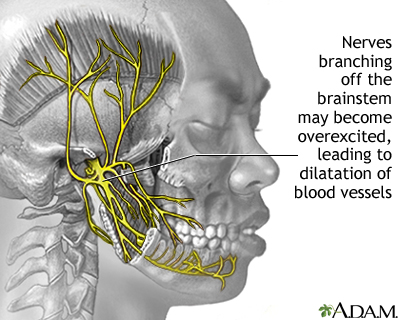
Migraine headaches tend to first appear between the ages of 10 and 45. Sometimes, they begin earlier or later. Migraines may run in families. Migraines occur more often in women than men. Some women, but not all, have fewer migraines when they are pregnant.
Migraine attacks may be triggered by any of the following:
- Caffeine withdrawal
- Changes in hormone levels during a woman’s menstrual cycle or with the use of birth control pills
- Changes in sleep patterns, such as not getting enough sleep
- Drinking alcohol
- Exercise or other physical stress
- Loud noises or bright lights
- Missed meals
- Odors or perfumes
- Smoking or exposure to smoke
- Stress and anxiety
fast facts on migraines:
- Some people who experience migraines can clearly identify triggers or factors that cause the headaches, such as allergies, light, and stress.
- Some people get a warning symptom before the start of the migraine headache.
- Many people with migraine can prevent a full-blown attack by recognizing and acting upon the warning signs.
- Over-the-counter (OTC) medications can eliminate or reduce pain, and specific medications can help some people with migraine.
- People who have severe attacks can take preventive medicines.
REQUEST AN APPOINTMENT OR BOOK A CONSULANT – Sargam.dange.18@gmail.com
Symptoms
Symptoms of migraine can start a while before the headache, immediately before the headache, during the headache, and after the headache. Although not all migraines are the same, typical symptoms include:
- moderate to severe pain, usually confined to one side of the head but capable of occurring on either side of the head
- severe, throbbing, or pulsing pain
- increasing pain during physical activity or when straining
- inability to perform regular activities due to pain
- feeling sick and physically vomiting
- increased sensitivity to light and sound, relieved by lying quietly in a darkened room
Some people experience other symptoms such as sweating, temperature changes, stomach ache, and diarrhea.
Risk factors
Several factors make you more prone to having migraines, including:
- Family history. If you have a family member with migraines, then you have a good chance of developing them too.
- Age. Migraines can begin at any age, though the first often occurs during adolescence. Migraines tend to peak during your 30s, and gradually become less severe and less frequent in the following decades.
- Sex. Women are three times more likely to have migraines.
- Hormonal changes. For women who have migraines, headaches might begin just before or shortly after onset of menstruation. They might also change during pregnancy or menopause.
BasicsWhat Is Migraine?Migraine StatisticsMigraine Types
- Abdominal Migraine
- Acephalgic Migraine
- Basilar-Type Migraine
- Cyclic Migraine Syndrome
- Familial Hemiplegic Migraine
- Gastric Stasis Migraine
- Hemiplegic Migraine
- Infantile Colic
- Hormonal Migraine
- Migraine Aura Without Pain
- Migraine with Aura
- Migraine with Brainstem Aura
- Migraine with Typical Aura
- Migraine Without Aura
- Ocular Migraine
- Retinal Migraine
- Seasonal Migraine
- Silent Migraine
- Sinus Migraine
- Stress Migraine
- Tension Migraine
- Vestibular Migraine
Migraine DiagnosisCauses & Triggers
- Migraine Phases
- Chronic Migraine
- Exertion Headache
- Hangover Headache
- Hypertension Headache
- Other Headache Types
REQUEST AN APPOINTMENT OR BOOK A CONSULANT – Sargam.dange.18@gmail.com
Types
Migraine is a word used to describe a wide range of related disorders. They are the most common cause of daily head pain, afflicting more than 87 percent of people who complain of daily head pain. The World Health Organization ranks migraine as the 19th most common cause of disability worldwide.
There are several different types of migraine, which are diagnosed based on the symptoms experienced. Some are triggered by changing seasons or hormonal changes in women. Others only cause symptoms in the stomach.
In the 2018 In America survey, 4,356 respondents shared their migraine diagnosis. Chronic migraine was the most prevalent diagnosis with over 7 in 10 reporting being diagnosed with chronic migraine by a healthcare professional.
The International Headache Society has developed one of the most well-known classification systems for migraine and headache, called the International Classification of Headache Disorders (ICHD). The ICHD-III defines migraine as one of the main types of primary headaches, along with other headaches types such as tension headaches and trigeminal autonomic cephalagias.
Specific migraine types recognized by the ICHD-III include:
- Migraine without aura
- Migraine with aura
- Migraine with typical aura
- Migraine with brainstem aura
- Hemiplegic migraine
- Retinal migraine
- Chronic migraine
- Complications of migraine
- Status migrainosus
- Persistent aura without infarction
- Migrainosus infarction
- Migraine aura-triggered seizure
- Probable migraine
- Probable migraine without aura
- Probable migraine with aura
- Episodic syndromes that may be associated with migraine
- Although the ICHD-III does not recognize the following terms as individual migraine types, some physicians may still use them in practice:
- Stress Migraine
- Silent, or Acephalgic, Migraine
- Sinus Migraine
- Ocular Migraine
- Seasonal Migraine
- Cyclic Migraine Syndrome
- Gastric Stasis Migraine
- Tension MigraineDifferent types of migraine are diagnosed based on symptoms, therefore all people with migraine are encouraged to make note of each attack experienced. A good place to keep track of migraine and migraine symptoms is in your migraine journal. This is where you write down what you were doing before the symptoms surfaced, how long the symptoms last and how intense the symptoms were. A headache doctor or specialist will use your journal to determine what type of migraine you have, what your triggers are and how to best go treat them.
Poll What type of migraine do you have? Migraine with aura Migraine without aura Abdominal Migraine Basilar-Type Migraine Hemiplegic Migraine Retinal migrain.
REQUEST AN APPOINTMENT OR BOOK A CONSULANT – Sargam.dange.18@gmail.com
Treatment
Migraine treatment is aimed at stopping symptoms and preventing future attacks.
Many medications have been designed to treat migraines. Medications used to combat migraines fall into two broad categories:
- Pain-relieving medications. Also known as acute or abortive treatment, these types of drugs are taken during migraine attacks and are designed to stop symptoms.
- Preventive medications. These types of drugs are taken regularly, often daily, to reduce the severity or frequency of migraines.
Your treatment choices depend on the frequency and severity of your headaches, whether you have nausea and vomiting with your headaches, how disabling your headaches are, and other medical conditions you have.
Medications for relief
Medications used to relieve migraine pain work best when taken at the first sign of an oncoming migraine — as soon as signs and symptoms of a migraine begin. Medications that can be used to treat it include:
- Pain relievers. These over-the-counter or prescription pain relievers include aspirin or ibuprofen (Advil, Motrin IB, others). When taken too long, these might cause medication-overuse headaches, and possibly ulcers and bleeding in the gastrointestinal tract. Migraine relief medications that combine caffeine, aspirin and acetaminophen (Excedrin Migraine) may be helpful, but usually only against mild migraine pain.
- Triptans. These are prescription drugs such as sumatriptan (Imitrex, Tosymra) and rizatriptan (Maxalt) are prescription drugs used for migraine because they block pain pathways in the brain. Taken as pills, shots or nasal sprays, they can relieve many symptoms of migraine. They might not be safe for those at risk of a stroke or heart attack.
- Dihydroergotamines (D.H.E. 45, Migranal). Available as a nasal spray or injection, these are most effective when taken shortly after the start of migraine symptoms for migraines that tend to last longer than 24 hours. Side effects can include worsening of migraine-related vomiting and nausea. People with coronary artery disease, high blood pressure, or kidney or liver disease should avoid dihydrogergotamines.
- Lasmiditan (Reyvow). This new oral tablet is approved for the treatment of migraine with or without aura. In drug trials, lasmiditan significantly improved pain as well as nausea and sensitivity to light and sound. Lasmiditan can have a sedative effect and cause dizziness, so people taking it are advised not to drive or operate machinery for at least eight hours. Lasmiditan also shouldn’t be taken with alcohol or other drugs that depress the central nervous system.
- Ubrogepant (Ubrelvy). This oral calcitonin gene-related peptide receptor antagonist is approved for the treatment of acute migraine with or without aura in adults. It’s the first drug of this type approved for migraine treatment. In drug trials, ubrogepant was more effective than placebo in relieving pain and other migraine symptoms such as nausea and sensitivity to light and sound two hours after taking it. Common side effects include dry mouth, nausea and excessive sleepiness. Ubrogepant should not be taken with strong CYP3A4 inhibitor drugs.
- Opioid medications. People who have migraines who can’t take other migraine medications, narcotic opioid medications, especially those that contain codeine, might help. Because they can be highly addictive, these are usually used only if no other treatments are effective.
- Anti-nausea drugs. These can help if your migraine with aura is accompanied by nausea and vomiting. Anti-nausea drugs include chlorpromazine, metoclopramide (Reglan) or prochlorperazine (Compro). These are usually taken with pain medications.
REQUEST AN APPOINTMENT OR BOOK A CONSULANT – Sargam.dange.18@gmail.com
Preventive medications
Medications can help prevent frequent migraines. Your doctor might recommend preventive medications if you have frequent, long-lasting or severe headaches that don’t respond well to treatment.
Preventive medication is aimed at reducing how often you get a migraine how severe the attacks are and how long they last. Options include:
- Blood pressure-lowering medications. These include beta blockers such as propranolol (Inderal, Innopran XL, others) and metoprolol tartrate (Lopressor). Calcium channel blockers such as verapamil (Tarka, Verelan) can be helpful in preventing migraines with aura.
- Antidepressants. A tricyclic antidepressant (amitriptyline) can prevent migraines. Because of the side effects of amitriptyline, such as sleepiness and weight gain, other antidepressants might be prescribed instead.
- Anti-seizure drugs. Valproate and topiramate (Topamax) might help you have less frequent migraines, but can cause side effects such as dizziness, weight changes, nausea and more.
- Botox injections. Injections of onabotulinumtoxinA (Botox) about every 12 weeks help prevent migraines in some adults.
- Calcitonin gene-related peptide (CGRP) monoclonal antibodies. Erenumab-aooe (Aimovig), fremanezumab-vfrm (Ajovy) and galcanezumab-gnlm (Emgality) are newer drugs approved by the Food and Drug Administration to treat migraines. They’re given monthly by injection.
Lifestyle and home remedies
When symptoms of migraine start, try heading to a quiet, darkened room. Close your eyes and rest or take a nap. Place a cool cloth or ice pack wrapped in a towel or cloth on your forehead or at the back of your neck.
Other practices that might soothe migraine with aura pain include:
- Try relaxation techniques. Biofeedback and other forms of relaxation training teach you ways to deal with stressful situations, which might help reduce the number of migraines you have.
- Develop a sleeping and eating routine. Don’t sleep too much or too little. Set and follow a consistent sleep and wake schedule daily. Try to eat meals at the same time every day.
- Drink plenty of fluids. Staying hydrated, particularly with water, might help.
- Keep a headache diary. Continue recording in your headache diary even after you see your doctor. It will help you learn more about what triggers your migraines and what treatment is most effective.
- Exercise regularly. Regular aerobic exercise reduces tension and can help prevent a migraine. If your doctor agrees, choose aerobic activity you enjoy, such as walking, swimming and cycling. Warm up slowly, however, because sudden, intense exercise can cause headaches. Regular exercise can also help you lose weight or maintain a healthy body weight, and obesity is thought to be a factor in migraines.
REQUEST AN APPOINTMENT OR BOOK A CONSULANT – Sargam.dange.18@gmail.com
Alternative medicine
Nontraditional therapies might help with chronic migraine pain.
- Acupuncture. Clinical trials have found that acupuncture may be helpful for headache pain. In this treatment, a practitioner inserts many thin, disposable needles into several areas of your skin at defined points.
- Biofeedback. Biofeedback appears to be effective in relieving migraine pain. This relaxation technique uses special equipment to teach you how to monitor and control certain physical responses related to stress, such as muscle tension.
- Cognitive behavioral therapy. Cognitive behavioral therapy may benefit some people with migraines. This type of psychotherapy teaches you how behaviors and thoughts affect how you perceive pain.
- Herbs, vitamins and minerals. There is some evidence that the herbs feverfew and butterbur might prevent migraines or reduce their severity, though study results are mixed. Butterbur isn’t recommended because of safety concerns.
A high dose of riboflavin (vitamin B-2) may also prevent migraines or reduce the frequency of headaches. Coenzyme Q10 supplements might decrease the frequency of migraines, but larger studies are needed.
Due to low magnesium levels in some people with migraines, magnesium supplements have been used to treat migraines, but with mixed results.
Ask your doctor if these treatments are right for you. Don’t use feverfew, riboflavin or butterbur if you’re pregnant or without first talking with your doctor.

REQUEST AN APPOINTMENT OR BOOK A CONSULANT – Sargam.dange.18@gmail.com