Food sanitation in hygiene.

REQUEST AN APPOINTMENT OR BOOK A CONSULANT – Sargam.dange.18@gmail.com

Food hygiene constitutes a basic necessity of Good Manufacturing/Agricultural Practices and the development of Hazard Analysis Critical Control Point (HACCP), as well being as a component of all GFSI-benchmarked food safety standards. Government, industry and consumers all play a role in safe sanitation and food hygiene practices.

Studies have shown that an appreciable percentage of foodborne illness cases can be attributed to poor sanitation and food hygiene, including poor personal hygiene and contamination of equipment and/or environments. Examples of food recalls related to sanitation issues include the contamination and subsequent recall of deli meats in Canada in 2008, when cells of Listeria monocytogenes were transferred to the product after surviving in equipment niches, where they were protected from sanitation procedures. The company was very public about the changes made to the sanitation program since then, including regular testing to monitor the success of the strategy in reducing environmental contamination.

Maintaining safety and quality is essential in the entire chain of food products ranging from primary food production at the level of farmers, primary food processing at the farm, dairy, abattoir, and grain mills, etc. Secondary food processing level such as canning, freezing, drying, and brewing, food distributors at the national and international level of import/export, food
retailing and catering and also domestic food preparation.

Safe food is food which is free of contaminants and will not cause illness or harm. Our food is devitalized, colored, filled with chemicals, drugs and synthetic ingredients, polluted by agricultural and environmental chemicals and are grown on impoverished land puffed up by chemical fertilizers. Moreover, the chemicals used are known to cause adverse effects in
humans and animals. Therefore all individuals involved in food handling should be trained in handling food safety. It is necessary to create and maintain hygienic and sanitary conditions to safeguard the food.

This involves:

Protecting food from risk of contamination, i.e. preventing objectionable matter getting into food, including harmful bacteria, poisons, and foreign bodies.
• Preventing any bacteria present multiplying to a level which would result in the illness of consumers or the early spoilage of food.
• Destroying any harmful bacteria in the food by thorough cooking, processing or irradiation; and
• Discarding unfit or contaminated food.

Sanitary practices and hygienic conditions are becoming more and more important because food is being processed, prepared and sold in larger volumes than before. Some microorganism causes food spoilage and foodborne diseases, but others are beneficial n food processing and preparation. Sanitation can reduce the growth of microorganisms on equipment and dirt on
the food. This can reduce contamination of food by microorganisms that cause foodborne diseases and food spoilage. Sanitary principles also apply to waste disposal and can help reduce pollution and improve ecological balance.

Personal Hygiene

In catering, hygiene and sanitation play a vital role in promoting and protecting the health and wellbeing of hundreds of people. The foods, materials, and equipment are subject to constant handling by people at every stage of food production and service. Thus it is the duty of every caterer to ensure that personal hygiene becomes a habit of all food handlers. All food handlers reporting for duty must be fresh, well-groomed and clean.

Few points for personal hygiene that food handlers must follow:

1. Bathing: Workers must bathe daily (even twice) as body odor is offensive and skin is the main breeding ground for bacteria. Head bath again twice a week.
2. Hair: Wearing clean headgear to be encouraged to prevent hair from falling in food, prevent from touching their scalp and also prevent long hair from getting entangled in machinery.
3. Teeth and Mouth: Teeth to be brushed thoroughly twice a day with a moderately hard brush – first thing in the morning and after dinner.
4. Hands: Hands are in direct contact with food, so can transfer bacteria and cause illness. To prevent this, hands should be washed:
• Before beginning work and after a break.
• After eating or smoking.
• After using the toilet.
• After touching infected or unsanitary areas of the body or combing hair or using mobile phones.
• After using a handkerchief, sneezing or coughing into the hands.
• After handling raw foods, especially meat, fish and poultry.
• After handling waste food or refuse.
• Whenever they are dirty.

Hands should be washed thoroughly with plenty of soap and water – preferably rinsed in running water or water stored in clean covered containers with a tap fixed on them. If soap cakes are used, they should be kept dry. Liquid soap is more hygienic and economical to use. Hands must be thoroughly dried by using a roller towel, disposable paper, towels or a hot air dryer. Exposed wounds, cuts, burns can harbor bacteria. They need to be covered with a waterproof dressing. Pus formation, inflammation indicates infection. Such people should not be allowed to handle food for some time.

5. Finger Nails: Nails should be trimmed as they harbor germs and can also chip and fall in

the food and kept clean. Nail polish used should not be allowed.
6. Feet and Footwear: Feet should be washed and kept clean. Always wear socks with shoes to keep away dirt and perspiration. Shoes should form a part of the uniform, sturdy, well-fitting, and well-polished, with a low heel.

7. Jewelry: Food handlers should not wear any jewelry as they tend to harbor bacteria and small parts may sometimes drop food into food.
8. Reporting Illness: If the food handler feels unwell he/she should report it to his or her supervisor. Such food handlers should be excluded from work until medical clearance is taken.

Habits to be avoided

• Washing hands in sinks used for food preparation. In case there is no separate

•All catering staff should need to be periodically put through a medical check-up to ensure that
they are not suffering from worms, T.B, skin or other infections. People with colds, sore throat,
boils, and diarrhea should not handle food.

Food Safety in Kitchens

Food Hygiene

Food hygiene may be defined as the sanitary science which aims to produce food which is safe
for the consumer and is of good keeping quality.

1. Procurement of raw material: Freshness, quality, quality of packaged food products
(e.g. Appearance, temperature, packaging and pack seals are intact).
2. Storage of Raw Materials: Storage areas (temperatures, products should be completely covered, FIFO ( first in first out) & FEFO (first expired first Out), 6” above the ground, veg & non-veg to be kept separate, all products with the label of expiry date, delivery date,cold storage at 5°C or below for chillers and -18°C for freezers.
3. Preparation of raw material :
a. General – Use of only potable water from safe source, clean work area, equipment,
product cover after preparation / cooking.
b. Sieving/sorting or cleaning – use potable water, uncooked, ready to eat – fruits and vegetables are disinfected with 50ppm chlorinated water before cutting, peeling or serving. Do not reuse this chlorinated water for other purposes.
4. Cooking/Processing: Temp. of cooked food should reach 70°C, cooking in hygienic area, was basin in the kitchen (e.g. In a dhaba or kiosk), then put a small tap outside and segregate it.
Tasting food with fingers or with the same spoon: is the most unhygienic thing to do. Leaving cooked food uncovered for a long time. Blowing air from the mouth over the hot food. separate equipments and utensils for vegetarian and non-vegetarian product, potable water, frying oil/fat should be changed immediately when there is colour change, foiling, syrupiness scum formation, ice should be prepared from potable water.

5. Storage of cooked food: Cooked food should be stored covered and at appropriate temperature, cold foods at 5°C or below hot foods at 60°C or above. Veg & non- veg products should be stored separately and properly labeled with day and date of
preparation, salads, garnishes or ready to eat foods are immediately stored in clean covered containers and refrigerated.
6. Preparation of cooked food before serving: Cold foods are served cold, hot foods hot (up to 70°C), and cooked food is not left at room temp. For more than 2 hours, surplus food is discarded and not mixed up with freshly prepared food; transported cooked food is consumed/used within 4 hours of its arrival.
7. Serving of Cooked Food: Use clean & intact utensils/ one time use disposables, clean and non-toxic material is used for packing food. Printed paper is not used for wrapping. All tables and food serving counters are to be kept clean, use spatula/spoon/hand gloves etc. for serving and not with bare hands.
8. Storage of surplus food: surplus food is consumed before expiry/use by date, surplus foods are stored in the refrigerator, surplus food is discarded, perishable products are consumed immediately. Canned products once opened should be transferred in the suitable covered containers and kept refrigerated.
9. Quality of water & ice: Municipal water supply should be used as it is safely treated in the water plant, ice should be handled hygienically with clean scoops.
10. Utensils & Equipment: Equipment cleaning and hygiene of establishment, surrounding/ environment, good lighting facility, pest control, insect electrocuting device (IED) on the entrance of Kitchens, Air screens, maintenance & cleaning. Last but not the least  personal hygiene.

REQUEST AN APPOINTMENT OR BOOK A CONSULANT – Sargam.dange.18@gmail.com

Workplace Sanitation

Maintaining a clean work environment is critical in preventing foodborne illness. Bacteria can grow on unsanitary surfaces and then contaminate food. Just because a work surface looks clean does not mean that it is sanitary. Always ensure that you clean and sanitize a work area before starting to prepare food.

Cleaning Procedures and Schedules

Cleaning with soap and other detergents is just one step of the cleaning procedure. It is also necessary to sanitize. Cleaning will remove any dirt or grease, but will not necessarily kill any bacteria or other pathogens. Only a sanitizer will kill bacteria and ensure the area is safe for food preparation. Leading sanitizers used in the food service industry are chlorine solutions (bleach), quaternary solutions (quats), and iodine. Use these materials according to the manufacturer’s instructions that accompany the product and that are found on the material safety data sheet (MSDS) using the appropriate personal protective equipment.

A sanitation plan is important in any food service preparation area. It ensures that all surfaces are cleaned on a regular basis and reduces the risks of transferring bacteria or other pathogens from an unclean surface to clean equipment such as cutting boards or tools. A sanitation plan has two components:

  1. A list of cleaning and sanitizing agents or supplies with instructions on their safe use and storage
  2. A cleaning schedule, outlining how each item needs to be cleaned, who is responsible, and how frequently it happens

Figure 5 shows a sample daily and weekly cleaning schedule for a restaurant.

Figure 5. Sample Cleaning Schedule

ItemFrequencyMethodResponsibilitySupervisor initial
Upright mixerPrior to use if mixer not used in previous 2 hours Immediately after use when finished taskLock out machine (unplug) and remove attachments and bowl. Send through dishwasher. Wash down all surfaces with a clean cloth immersed in clean warm water and detergent. Wipe down all surfaces with a second clean cloth immersed in sanitizing solution (100 ppm chlorine or 28 mL bleach per 4.5 L water). Allow to air dry prior to reassembly and next use.Pastry cooks________
Meat slicerPrior to use if slicer not used in previous 2 hours Immediately after use when finished taskLock out machine (unplug) and set slicer to zero. Remove blade guard. Send through dishwasher. Carefully wash down all surfaces with a clean cloth immersed in clean warm water and detergent. Carefully wipe down all surfaces with a second clean cloth immersed in sanitizing solution (100 ppm chlorine or 28 mL bleach per 4.5 L water). Allow air dry prior to reassembly and next use.Garde manger________
ItemFrequencyMethodResponsibilitySupervisor initial
Dry storage Monday after dinner serviceRemove food from shelves one shelf at a time. Store rolling rack in dry storage while cleaning shelf in place. Wash down all surfaces with a clean cloth immersed in clean warm water and detergent. Wipe down all surfaces with a second clean cloth immersed in sanitizing solution (100 ppm chlorine or 28 mL bleach per 4.5 L water). Allow to air dry prior to replacing food on shelves.Grill cook________
Reach-in freezerTuesday after dinner derviceRemove food from shelves one shelf at a time. Store rolling rack in cooler while cleaning shelf in place. Wash down all surfaces with a clean cloth immersed in clean warm water and detergent. Wipe down all surfaces with a second clean cloth immersed in sanitizing solution (100 ppm chlorine or 28 mL bleach per 4.5 L water). Allow to air dry prior to replacing food on shelves.Garde manger________

Dishwashing Procedures

Effective dishwashing ensures that all equipment is sanitary and ready for use when required. Using soiled or dirty china is not only dangerous, but it will tell customers that the operator as little or no regard for customer safety. Table 2.5 shows the proper procedures for both manual and automatic dishwashing.

Before washing, scrape dishes and pre-soak any items with hard to remove residue. Then follow the procedure in Table 5, depending on whether you are using a high- or low-temperature dishwasher or you are washing dishes manually.

StepManualHigh-temperature dishwasherLow-temperature dishwasher or glass washer
WashUse a commercial detergent and 45°C (113°F) water.Wash cycle must reach at least 60°C (140°F).Wash cycle must reach at least 60°C (140°F).
RinseRinse in clean hot water.Hot rinse cycle.Warm or cold rinse cycle with sanitizer.
SanitizeSanitize for 2 minutes with an approved sanitizing solution (50 ppm chlorine or 12.5 ppm iodine).Rinse cycle must reach at least 82°C (180°F) for at least 10 seconds.Final rinse must have concentration of 50 ppm chlorine or 12.5 ppm iodine.
DryDrain boards should be sanitized and sloped for drainage. Never towel dry.Drain boards should be sanitized and sloped for drainage Never towel dry.Drain boards should be sanitized and sloped for drainage Never towel dry.

REQUEST AN APPOINTMENT OR BOOK A CONSULANT – Sargam.dange.18@gmail.com

Routine Equipment Maintenance

Most kitchen equipment is intended to be disassembled for cleaning. Refer to the manufacturer’s instructions and training provided by your employer or instructor on how to do this safely. Some equipment is intended to be cleaned in place. This should be identified in your sanitation plan and cleaning schedule.

All equipment must be routinely cleaned and inspected. Older equipment may have nooks and crannies where dirt and bacteria can hide, which can be difficult to clean effectively. Proper cleaning procedures must be established and followed at all times with regular review to ensure that procedures are working. If equipment is replaced or cleaning materials change, the process may have to be adjusted. If you notice any safety concerns with the equipment while cleaning it, such as a frayed cord, missing guard or loose parts, let your supervisor know immediately.

Importance of Personal Hygiene

It is imperative for safe food-handling outcomes for all workers to be familiar with standard sanitation and hygiene practices. Figure 6 shows the cycles of transmission of micro-organisms. One of the basic principles is to break the cycle by avoiding cross-contamination, which can be achieved by ensuring personal hygiene practices are followed.
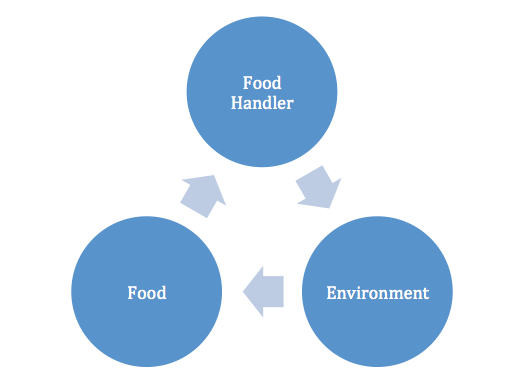
The cycle of bacterial transmission goes from food handler to environment to food and back to the Food Handler
Figure 6. The cycle of bacterial transmission. Image created by go2hr and used under a CC BY 4.0 Licence.

Proper personal hygiene is critical in any food service premise. Personal hygiene includes:

  • Showering and bathing regularly
  • Keeping hair clean hair and covered or tied back
  • Keeping clean clothing and footwear that is used only at work
  • Handwashing regularly
  • Using clean utensils for tasting food
  • Using separate cloths for cleaning and wiping plates

Handwashing

Proper and regular handwashing is a critical part of any food safety system. You must always wash your hands after:

  • Sneezing, coughing, or touching your mouth or nose
  • Using the bathroom
  • Smoking or using toothpicks
  • Handling raw foods
  • Cleaning and wiping tables, food preparation surfaces, or equipment
  • Handling soiled objects, garbage, or money

The steps for proper handwashing are as follows:

  1. Wet hands with warm water.
  2. Apply liquid soap and lather for at least 20 to 30 seconds.
  3. Scrub backs of hands, wrists, all fingers, and under nails.
  4. Rinse under running water, pointing down toward the drain.
  5. Dry with a paper towel.
  6. Turn off taps and open bathroom door using the paper towel

Safety in Storage of Food

Foods should be stored in the right way so that they do not become hazardous to health and their quality does not deteriorate.

There are two kinds of storages:

1. Dry Storage Rooms: (For Dry Ingredients)

Meant for non-perishable foods like cereals, pulses, legumes, sugars, spices, fats and oils, packaged and canned foods; and for semi – perishables like under ripe fruits and vegetables, potatoes and onions, bread and eggs. Temperature conditions – 20-25°C (room temperature). If the outside temperatures are too high, then the store temperatures have to be brought down by air cooling the store. The storage should be dry cool well ventilated and free from infestation to maintain quality of food. Good ventilation will counteract the effort of humidity and high temperature.
• While most non-perishables can be stored together in a storeroom, some semi – perishables require separate ventilated storage facilities, slightly cooler than the rest of the store.
• Foods which need to be held only for 2-3 days require a temperature of 10- 15.5°C. Like breads, bakery products.
• If space allows, fats and oils should be stored away from the rest of the food.
• As far as possible, the non-perishables should be stored in air tight covered bins, cartons, polythene packs and cans.
• Transparent glass jars may be used for pulses and spices.
• Eggs may be kept in cardboard trays and cartons and consumed in 2-3 days.
• Cleaning supplies which include detergents, brushes, mops, and antiseptic solutions should be stored in separate section.
• Trash is always stored away from the store.

In a small food joint, like coffee shops or kiosks, the dry store may have to provide space for storing all types of commodities. In such a case, care should be taken to ensure that food, equipment and detergents are placed in separate cabinets or
shelves (detergent may be added instead of salt)

2. Low Temperature Storage:

The principle is to maintain temperatures at levels which will inhibit the growth of micro-organisms, and thus preserving food. Perishable foods have a high content of moisture, providing suitable humidity for microbes to thrive and for spoilage to occur.
They are two types:

a. Refrigerated Storage Temperatures between 0 – 10 deg. Celsius.

This is necessary for perishables like milk and milk products, leftovers of cooked food,
fermented batters, dough’s, green vegetables and fruits.

All foods must be kept covered.

b. Freezer Storage
Freezer storage may be in the form of a free standing cabinet or a separate cabinet in the refrigerator where the temperature is maintained from -20 to 0 deg. Celsius.

All meat/fish/poultry, frozen veggies, ice-creams etc. require frozen conditions.

For successful freezing, it is necessary to blanch foods, cool quickly to freezing temperatures and pack in air tight containers and packets.

A food removed from the freezer, thawed for use, must never be put back in the freezer as this increases the microbes manifold and make the food unsafe.

Sanitation and Safety of Stores

•Dry food stores should be fly proofed. Wire meshing of doors and windows to be done. Use of insect electrocuting device at the entry.
• Walls to be treated with insecticide sprays which leave insecticidal films on walls – remain effective for 2 – 3 months.
• While whitewashing D.D.T or Lindane may be mixed with the white was to make the surface insect repellent.
• All stores to be guarded against pests like rodents, cockroaches, flies to safeguard both staff and consumers against infested and contaminated food. The store supervisor should:
a. Maintain cleanliness.
b. Use poisoned baits or traps for rats (Zinc Phosphide, Warfarin, are effective rat poisons)
c. All openings to be sealed – open drains, gaps in doors, around water pipes.
d. Cockroaches hide in dark nooks and corners. All cracks and crevices to be sealed.
e. Personal Hygiene should be maintained by the staff.

REQUEST AN APPOINTMENT OR BOOK A CONSULANT – Sargam.dange.18@gmail.com

intelligence

REQUEST AN APPOINTMENT OR BOOK A CONSULANT – Sargam.dange.18@gmail.com

Intelligence has been a controversial topic throughout psychology’s history. Despite the substantial interest in the subject, there is still considerable disagreement about what components makeup intelligence. In addition to questions of exactly how to define intelligence, the debate continues today about whether accurate measurements are even possible.

At various points throughout recent history, researchers have proposed some different definitions of intelligence. While these definitions can vary considerably from one theorist to the next, current conceptualizations tend to suggest that intelligence is the ability to:

  • Learn from experience:The acquisition, retention, and use of knowledge is an important component of intelligence.
  • Recognize problems: To put knowledge to use, people must be able to identify possible problems in the environment that need to be addressed.
  • Solve problems:People must then be able to take what they have learned to come up with a useful solution to a problem they have noticed in the world around them.1

Intelligence involves some different mental abilities including logic, reasoning, problem-solving, and planning. While the subject of intelligence is one of the largest and most heavily researched, it is also one of the topics that generate the greatest controversy.

While psychologists often disagree about the definition and causes of intelligence, research on intelligence plays a significant role in many areas. These areas include decisions regarding how much funding should be given to educational programs, the use of testing to screen job applicants, and the use of testing to identify children who need additional academic help.

Brief History of Intelligence

The term “intelligence quotient,” or IQ, was first coined in the early 20th century by a German psychologist named William Stern. Psychologist Alfred Binet developed the very first intelligence tests to help the French government identify schoolchildren who needed extra academic assistance. Binet was the first to introduce the concept of mental age or a set of abilities that children of a certain age possess.2

Since that time, intelligence testing has emerged as a widely used tool that has led to developing many other tests of skill and aptitude. However, it continues to spur debate and controversy over the use of such testing, cultural biases that may be involved, influences on intelligence, and even the very way we define intelligence.

Theories of Intelligence

Different researchers have proposed a variety of theories to explain the nature of intelligence. Here are some of the major theories of intelligence that have emerged during the last 100 years.

General Intelligence

British psychologist Charles Spearman (1863–1945) described a concept he referred to as general intelligence or the g factor. After using a technique known as factor analysis to examine some mental aptitude tests, Spearman concluded that scores on these tests were remarkably similar.

People who performed well on one cognitive test tended to perform well on other tests, while those who scored badly on one test tended to score badly on others. He concluded that intelligence is a general cognitive ability that can be measured and numerically expressed.3

Primary Mental Abilities

Psychologist Louis L.Thurstone (1887–1955) offered a differing theory of intelligence. Instead of viewing intelligence as a single, general ability, Thurstone’s theory focused on seven different primary mental abilities.4

  • Associative memory: The ability to memorize and recall
  • Numerical ability: The ability to solve arithmetic problems
  • Perceptual speed: The ability to see differences and similarities among objects
  • Reasoning: The ability to find rules
  • Spatial visualization: The ability to visualize relationships
  • Verbal comprehension: The ability to define and understand words
  • Word fluency: The ability to produce words rapidly

Theory of Multiple Intelligences

One of the more recent ideas to emerge is Howard Gardner’s theory of multiple intelligences. Gardner proposed that the traditional idea of intelligence, based on IQ testing, did not fully and accurately depict a person’s abilities. His theory proposed eight different intelligences based on skills and abilities that are valued in different cultures:5

  • Bodily-kinesthetic intelligence: The ability to control your body movements and to handle objects skillfully
  • Interpersonal intelligence: The capacity to detect and respond appropriately to the moods, motivations, and desires of others
  • Intrapersonal intelligence: The capacity to be self-aware and in tune with inner feelings, values, beliefs, and thinking processes
  • Logical-mathematical intelligence: The ability to think conceptually and abstractly, and the capacity to discern logically or numerical patterns
  • Musical intelligence: The ability to produce and appreciate rhythm, pitch, and timbre
  • Naturalistic intelligence: The ability to recognize and categorize animals, plants, and other objects in nature
  • Verbal-linguistic intelligence: Well-developed verbal skills and sensitivity to the sounds, meanings, and rhythms of words
  • Visual-spatial intelligence: The capacity to think in images and pictures, to visualize accurately and abstractly.

Triarchic Theory of Intelligence

Psychologist Robert Sternberg defined intelligence as “mental activity directed toward purposive adaptation to, selection, and shaping of real-world environments relevant to one’s life.”

While he agreed with Gardner that intelligence is much broader than a single, general ability, he suggested that some of Gardner’s types of intelligence are better viewed as individual talents. Sternberg proposed what he referred to as “successful intelligence,” which involves three different factors:6

  • Analytical intelligence:Your ability to evaluate information and solve problems
  • Creative intelligence: Your ability to come up with new ideas
  • Practical intelligence: Your ability to adapt to a changing environment

Questions About Intelligence Testing

In order to gain a deeper understanding of intelligence and the tests developed to measure this concept, it’s important to understand the history of intelligence testing, the research that has been conducted, and the findings that have emerged.

Major questions about intelligence and IQ testing still include:

  • Are intelligence tests biased?
  • Is intelligence a single ability, or does it involve an assortment of multiple skills and abilities?
  • Is intelligence inherited, or does the environment play a larger role?
  • What do intelligence scores predict, if anything?

To explore these questions, psychologists have conducted a considerable amount of research on the nature, influences, and effects of intelligence.

REQUEST AN APPOINTMENT OR BOOK A CONSULANT – Sargam.dange.18@gmail.com

Types of Intelligence

After examining the popular competing theories of intelligence, it becomes clear that there are many different forms of this seemingly simple concept.

On one hand, Spearman claims that intelligence is generalizable across many different areas of life, and on the other hand, psychologists such as Thurstone, Gardener, and Sternberg hold that intelligence is like a tree with many different branches, each representing a specific form of intelligence.

To make matters even more interesting, let’s throw a few more types of intelligence into the mix!

Emotional Intelligence

Emotional Intelligence is the “ability to monitor one’s own and other people’s emotions, to discriminate between different emotions and label them appropriately, and to use emotional information to guide thinking and behaviour” (Salovey and Mayer, 1990).

Emotional intelligence is important in our everyday lives, seeing as we experience one emotion or another nearly every second of our lives. You may not associate emotions and intelligence with one another, but in reality, they are very related.

Emotional intelligence refers to the ability to recognize the meanings of emotions and to reason and problem-solve on the basis of them (Mayer, Caruso, & Salovey, 1999). The four key components of emotional Intelligence are (i) self-awareness, (ii) self-management, (iii) social awareness, and (iv) relationship management.

Emotional and Social Intelligence Leadership Competencies

In other words, if you are high in emotional intelligence, you can accurately perceive emotions in yourself and others (such as reading facial expressions), use emotions to help facilitate thinking, understand the meaning behind your emotions (why are you feeling this way?), and know how to manage your emotions (Salovey & Mayer, 1990).

Fluid vs. Crystallized Intelligence

Raymond Cattell (1963) first proposed the concepts of fluid and crystallized intelligence and further developed the theory with John Horn.

Fluid intelligence is the ability to problem solve in novel situations without referencing prior knowledge, but rather through the use of logic and abstract thinking. Fluid intelligence can be applied to any novel problem because no specific prior knowledge is required (Cattell, 1963). As you grow older fluid increases and then starts to decrease in the late 20s.

Crystallized intelligence refers to the use of previously-acquired knowledge, such as specific facts learned in school or specific motor skills or muscle memory (Cattell, 1963). As you grow older and accumulate knowledge, crystallized intelligence increases.

graph showing fluid and crystalized intelligence across the lifespan

The Cattell-Horn (1966) theory of fluid and crystallized intelligence suggests that intelligence is composed of a number of different abilities that interact and work together to produce overall individual intelligence

For example, if you are taking a hard math test, you rely on your crystallized intelligence to process the numbers and meaning of the questions, but you may use fluid intelligence to work through the novel problem and arrive at the correct solution. It is also possible that fluid intelligence can become crystallized intelligence.

The novel solutions you create when relying on fluid intelligence can, over time, develop into crystallized intelligence after they are incorporated into long-term memory.

This illustrates some of the ways in which different forms of intelligence overlap and interact with one another, revealing its dynamic nature.


Intelligence Testing

Binet-Simon Scale

During the early 1900s, the French government enlisted the help of psychologist Alfred Binet to understand which children were going to be slower learners and thus require more assistance in the classroom (Binet et al., 1912).

As a result, he and his colleague, Theodore Simon, began to develop a specific set of questions that focused on areas such as memory and problem-solving skills.

Binet-Simon Scale Item

They tested these questions on groups of students aged three to twelve to help standardize the measure (Binet et al., 1912). Binet realized that some children were able to answer advanced questions that their older peers were able to answer.

As a result, he created the concept of a mental age, or how well an individual performs intellectually relative to the average performance at that age (Cherry, 2020).

Ultimately, Binet finalized the scale, known as the Binet-Simon scale, that became the basis for the intelligence tests still used today.

The Binet-Simon scale of 1905 comprised 30 items designed to measure judgment, comprehension, and reasoning which Binet deemed the key characteristics of intelligence.

Stanford-Binet Intelligence Scale

When the Binet-Simon scale made its way over to the United States, Stanford psychologist Lewis Terman adapted the test for American students, and published the Stanford-Binet Intelligence Scale in 1916 (Cherry, 2020).

The Stanford-Binet Scale is a contemporary assessment which measures intelligence according to five features of cognitive ability, including fluid reasoning, knowledge, quantitative reasoning, visual-spatial processing and working memory. Both verbal and nonverbal responses are measured.

IQ normal distribution bell curve

This test used a single number, referred to as the intelligence quotient (IQ) to indicate an individual’s score.

The average score for the test is 100, and any score from 90 to 109 is considered to be in the average intelligence range. Score from 110 to 119 are considered to be High Average. Superior scores range from 120 to 129 and anything over 130 is considered Very Superior.

To calculate IQ, the student’s mental age is divided by his or her actual (or chronological) age, and this result is multiplied by 100. If your mental age is equal to your chronological age, you will have an IQ of 100, or average. If, however, your mental age is, say, 12, but your chronological age is only 10, you will have an above-average IQ of 120.

WISC and WAIS

Just as theories of intelligence build off one another, intelligence tests do too. After Terman created Stanford-Binet test, American psychologist David Wechsler developed a new tool due to his dissatisfaction with the limitations of the Stanford-Binet test (Cherry, 2020).

Just like Thurstone, Gardner, and Sternberg, Wechsler believed that intelligence involved many different mental abilities and felt that the Stanford-Binet scale too closely reflected the idea of one general intelligence.

Because of this, Wechsler created the Wechsler Intelligence Scale for Children (WISC) and the Wechsler Adult Intelligence Scale (WAIS) in 1955, with the most up-to-date version being the WAIS-IV (Cherry, 2020).

The Wechsler Intelligence Scale for Children (WISC), developed by David Wechsler, is an IQ test designed to measure intelligence and cognitive ability in children between the ages of 6 and 16. It is currently in its fourth edition (WISC-V) released in 2014 by Pearson.

WISC Sample Test Question

Above Image: WISC-IV Sample Test Question

The Wechsler Adult Intelligence Scale (WAIS), is an IQ test designed to measure cognitive ability in adults and older adolescents, including verbal comprehension, perceptual reasoning, working memory, and processing speed.

The latest version of the Wechsler Adult Intelligence Scale (WAIS-IV) was standardized on 2,200 healthy people between the ages of 16 and 90 years (Brooks et al., 2011).

The standardization of a test involves giving it to a large number of people at different ages in order to compute the average score on the test at each age level

The overall IQ score combines the test takers’ performance in all four categories (Cherry, 2020). And rather than calculating this number based on mental and chronological age, the WAIS compares the individual’s score to the average score at that level, as calculated by the standardization process.

The Flynn Effect

It is important to regularly standardize an intelligence test because the overall level of intelligence in a population may change over time.

This phenomenon is known as the Flynn effect (named after its discoverer, New Zealand researcher James Flynn) which refers to the observation that scores on intelligence tests worldwide increase from decade to decade (Flynn, 1984).

Aptitude vs. Achievement Tests

Other tests, such as aptitude and achievement tests, are designed to measure intellectual capability. Achievement tests measure what content a student has already learned (such as a unit test in history or a final math exam), whereas an aptitude test measures a student’s potential or ability to learn (Anastasi, 1984).

Although this may sound similar to an IQ test, aptitude tests typically measure abilities in very specific areas.

Extremes of Intelligence

IQ scores are generally normally distributed (Moore et al., 2013). That is, roughly 95% of the population has IQ scores between 70 and 130. But what about the other 5%? 

Individuals who fall outside this range represent the extremes of intelligence. 

IQ normal distribution bell curve

Those who have an IQ above 130 are considered to be gifted (Lally & French, 2018), such as Christopher Langan, an American horse rancher, who has an IQ score around 200 (Gladwell, 2008).

Those individuals who have scores below 70 do so because of an intellectual disability, marked by substantial developmental delays, including motor, cognitive, and speech delays (De Light, 2012). 

Some of the time, these disabilities are the product of genetic mutations. 

Down syndrome, for example, resulting from extra genetic material from or a complete extra copy of the 21st chromosome, is a common genetic cause of an intellectual disability (Breslin, 2014). As such, many individuals with down syndrome have below average IQ scores (Breslin, 2014). 

Savant syndrome is another example of an extreme of intelligence. Despite having significant mental disabilities, these individuals demonstrate certain abilities in some fields that are far above average, such as incredible memorization, rapid mathematical or calendar calculation ability, or advanced musical talent (Treffert, 2009).

The fact that these individuals who may be lacking in certain areas such as social interaction and communication make up for it in other remarkable areas, further illustrates the complexity of intelligence and what this concept means today, as well as how we must consider all individuals when determining how to perceive, measure, and recognize intelligence in our society.


Intelligence Today

Today, intelligence is generally understood as the ability to understand and adapt to the environment by using inherited abilities and learned knowledge. 

;Many new intelligence tests have arisen, such as the University of California Matrix Reasoning Task (Pahor et al., 2019), that can be taken online and in very little time, and new methods of scoring these tests have been developed too (Sansone et al., 2014). 

Admission into university and graduate schools rely on specific aptitude and achievement tests, such as the SAT, ACT, and the LSAT – these tests have become a huge part of our lives.

Humans are incredibly intelligent beings and we rely on our intellectual abilities every day. Although intelligence can be defined and measured in countless ways, our overall intelligence as a species makes us incredibly unique and has allowed us to thrive for generations on end.

REQUEST AN APPOINTMENT OR BOOK A CONSULANT – Sargam.dange.18@gmail.com

personality

REQUEST AN APPOINTMENT OR BOOK A CONSULANT – Sargam.dange.18@gmail.com

Personality refers to individual differences in characteristic patterns of thinking, feeling and behaving. The study of personality focuses on two broad areas: One is understanding individual differences in particular personality characteristics, such as sociability or irritability. The other is understanding how the various parts of a person come together as a whole.

Types: A, B, C, and D

Each person is a unique combination of four personality types. Over the centuries, these basic categories have gone by several names and designations, but for our purposes, they are known as the director, the socializer, the thinker, and the supporter. As shorthand, though, we refer to those personality types as A, B, C, and D, respectively. Learning how to identify people by personality type can bring a higher level of understanding to interpersonal relationships and team building, especially for employers looking for ways to improve employee hiring and retention.

What is a Type A personality?

Type A personality

A Type A personality likes to be in charge and be in control of their environment and their lives. They’re normally not very detail-oriented, choosing to delegate details to others. They’re usually very goal-oriented and practical in their solutions. And arriving at their solutions and goals will entail a no-nonsense, bottom-line approach.

What are other names for the Type A personality?

Personality Tests & ApproachesType A Personality Name
The Hire Success® SystemDirector
HippocratesCholeric (bodily humor: yellow bile)
PlatoGuardian
JungSensor
DISCD; Direct/Controlling
InsightBlue
Myers-BriggsENFJ, ENFP, INFJ, INFP
EnneagramAdventurer/Achiever
PSIController
Biblical characterPaul
Cartoon/comic charactersLucy (from Peanuts) / Rabbit (from Winnie the Pooh)

What are Type A personality strengths?

  • Embraces change
  • Take-charge
  • Fast-paced
  • Entrepreneurial
  • Direct management style
  • Ambitious
  • Works well independently
  • Passionate
  • Demands maximum freedom
  • Dominant
  • Good administrative skills
  • Highly competitive
  • Good delegation skills
  • Multitasking

What are Type A personality weaknesses?

  • Stubborn
  • Workaholic
  • Impatient
  • Abrupt
  • Tough
  • Easily angered
  • Insensitive
  • Ill-tempered (short fuse)
  • Intolerant
  • Domineering

What motivates a Type A personality?

  • Money
  • Opportunity
  • Freedom/independence
  • Favorable risk-reward ratio
  • Challenges
  • Urgency
  • Success
  • Leadership

What are some common words or phrases that motivate or grab the attention of the Type A personality?

  • “Let’s get it done.”
  • Fast
  • Results
  • Immediate/today/now
  • The bottom line
  • “What do you think about ___?”
  • “The best (newest, cutting-edge, etc.)”
  • Take the challenge
  • Great return on investment

What are the turnoffs, dislikes, and fears of the Type A personality?

  • Touchy-feely things
  • Long explanations or descriptions
  • Explaining things in emotional terms or more than once to the same person
  • Looking soft or vulnerable
  • Falling into routines
  • Being taken advantage of
  • Losing

Which jobs attract a Type A personality?

  • President/CEO
  • General contractor
  • Salesperson or sales manager
  • Business owner
  • Politician
  • Entrepreneur
  • Police/military officer
  • Manager
  • Executive

What do Type A personality traits look like at work?

People with Type A personalities can typically be identified by the following traits:

  • Goal-oriented
  • Risk-taking
  • Good under stress

Type A personalities don’t like a lot of restraints or restrictions placed on them. Instead, they prefer to work independently and set their own schedules. Since they often tend to be workaholics, it’s not unusual to see them put in whatever time and effort it takes to accomplish their goals. They may seem impatient at times, especially if they believe someone is spending too much time going over details with them or impeding the successful completion of whatever goal or project they’re focusing on at the moment.

Don’t be surprised to see this personality type in a supervisory position or management. Having an entrepreneurial streak, they may be a business owner or strive to own their own business someday. The Type A personality is not easily discouraged and will normally exude confidence.

If a Type A personality sees their day-to-day job as routine or repetitive, they’ll get bored easily and won’t enjoy the work. They’ll want others to view them as tough in these situations, but internally they may be miserable if the job is too routine. Type A personalities will do whatever is necessary to prevent themselves from falling into patterns or routines and seek freedom and independence instead. They’ll also be very dissatisfied if they believe someone is trying to take advantage of them or hold them back.

A Type A personality may not be very good at recognizing coworker’s feelings and needs. It’s not necessarily because they don’t care; rather, they’re extremely focused on achieving their goals and may not notice. If you’re looking for someone who works well under pressure and seems to excel in high-stress situations, the Type A personality is probably what you’re looking for.

What is a Type B personality?

Type B personality

The Type B personality is a very outgoing, energetic, and fast-paced individual who likes to be around people and enjoys being the center of attention. They’re good relationship builders, and most people like them right away. Their driving need is for approval, so they try to like everyone in hopes everyone will like them too. Compliments, acknowledgement of their achievements, words of admiration, and even applause from groups will be the most important thing you can do for them.

What are other names for the Type B personality?

Personality Tests & ApproachesType B Personality Name
Hire Success® SystemSocializer
HippocratesSanguine (bodily humor: blood)
PlatoArtisan
JungIntuitor
DISCI; direct/supporting
InsightGreen
Myers-BriggsENTJ, ENTP, INTJ, INTP
EnneagramHelper/romantic
PSIPromoter
Biblical characterPeter
Cartoon/comic charactersSnoopy (from Peanuts) / Tigger (from Winnie the Pooh)

What are Type B personality strengths?

  • Enthusiasm
  • Fun-loving
  • Persuasiveness
  • Easily liked by most people
  • Friendliness
  • Charismatic
  • Idea person
  • motivator
  • Dreamer
  • Lighthearted
  • People-oriented
  • Spontaneous
  • Faster-paced
  • Self-confident

REQUEST AN APPOINTMENT OR BOOK A CONSULANT – Sargam.dange.18@gmail.com

What are Type B personality weaknesses?

  • Too self-involved
  • May try to do too much at once
  • Impatient
  • Sometimes unrealistic
  • Trouble being alone
  • Doesn’t finish what was started
  • Short attention span
  • Arrogant or cocky
  • Easily bored
  • Self-indulgent
  • Prone to sweeping generalizations
  • Impulsive
  • Procrastination
  • Whimsical

What motivates a Type B personality?

  • Public recognition
  • Awards, plaques, certificates
  • Having picture taken with celebrities
  • Succeeding, especially beyond peers
  • Being the center of attention, public speaker, director, etc.
  • Acceptance
  • The latest styles and/or trends

What are some common words or phrases that motivate or grab the attention of the Type B personality?

  • “You look great.”
  • “You’re the best ____.”
  • “People love you.”
  • “This will be fun.”
  • Entertaining

What are the turnoffs, dislikes, and fears of the Type B personality?

  • Public humiliation
  • Being unappreciated
  • Appearing uninvolved
  • Nonsocial types
  • Appearing unattractive
  • People and things that distract attention
  • Appearing unsuccessful
  • Appearing unacceptable

Which jobs attract a Type B personality?

  • Public relations
  • Salesperson
  • Entertainment
  • Personnel interviewer
  • Professional host(ess)
  • Politician
  • Recreation director
  • Party planner
  • Customer service/relations

REQUEST AN APPOINTMENT OR BOOK A CONSULANT – Sargam.dange.18@gmail.com

What do Type B personality traits look like at work?

People with Type B personalities can typically be identified by the following traits:

  • Relationship-oriented
  • Outgoing
  • Enthusiastic

Type B personalities love to talk about themselves. Some may view that as self-centered, but a Type B’s real motivation is to be liked. For an extreme (and funny) example, think of the character played by Bette Midler in the movie Beaches, when she invited an old friend up to see her lavish apartment and told her about her great success. Then she said to the friend: “Enough about me. Let’s talk about you. So, what do you think of me?”

The Type B personality’s biggest fear is being humiliated in public, since that might make many people disapprove of them, and the thought of that would be devastating. The B personality doesn’t want to appear unattractive or unsuccessful either, so they’ll make sure their appearance is impeccable and will always give the impression of being very successful at whatever they do, whether they are or not.

Some of the strengths you can count on from the Type B personality are their enthusiasm, outgoing behavior, friendliness toward others, and their ability to persuade even the most skeptical of people. They tend to be dreamers and can often turn those dreams into very practical ideas in the workplace. Type B personalities are normally spontaneous and use their quick wit and humor to make people like them. They aren’t very good about hiding their own feelings either, so if they’re hurt or disappointed, you’ll probably be able to read it in their mannerisms and overall disposition.

Some of the natural weaknesses that are associated with the Type B personality include being impatient, having a relatively short attention span, and not being very detail-oriented. In business, Type B personalities may tend to oversocialize and not spend as much time doing their work because they strive for the social interaction. Although this is their natural tendency, many have learned to keep their counterproductive impulses in check while benefiting from the positives of having a social nature.

What is a Type C personality?

Type C personality

The Type C personality is a very detail-oriented individual who likes to be involved in things that are controlled and stable. They’re interested in accuracy, rationality, and logic. People who can’t seem to control their emotions will bother them because Type C personalities believe being emotional makes objectivity difficult or perhaps impossible. They also dislike being around people who are full of hype, since they desire facts, accuracy, and logic. Other people’s emotions may not be a priority for them, as they tend to strive for the facts and let the chips fall where they may.

What are other names for the Type C personality?

Personality Tests & ApproachesType C Personality Name
Hire Success® SystemThinker
HippocratesMelancholic (bodily humor: black bile)
PlatoScientist
JungThinker
DISCC; indirect/controlling
InsightGold
Myers-BriggsESTJ, ESFJ, ISTJ, ISFJ
EnneagramAsserter/perfectionist
PSIAnalyst
Biblical characterMoses
Cartoon/comic charactersLinus (from Peanuts) / Eeyore (from Winnie the Pooh)

What are Type C personality strengths?

  • Accuracy
  • Creative
  • Dependable
  • Imaginative
  • Independent
  • Detailed
  • Follow-through
  • Plays by the rules
  • Organized
  • Intelligent
  • Analytical
  • Critical thinker
  • Quality control
  • Thoughtful

What are Type C personality weaknesses?

  • Worry about progress
  • Can appear unsocial
  • Critical behavior
  • Likes to do things their own way
  • Detached behavior
  • Can see the glass half empty
  • Skeptical, disbelieving
  • May never have personal expectations met
  • Disengagement

What motivates a Type C personality?

  • Control
  • Opportunities to be independent and analytical
  • Challenges
  • Problem-solving

REQUEST AN APPOINTMENT OR BOOK A CONSULANT – Sargam.dange.18@gmail.com

What are some common words or phrases that motivate or grab the attention of the Type C personality?

  • Perfection
  • “How does that work?”
  • Quiet, solitude
  • “Tell me more about ____.”

What are the turnoffs, dislikes, and fears of the Type C personality?

  • Uncontrolled emotions
  • Irrational acts
  • Indecision
  • People who are self-centered, or self-aggrandizement
  • Loss of control
  • Being subject to control or supervision by people they don’t trust or respect
  • Distractions or distracting people

Which jobs attract a Type C personality?

  • Forecaster
  • Troubleshooter
  • Critic
  • Investigator (police, crime scene, private, etc.)
  • Engineer
  • Technical support
  • Research scientist
  • Game designer
  • Data analyst
  • Pilot
  • Programmer/analyst
  • Artist
  • Actuary
  • Musician
  • Accountant/auditor
  • Inventor

What do Type C personality traits look like at work?

People with Type C personalities can typically be identified by the following traits:

  • Detail-oriented
  • Logical
  • Prepared

Type C personalities tend to be quite controlling, both of themselves and others. They don’t like things to get out of hand and may not appear very expressive at times because they don’t really want themselves to display a lot of emotion. They’re very outcome-driven and will be sticklers for following procedures and protocol in getting the job done. They’re careful, resourceful, and, above all, excellent thinkers who will look at all aspects of an issue before taking a stand. Once they take a stand on an issue, though, they’ll have the facts to back it up, so anyone who challenges them better be prepared. They like their jobs to be clearly defined and want to know exactly what’s expected of them. Knowing those facts, they will be able to prioritize their tasks and see them through to completion.

When in decision-making roles, they’re cautious and logical, requiring many details and facts before they make a decision. People who try to sell them something by trying to get them emotionally involved usually fail; the Type C personality would consider such an effort to be hype and would wonder what facts the other person is trying to hide.

In more public roles, the Type C personality will strive for originality, cleverness, and uniqueness in all things. Because of their detail orientation, they’re meticulously prepared to defend their decisions against any possible objections. Many accountants and lawyers, for example, are Type C personalities. They’re excellent for any job that requires creative thinking based on patience, facts, and accuracy.

What is a Type D personality?

Type D personality

A Type D personality takes a slower, easier pace toward their work and life in general. They seek security and longevity on the job and are very happy doing a repetitive task, day in and day out. The repetition allows them to become very skilled in what they do. Likewise, they won’t like it if the rules change a lot, as that’s contrary to their desire to minimize change and stick with what they know works. For the Type D personality, even though the current way may be unpleasant, they worry that the unknown may be even worse.

What are other names for the Type D personality?

Personality Tests & ApproachesType D Personality Name
Hire Success® SystemSupporter
HippocratesPhlegmatic (bodily humor: phlegm)
PlatoPhilosopher
JungFeeler
DISCS; indirect/supporting
InsightOrange
Myers-BriggsESTP, ESFP, ISTP, ISFP
EnneagramPeacemaker/observer
PSISupporter
Biblical characterAbraham
Cartoon/comic charactersCharlie Brown (from Peanuts) / Winnie the Pooh

What are Type D personality strengths?

  • Low-key
  • Caring
  • Sincere
  • Compassionate
  • Stable
  • Fair and equitable
  • Calm
  • Unimposing
  • Looks approachable
  • Dependable
  • Appearance of strength
  • Trusting
  • Minimal mood swings
  • Self-confident
  • Reliable
  • Consistent
  • Observant
  • Good at routines or repetitive tasks

What are Type D personality weaknesses?

  • Not speaking up
  • Easily used by others
  • Going along when they don’t agree
  • Uncomfortable with constant change
  • Going along to avoid confrontation
  • Less assertive
  • Gets hurt feelings
  • Shy
  • Resistant to change

What motivates a Type D personality?

  • Stability
  • Benefits
  • Security
  • Low risk
  • Routine
  • Team/group opportunities
  • Calm work atmosphere

What are some common words or phrases that motivate or grab the attention of the Type D personality?

  • “Help others in need.”
  • Relaxed atmosphere
  • Logical
  • Rational

What are the turnoffs, dislikes, and fears of the Type D personality?

  • Risks
  • Pushy people
  • Change (especially frequent change)
  • Instability
  • Disorganization
  • Aggressive behavior
  • Disruption in routine
  • Surprises
  • The unknown
  • Conflict

Which jobs attract a Type D personality?

  • Secure team position
  • Administrator
  • Financial services
  • HR manager
  • Social worker
  • Bureaucrat
  • Family doctor/nurse
  • Assembly line worker
  • Residential/community services
  • Mechanic
  • Teacher
  • Counselor
  • Personal assistant/secretary
  • Minister
  • Insurance agent
  • Supervisor
  • Librarian
  • Security guard
  • Customer service representative

What do Type D personality traits look like at work?

People with Type D personalities can typically be identified by the following traits:

  • Task-oriented
  • Stabilizing
  • Cautious

They seek the respect, sincere admiration, and acceptance of others. The Type D personality will gladly work hard to please the people they work for as long as they feel appreciated and receive plenty of reassurance that they’re needed. They need that sense of security. Type D personalities often think the Type A personality is crazy for taking so many risks and not showing much concern for security and longevity.

Type D personalities are usually very organized; being around a messy environment or disorganization will bother them. They’re also good at playing a very supportive role with others and are normally very caring, thoughtful, and compassionate. They are patient, tend to be good listeners, and will persevere when all others have given up. They especially like working in a group or on a team and will be a stabilizing force in these scenarios.

Although they may not be as fast as others, they’re accurate and thorough. They’ll usually keep their feelings to themselves and are reluctant to express themselves, even if a more assertive type seems to be taking advantage of them. They tend to go along to get along.

To attract the Type D personality, be sure to talk about the company benefits package and the long-term growth potential within the company. Having a secure, stable environment will be very important to the Type D personality.

What is a Type X personality?

Type X personality

Whenever two or more personality types are equal in strength within a person, that person is considered a Type X personality. For example, if an individual’s two highest-strength personality types were A and B, they might be identified as AX and BX. In the extremely rare event that all four personality types were identical, that person would be considered simply as a Type X personality.

Type X personality traits

The X indicates a cross, or an intersection, of two or more types. It’s not unusual to see the X between two of the four personality types, and it doesn’t necessarily have to include the primary (or strongest) personality. However, when it does include the primary personality, the individual in question may have a tendency to be like one type in one situation and the other type in another. And when all four types are very close in strength, the individual may seem like a chameleon of personalities. This can be beneficial for many jobs, especially when it’s important that the person gets along with almost everybody, such as consultative sales people for example. The Type X personality tends to change personality “colors” as needed based on who they may be with. Although somewhat unpredictable at times, this rare combination could be an important asset if utilized fully.

How Personality Is Tested

To study and measure personality, psychologists have developed personality tests, assessments, and inventories. The tests are widely used in a variety of settings. For example, the famous Myers-Briggs Type Indicator (MBTI) is frequently used as a pre-employment screening assessment.

Other assessments can be used to help people learn more about different aspects of their personalities. Some tests are used as screening and evaluation tools to help diagnose personality disorders.

Gaining a better understanding of your personality can be helpful in many aspects of your life. For example, relationships with friends, family, and coworkers might improve when you become aware that you work well with others or that you need to make time to be alone.

You have probably encountered a selection of personality tests online (for example, an online quiz that tells you whether you are extroverted or introverted). Some of these tests purport to reveal the “real you,” while others are clearly meant only for entertainment.

Personality assessments that you take online should be taken with a grain of salt. Informal tools can be fun and might offer some insight into your preferences and characteristics, but only personality tests administered by trained and qualified professionals should be used as formal assessments or to make a diagnosis.

Personality Disorders

Personality psychologists are also interested in studying problems with personality that may arise. Personality disorders are characterized as chronic and pervasive mental disorders that can seriously impact a person’s thoughts, behaviors, and interpersonal functioning.

The current edition of the Diagnostic and Statistical Manual of Mental Disorders (DSM-5 ) lists 10 personality disorders, including antisocial personality disorder, borderline personality disorder, narcissistic personality disorder, and obsessive-compulsive personality disorder.

The National Institute of Mental Health (NIH) reports that approximately 9.1% of the adult population in the United States experiences symptoms of at least one personality disorder each year.

Being diagnosed with a personality disorder can be distressing, but you should know that there are treatments. Working with a mental health professional, you can learn to recognize the difficulties that these disorders can cause and explore new coping strategies.

It is OK to feel frightened and concerned about what the future might hold but remember that you do not have to face it alone. There are people who are trained, skilled, and ready to help you take the next steps in your treatment.

Depending on your specific diagnosis, your doctor might recommend psychotherapy, skills training, medication, or a combination of all three.

Work closely with your healthcare team to develop a treatment plan that focuses on your needs and goals.

A Word From Verywell

Personality is a broad subject that touches on nearly every aspect of what makes people who they are. There are many ways to think about personality. There are some theories that focus on individual traits and those that consider the different developmental stages that take place as personality emerges (and sometimes changes) over time.

Psychologists are not only interested in understanding normal human personality, but in recognizing potential personality disturbances that might lead to distress or difficulty in key life areas. By being able to identify problems people have at home, school, work, or in their relationships, psychologists are better able to help people develop skills to cope and manage the symptoms of personality disorders.

REQUEST AN APPOINTMENT OR BOOK A CONSULANT – Sargam.dange.18@gmail.com

personality

REQUEST AN APPOINTMENT OR BOOK A CONSULANT – Sargam.dange.18@gmail.com

Personality, a characteristic way of thinking, feeling, and behaving. Personality embraces moods, attitudes, and opinions and is most clearly expressed in interactions with other people. It includes behavioral characteristics, both inherent and acquired, that distinguish one person from another and that can be observed in people’s relations to the environment and to the social group.

Your unique personality makes you who you are and influences everything from your relationships to the way you live. Personality is something that you might be able to describe, but do you know what the scientific study of personality entails?

Personality psychology is one of the largest and most popular branches of psychology.

Professionals who study personality psychology want to understand how personality develops as well as how it influences the way we think and behave. Psychologists look at how personality varies among individuals as well as how people are similar. They also assess, diagnose, and treat personality disorders.

What exactly is personality? How can understanding your personality help you gain insight into your emotional well-being?

What Is Personality?

What is it that makes you who you are? Many factors contribute to the person you are today, including genetics, your upbringing, and your life experiences.

Many would argue that what makes you unique is the characteristic patterns of thoughts, feelings, and behaviors that make up your personality. While there is no single agreed-upon definition of personality, it is often thought of as something that arises from within the individual and remains fairly consistent throughout life.

Personality encompasses all of the thoughts, behavior patterns, and social attitudes that impact how we view ourselves and what we believe about others and the world around us.

Understanding personality allows psychologists to predict how people will respond to certain situations and the sorts of things they prefer and value. To get a sense of how researchers study personality psychology, it will be helpful to learn more about some of the most influential personality theories.

Theories

A number of theories have emerged to explain the aspects of personality. Some are focused on explaining how personality develops, while others are concerned with individual differences in personality.

Trait Theories of Personality

The trait theories of personality center on the idea that personality is comprised of broad traits or dispositions. Various theories have been proposed to identify which attributes are key components in personality, as well as attempts to determine the total number of personality traits.

Psychologist Gordon Allport was one of the first to describe personality in terms of individual traits. In his dispositional perspective, Allport suggested that there are different kinds of traits: common, central, and cardinal.

Common traits are shared by many people within a particular culture. Central traits are those that make up an individual’s personality. Cardinal traits are those that are so dominant that a person becomes primarily known for those characteristics.

An example of a cardinal trait is Mother Teresa. She was so well-known for her charitable work that her name became almost synonymous with providing service to those in need.

Allport suggested that there were as many as 4,000 individual traits. Psychologist Raymond Cattell proposed that there were 16. Cattell also believed that these traits exist on a continuum and that all people possess each trait in varying degrees.

A psychologist named Hans Eysenck would narrow the list of traits further, suggesting there were only three: extroversion, neuroticism, and psychoticism.

Today, the “Big Five” theory is perhaps the most popular and widely accepted trait theory of personality. The theory proposes that personality is made up of five broad personality dimensions:

  • Agreeableness
  • Conscientiousness
  • Extroversion
  • Neuroticism
  • Openness

The Big Five theory states that each trait exists as a broad continuum. An individual’s personality will fall somewhere on the spectrum for each trait.

For example, you might be high in extroversion, conscientiousness, and agreeableness, but somewhere in the middle for openness and neuroticism.

Physiological type theories

The idea that people fall into certain personality type categories in relation to bodily characteristics has intrigued numerous modern psychologists as well as their counterparts among the ancients. The idea that people must fall into one or another rigid personality class, however, has been largely dismissed. Two general sets of theories are considered here, the humoral and the morphological.

REQUEST AN APPOINTMENT OR BOOK A CONSULANT – Sargam.dange.18@gmail.com

Humoral theories

Perhaps the oldest personality theory known is contained in the cosmological writings of the Greek philosopher and physiologist Empedocles and in related speculations of the physician Hippocrates. Empedocles’ cosmic elements—air (with its associated qualities, warm and moist), earth (cold and dry), fire (warm and dry), and water (cold and moist)—were related to health and corresponded (in the above order) to Hippocrates’ physical humours, which were associated with variations in temperament: blood (sanguine temperament), black bile (melancholic), yellow bile (choleric), and phlegm (phlegmatic). This theory, with its view that body chemistry determines temperament, has survived in some form for more than 2,500 years. According to these early theorists, emotional stability as well as general health depend on an appropriate balance among the four bodily humours; an excess of one may produce a particular bodily illness or an exaggerated personality trait. Thus, a person with an excess of blood would be expected to have a sanguine temperament—that is, to be optimistic, enthusiastic, and excitable. Too much black bile (dark blood perhaps mixed with other secretions) was believed to produce a melancholic temperament. An oversupply of yellow bile (secreted by the liver) would result in anger, irritability, and a “jaundiced” view of life. An abundance of phlegm (secreted in the respiratory passages) was alleged to make people stolid, apathetic, and undemonstrative. As biological science has progressed, these primitive ideas about body chemistry have been replaced by more complex ideas and by contemporary studies of hormones, neurotransmitters, and substances produced within the central nervous system, such as endorphins.

Morphological (body type) theories

Related to the biochemical theories are those that distinguish types of personalities on the basis of body shape (somatotype). Such a morphological theory was developed by the German psychiatrist Ernst Kretschmer. In his book Physique and Character, first published in 1921, he wrote that among his patients a frail, rather weak (asthenic) body build as well as a muscular (athletic) physique were frequently characteristic of schizophrenic patients, while a short, rotund (pyknic) build was often found among manic-depressive patients. Kretschmer extended his findings and assertions in a theory that related body build and personality in all people and wrote that slim and delicate physiques are associated with introversion, while those with rounded heavier and shorter bodies tend to be cyclothymic—that is, moody but often extroverted and jovial.

Despite early hopes that body types might be useful in classifying personality characteristics or in identifying psychiatric syndromes, the relations observed by Kretschmer were not found to be strongly supported by empirical studies. In the 1930s more elaborate studies by William H. Sheldon in the United States developed a system for assigning a three-digit somatotype number to people, each digit with a range from 1 to 7. Each of the three digits applies to one of Sheldon’s three components of body build: the first to the soft, round endomorph, the second to the square, muscular mesomorph; and the third to the linear, fine-boned ectomorph. Thus, an extreme endomorph would be 711, an extreme ectomorph 117, and an average person 444. Sheldon then developed a 20-item list of traits that differentiated three separate categories of behaviours or temperaments. The three-digit temperament scale appeared to be significantly related to the somatotype profile, an association that failed to excite personologists.

Personality key people

  • Sigmund Freud
  • Karen Horney
  • Wilhelm Reich
  • Harold Lasswell
  • William Sheldon
  • E. Mavis Hetherington
  • Dale Carnegie
  • Raymond B. Cattell
  • Gordon Allport
  • Neil Smelser

related topics

  • Human behaviour
  • Personality assessment
  • Psychology
  • Parenting
  • Personal identity
  • Infant and toddler development
  • Emotional development
  • Psychological development
  • Neuroticism
  • Queer

Psychoanalytic theories

Freud

Perhaps the most influential integrative theory of personality is that of psychoanalysis, which was largely promulgated during the first four decades of the 20th century by the Austrian neurologist Sigmund Freud. Although its beginnings were based in studies of psychopathology, psychoanalysis became a more general perspective on normal personality development and functioning. The field of investigation began with case studies of so-called neurotic conditions, which included hysteria, obsessive-compulsive disorders, and phobic conditions. Patients with hysterical symptoms complained of acute shortness of breath, paralyses, and contractures of limbs for which no physical cause could be found. In the course of interviews, Freud and his early coworker and mentor, the Austrian physician Josef Breuer, noted that many of their patients were unsure of how or when their symptoms developed and even seemed indifferent to the enormous inconvenience the symptoms caused them. It was as if the ideas associated with the symptoms were quarantined from the consciousness and lay neglected by normal curiosity. To explain this strange pattern Breuer and Freud made two assumptions. The first was based on the general scientific position of determinism, which was quite prevalent in 19th-century science: although no apparent physical causes could be implicated, these neurotic symptoms were nevertheless caused, or determined, perhaps not by one but by multiple factors, some of which were psychologically motivated. The second assumption entailed unconscious psychological processes; that is, ideas continue to be active, to change, and to influence behaviour even when they are outside of awareness. One source for this assumption was the observation of posthypnotic suggestion, which seemed to imply that past experiences, surviving outside of consciousness as latent memories, could be activated by a signal from the environment and could then influence behaviour even though the hypnotized person was unaware of the reasons for his behaviour.

Breuer and Freud believed that the specific motivation for these neurotic symptoms lay in the patient’s desire to obliterate from memory profoundly distressing events that were incompatible with the patient’s moral standards and therefore in conflict with them. These events were considered to have been sexual in nature, and further exploration convinced Freud that his patients had had even earlier troublesome sexual experiences—usually seductions—the memories of which had lain dormant until awakened by a more recent sexual encounter. Freud reasoned that the earlier seduction experience imparted to the later one its pathogenic force. Freud at first accepted many of the experiences reported by his young, impressionable patients as actual seductions. He later came to believe that many, though not all, of the narrations were fantasies. Based upon this conviction Freud formulated a theory indicating that personality is shaped by such experiences as well as by other traumatic or frustrating events. He postulated that the fantasies about sexual traumas were expressions of a sexual drive. Thereafter in Freud’s therapeutic method, the search for actual sexual trauma was replaced by an exploration of the ways in which patients’ sexual inclinations, already present in childhood, were expressed in behaviour. Neurosis and personality in general came to be viewed as outcomes of conflict between sexual motivations and defenses against them, the conflict being rooted in early child development.

Freud assumed that his patients were motivated to ward off those fantasies that had an exciting as well as a repelling quality about them. Freud described various psychological devices (defense mechanisms) by which people tried to make the fantasies bearable. For example, in the obsessive-compulsive condition, which refers to persistent unwelcome ideas or recurrent irresistible urges to perform certain acts, such as incessant hand washing, the defense maneuvers are called isolation and displacement. They consist in separating (isolating) a fantasy from its corresponding emotion, and then attaching (displacing) the emotion to another, previously trivial idea; for instance, to the hand washer it is the hands that are dirty rather than the desires. Freud also noted that people who rely on isolation and displacement are otherwise characterized by nonpathological personality qualities such as perfectionism, indecisiveness, and formality in interpersonal contacts. To Freud the fantasies were the mental representations of basic drives, among which sex, aggression, and self-preservation were paramount. These drives, moreover, required taming as the child matured into an adult, and the taming process involved blocking out of consciousness some of the ideas associated with the expression of those drives. Other methods of defense include repression, a kind of withholding of conflicting ideas from recall; projection, the attribution to others of one’s own rejected tendencies; and reaction formation, turning into its opposite a tendency rejected in oneself—as in excessive generosity as a defense against avarice. The basic conflict between drives and control processes, which Freud believed to be the basis of several neuroses, was also invoked to explain both dream content and the “psychopathology of everyday life”—the ordinary slips of the tongue (sometimes called Freudian slips) and errors such as forgetting intentions or misplacing objects.

These primary human drives, moreover, were seen to undergo transformations as part of psychological and physical growth. This formulation widened the realm of sexuality beyond reproduction, by proposing that genital activity does not encompass all of sexuality, because sexual activity can be observed long before biological maturity and can occur without leading to reproduction. The theory further proposed that sexual maturation develops in a sequence of stages as parts of the body successively yield sensual pleasure to the child, beginning with the mouth, followed by the anus, and then the genitals. Social demands for inhibition and control of the drives centre about the functions of these zones, and it is from this process of socialization that personality is said to emerge. For example, the extent to which the personality expresses power, responsibility, compliance, and defiance seems to coincide with anal expressions of the sexual drive and is related to the process of obtaining control over anal functions.

The conflict between the drives—conceptualized as a wholly unconscious structure called the id—and the drive control processes—conceptualized as a largely unconscious structure called the ego—results in the creation of a characteristic style for mediating conflicts, which is assumed to be formed prior to adolescence. While learning and experience are recognized as conspicuous factors in the shaping of these behaviours, the theory also gives prominence to possibly inborn differences in the strength of drives and of the control processes.

REQUEST AN APPOINTMENT OR BOOK A CONSULANT – Sargam.dange.18@gmail.com

Among the controlling functions of the ego are identifications and defenses. Children are inclined to behave like the significant adult models in their environment, Freud postulated. These identifications give identity and individuality to the maturing child. Moreover, the process of self-criticism is part of the ego controls (Freud called it the superego) and acts as an internal and often unconscious conscience that influences moral values.

Jung

The Swiss psychiatrist Carl Gustav Jung, an early adherent of Freud’s theories, questioned the degree of emphasis that Freud gave to sexual motivations in personality development. Jung accepted the significant effect of the unconscious processes, but unlike Freud he preferred to emphasize that behaviour is motivated more by abstract, even spiritual, processes than by sexual drives. Jung also focused more on individual differences; in particular he developed a typology of reaction styles, distinguishing between two basic means of modulating basic drives, introversion and extroversion. Introversion was defined as preoccupation with one’s inner world at the expense of social interactions and extroversion as a preference for social interplay for living out inner drives (collectively termed libido). The existence of these two types receives empirical support from most studies of traits (see below Trait theories).

Adler

The Austrian psychiatrist Alfred Adler, another of Freud’s early followers, also disputed the importance of sexual motives. Adler described a coping strategy that he called compensation, which he felt was an important influence on behaviour. In his view people compensated for a behavioral deficiency by exaggerating some other behaviour: a process analogous to organic processes called hypertrophy, in which, for example, if one eye is injured, the other eye may compensate by becoming more acute. In Adler’s view, a person with a feeling of inferiority related to a physical or mental inadequacy would also develop compensating behaviours or symptoms. Shortness of stature, for example, could lead to the development of domineering, controlling behaviours. Adler assigned a prominent place to family dynamics in personality development. Children’s position in their family—their birth order—was seen as determining significant character traits.

Erikson

Freud’s emphasis on the developmental unfolding of the sexual, aggressive, and self-preservative motives in personality was modified by the American psychoanalyst Erik H. Erikson, who integrated psychological, social, and biological factors. Erikson’s scheme proposed eight stages of the development of drives, which continue past Freud’s five stages of childhood (oral, anal, phallic, latency, and genital) and through three stages of adulthood. The stages proceed in leaps according to what is called an epigenetic process. The term epigenesis, borrowed from embryology, refers to the predetermined developmental sequence of parts of an organism. Each part has a special time for its emergence and for its progressive integration within the functioning whole. Each phase of emergence depends upon the successful completion of the preceding phase. According to Erikson, environmental forces exercise their greatest effect on development at the earliest stages of growth, because anything that disturbs one stage affects all of the following stages. As if controlled by a biological timetable, each given stage must be superseded by a new one, receding in significance as the new stage assumes dominance. A constant interleaving at critical periods—in which some parts emerge while others are suppressed—must proceed smoothly if personality problems are to be avoided.

The Freudian theory of development with Erikson’s modifications provides for a succession of drive-control (inner and environmental) interactions. These can be fit into a schema of polar attitudes that develop in progressive stages of a person’s life, creating a conflict at each stage which should be resolved to avoid extremes of personality development. Erikson thus evolved his eight stages of development, which he described as: (1) infancy: trust versus mistrust; (2) early childhood: autonomy versus shame and doubt; (3) preschool: initiative versus guilt; (4) school age: industry versus inferiority; (5) puberty: identity versus identity confusion; (6) young adulthood: intimacy versus isolation; (7) middle adulthood: generativity versus stagnation; and (8) late adulthood: integrity versus despair.

The impact of psychoanalysis

There is little doubt that psychoanalysis had a profound influence on personality theory during the 20th century. It turned attention from mere description of types of people to an interest in how people become what they are. Psychoanalytic theory emphasizes that the human organism is constantly, though slowly, changing through perpetual interactions, and that, therefore, the human personality can be conceived of as a locus of change with fragile and indefinite boundaries. It suggests that research should focus not only on studies of traits, attitudes, and motives but also on studies that reflect the psychoanalytic view that personality never ceases to develop and that even the rate of personality modification changes during the course of a life. Although the theory holds that conflict and such basic drives as sex and aggression figure prominently in personality development and functioning, their presence may be neither recognizable nor comprehensible to persons untrained to look for those motives. However, personality characteristics are relatively stable over time and across situations, so that a person remains recognizable despite change. Another feature of psychoanalytic theory is the insistence that personality is affected by both biological and psychosocial forces that operate principally within the family, with the major foundations being laid early in life.

The data on which psychoanalytic theory rests came from the psychoanalysts’ consulting rooms, where patients in conflict told their life stories to their analysts. No provision is made in that setting for experimental manipulation, for independent observation, or for testing the generality of the formulations. As a consequence, although much of the theory has found its way into accepted doctrine, psychoanalysis cannot claim a body of experimentally tested evidence. Nevertheless, psychoanalytic theory provides at least a preliminary framework for much of personality research involving motives and development.

Similar Topics

  • Human sexual activity
  • Motivation
  • Perception
  • Human intelligence
  • Memory
  • Emotion
  • Creativity
  • Mind
  • Attitude
  • Anomie

Trait theories

Contemporary personality studies are generally empirical and based on experiments. While they are more precise, and thus may be more valid than much of psychoanalytic theory, experiments perforce have a narrower scope than the grand sweep of psychoanalysis. In the 1940s many investigators focused on intensive studies of individual traits and of combinations of traits that seemed to define personality types, such as the “authoritarian personality.” Others, like the American psychologists David C. McClelland and John W. Atkinson, studied the characteristic presence of certain needs identified by Murray, such as the need for achievement or affiliation. The method used to measure these needs was to examine the fantasy productions of Murray’s Thematic Apperception Test (TAT) and to relate the motive score to other behavioral indexes such as personal history, occupational choice, speed of learning, and persistence of behaviour following failure.

Stability of traits

Traits such as sociability, impulsiveness, meticulousness, truthfulness, and deceit are assumed to be more or less stable over time and across situations. Traits refer not to single instances of a behaviour, such as lying, but to persistent although not unvarying behaviour that, according to some personologists, implies a disposition to respond in a particular, identifiable way. According to Allport’s 1937 textbook, traits represent structures or habits within a person and are not the construction of observers; they are the product of both genetic predispositions and experience. It can be generally stated that traits are merely names for observed regularities in behaviour, but do not explain them. Nevertheless, the study of how traits arise and are integrated within a person forms a major area of personality studies.

In the English language there are several thousand words representing traits, many of them close in meaning to others (for example, meticulous, careful, conscientious). Most of the measurement studies employ self-report (personality) inventories that require people to describe themselves by checking relevant adjectives or answering questions about typical behaviours that they are conscious of displaying. In some measurements, observers rate the behaviour of others. Psychologists such as Hans J. Eysenck in the United Kingdom and Raymond B. Cattell in the United States have attempted to reduce the list to what they could consider to be the smallest possible number of trait clusters. The statistical technique of factor analysis has been favoured for this task, since it explores the correlations among all of the trait names and identifies clusters of correlations among traits that appear to be independent of (uncorrelated with) each other. Common to almost all the trait systems are variables related to emotional stability, energy level, dominance, and sociability, although different investigators choose different names for these factors. Eysenck, for example, has reduced the trait names to but three higher-order factors—introversion–extroversion, neuroticism, and psychoticism—and has attempted to explore the biological roots of each factor.

Deviation from trait theory

The idea that traits represent relatively stable behaviours has received criticism from psychologists who point out that behavioral consistency across situations and across time is not the rule. For example, in a study of children’s moral development, the American psychologists Hugh Hartshorne and Mark A. May in 1928 placed 10- to 13-year-old children in situations that gave them the opportunity to lie, steal, or cheat; to spend money on themselves or on other children; and to yield to or resist distractions. The predictive power of personal and educational background was low, and children were not found consistently honest or dishonest, distractible, or altruistic. The most powerful predictor of children’s behaviour was what other children around them were doing.

In the 1960s and ’70s some psychologists, including Walter Mischel and Albert Bandura in the United States, recalled the Hartshorne and May study and variations of it to support their view that behaviour is controlled not by hypothetical traits but according to the degree of regularity of external stimuli. That is, they believe that personality traits are only consistent if the situation is consistent and that they vary once the situation changes. In their view, behavioral consistency does not reflect stable personality traits. Rather, it is the environment that evokes and shapes the illusion of such traits. This would be in keeping with the view of social learning theorists that personality, like other elements of a person’s psychological makeup, is largely a learning phenomenon related to such factors as the imitation of role models. Social learning theory would also contend that personality is more susceptible to change than would trait theory.

Although it has been demonstrated that behaviour is seldom entirely consistent, it also has been shown that it reflects considerable consistency. Even in the Hartshorne and May study some children showed consistently honest or dishonest behaviour, and behavioral consistency was found to increase with age.

Support for personal consistency is bolstered by studies of what has been called the fundamental attribution error. The investigators, most of them social psychologists, report that, in observing the behaviour of others, people exaggerate the role of internal causes and invoke traits as a primary cause (e.g., “John acted the way he did because he is honest”). In assigning cause to their own behaviour, however, people more often cite external causes such as the particular situation. These tendencies are accompanied by another discovered regularity: in seeking sources for their own behaviour, people are likely to favour internal causes (and thus agree with an observer’s judgment) when they consider a behaviour to be desirable (e.g., success, as in “I was successful because I am skillful”), and they invoke external, situational causes in judging a behaviour they deem undesirable (e.g., failure, as in “I failed because the test was unfair”). There are, of course, limits to the regularity with which these generalizations hold. Because people tend to know their own characteristics better than observers do, they are generally more aware than observers are of any divergences from their usual behaviour.

Although people may assume the existence of traits in themselves, they do not, in analyzing a specific situation, see themselves as a mere collection of trait names. Consequently, they are not for the most part perplexed by, and often do not recognize, cross-situational inconsistency in their own behaviour. But in observing another person’s behaviour, most people attribute high consistency to that person, as if many positive traits could be inferred from the attribution or observation of one positive trait. For example, the American social psychologist Solomon Asch has shown that a physically attractive person will tend to be judged as having many other desirable qualities. Asch also demonstrated that, in forming impressions of the personal characteristics of others, observers are most influenced by their first impression. The reason first impressions seem to be almost indelible is that they carry an excessive amount of new information, which has a high degree of unpredictability. That is, the more new information contained in an event, the more attention it attracts. Since impressions about a person tend to be integrated into a single characterization, an observer may be jarred by recognizing an undesirable fact about an attractive person and may try either to ignore that fact or to mitigate (rationalize) it. These propensities make up a “common sense psychology,” in the words of Fritz Heider, an American psychologist. This “naive” psychology, as he called it, consists of a set of rules that guide most people’s impressions of other people and of social situations. These rules are used constantly to interpret one’s own and other people’s behaviour and to predict behaviour under certain conditions. The psychoanalytic view, however, seriously challenges this common sense psychology. Psychoanalysis has no problem explaining that those who put to death countless people in the Nazi death chambers, for example, could also be devoted parents, whereas common sense psychology would have difficulty with this. For the psychoanalyst, a personality may be integrated, but it is rarely seamless and regular. People generally make two types of errors in judging personality: they impute more personality consistency to others than the actors themselves would allow, and they often ignore the operation of unconscious psychological processes that can explain at least some of the inconsistencies.

Much work on trait structure and impression formation has concerned adjectival words that describe traits, and the fact that these studies have been carried out principally in the United States and western Europe has led some anthropologists, such as the American Robert LeVine, to remark that modern personality trait theory is ethnocentric. For example, the folk-psychological concepts and the trait matrices derived from factor analyses include culture-specific assumptions about personal experiences, such as the distinctions between mind and body, natural and supernatural, and intellect and morality, which do not exist in the folk traditions of many non-Western peoples. Unlike most other cultures, Western thought assumes that a high degree of personal autonomy is desirable and that the most important emotional and personal relations are with a marital partner. For some psychologists these cultural differences point to the need for a less culture-bound approach to personality trait theory.

REQUEST AN APPOINTMENT OR BOOK A CONSULANT – Sargam.dange.18@gmail.com

Thinking and problem solving

REQUEST AN APPOINTMENT OR BOOK A CONSULANT – Sargam.dange.18@gmail.com

From organizing your movie collection to deciding to buy a house, problem-solving makes up a large part of daily life. Problems can range from small (solving a single math equation on your homework assignment) to very large (planning your future career).

In cognitive psychology, the term problem-solving refers to the mental process that people go through to discover, analyze, and solve problems.1 The steps in the problem process include:

  • The discovery of the problem
  • The decision to tackle the issue
  • Understanding the problem
  • Researching the available options
  • Taking actions to achieve your goals

Before problem-solving can occur, it is important to first understand the exact nature of the problem itself. If your understanding of the issue is faulty, your attempts to resolve it will also be incorrect or flawed.

Problem-Solving Mental Processes

There are a number of mental processes at work during problem-solving. These include:

  • Perceptually recognizing a problem
  • Representing the problem in memory
  • Considering relevant information that applies to the current problem
  • Identify different aspects of the problem
  • Labeling and describing the problem

Problem-Solving Strategies

There are a number of different ways that people go about solving a problem. Some of these strategies might be used on their own, but people may also employ a range of approaches to figuring out and fixing a problem.

Algorithms

An algorithm is a step-by-step procedure that will always produce the correct solution. A mathematical formula is a good example of a problem-solving algorithm.

While an algorithm guarantees an accurate answer, it is not always the best approach to problem-solving.

This strategy is not practical for many situations because it can be so time-consuming. For example, if you were trying to figure out all of the possible number combinations to a lock using an algorithm, it would take a very long time.

Heuristics

A heuristic is a mental rule-of-thumb strategy that may or may not work in certain situations. Unlike algorithms, heuristics do not always guarantee a correct solution.

However, using this problem-solving strategy does allow people to simplify complex problems and reduce the total number of possible solutions to a more manageable set.2

Trial and Error

A trial-and-error approach to problem-solving involves trying a number of different solutions and ruling out those that do not work. This approach can be a good option if you have a very limited number of options available.

If there are many different choices, you are better off narrowing down the possible options using another problem-solving technique before attempting trial-and-error.

Insight

In some cases, the solution to a problem can appear as a sudden insight. This can occur because you realize that the problem is actually similar to something that you have dealt with in the past. However, the underlying mental processes that lead to insight happen outside of awareness.

Obstacles in Problem-Solving

Of course, problem-solving is not a flawless process. There are a number of different obstacles that can interfere with our ability to solve a problem quickly and efficiently. Researchers have described a number of these mental obstacles, which include functional fixedness, irrelevant information, and assumptions.

  • Assumptions: When dealing with a problem, people often make assumptions about the constraints and obstacles that prevent certain solutions.
  • Functional fixedness: This term refers to the tendency to view problems only in their customary manner.3 Functional fixedness prevents people from fully seeing all of the different options that might be available to find a solution.
  • Irrelevant or misleading information: When you are trying to solve a problem, it is important to distinguish between information that is relevant to the issue and irrelevant data that can lead to faulty solutions. When a problem is very complex, the easier it is to focus on misleading or irrelevant information.
  • Mental set: A mental set is the tendency people have to only use solutions that have worked in the past rather than looking for alternative ideas.4 A mental set can often work as a heuristic, making it a useful problem-solving tool. However, mental sets can also lead to inflexibility, making it more difficult to find effective solutions.

Define the Problem

The first step on problem solving is to define the problem- don’t skimp here because the problem may NOT be what you think it is! People often define problems in self-centered ways (“It’s about me!”) when the actual problem has little to do with them. For instance, if your partner forgets your birthday, you might think they don’t care as much for you as they once did, when it might really be about the partner being exhausted after working double shifts several days in a row. So, spend some time thinking about the circumstances of the problem before defining it. Also, be willing to re-define the problem as needed! Problems can be slippery things.  A car mechanic has to take information from a customer as well as examining the car, both of which can give erroneous information! So she needs to adapt to new information. If the problem is with another person, that flexibility needs to be double. You’ll find a problem you thought you’d defined is really something else entirely.

One case study: June forgot Henry’s birthday. Henry initially thinks the issue relates to frustration with June’s  unreliability, but if he thinks further, he might decide it is about how birthdays were the one place he felt special while growing up. The missed birthday brought back those feelings, and so he was upset at not at June, but at not feeling special. June’s actions were just a catalyst; it was really about the person’s feelings. Henry can’t expect June to know why birthdays mattered so much to him, unless  he told her the story. And he might not even realize it himself until this situation happens, and he has to think about it!

Any sort of problem becomes easier once it is specified. Once you understand the kinds of math a word problem requires, it is just a matter of going through the steps!

2) Create your Solution, and Apply

Once the problem is specified, then a solution often becomes easier to find. In the Missed Birthday case, once Henry understands that the issue is about him feeling special, then he can talk to June about why events like birthdays matter. He may realize that talking about it makes it less important, and she does not need to change. He might say, “This is silly. I’m not twelve anymore, and I don’t need to be stuck on this anymore.” He might also decide it still matters, and they can then work on  ways for her to do things that say to him, “You are special.” Knowing his feelings, she’s probably motivated to do more than just the birthday too. It might be telling him she appreciates how he contributes to their lives, for instance.  

3) Review

A solution is only step 2. The last step is to check and see how the solution worked. In a math problem, you might check your work. In a problem that involves people, it would involve the person checking in with the other. So to go back to the Missing Birthday case, after a while Henry and June should check back in to see how they each feel about their solution.

Problems in Problem Solving

Most of the time, people solve problems fairly well. They get their needs met, they achieve their goals, and life is good. But there are the times when people don’t solve problems in good or accurate ways. They are not able to achieve their goals. Psychologists have found that there are typical patterns in the way people fail to solve problems correctly or accurately. There are two broad categories of these patterns. They are called Heuristics and Cognitive Biases.

 Heuristics are estimates or educated guesses we use to solve a problem. At the grocery store, for example, you probably estimate how much you’ll spend to buy the items in your buggy. That estimate is a heuristic. When you see two people walking hand in hand and assume they are a couple, you’re using a heuristic. This method works “well enough” much of the time, and it saves a lot of time and energy. But there’s a problem when the heuristic doesn’t work, because then the person doesn’t meet their goals.

Cognitive Biases are tendencies or habits of mind that prevent people from solving a problem correctly. These biases can result in the person misrepresenting or even distorting their own experience or memory! A bias can be seen as like trying to roll a ball on a tilted floor. The ball will always tend to go “down” the tilt. Similarly, a cognitive bias tends to push thinking toward particular conclusions. For instance, a person who is a Democrat will tend to accept democratic ideas, candidates, etc, with less thinking and analysis than if looking at a Republican idea. The Democrat’s thinking is “tilted” toward Democratic ideas. This kind of bias is normal, and is fine as long as it is not so deeply rooted that it prevents the person from meeting their needs or goals.

Problem- a problem is anything that a person sets out to solve. It could involve figuring out the best choice for dinner, or troubleshooting a computer, or a disagreement between people.  A “problem” can be a lot of things!

REQUEST AN APPOINTMENT OR BOOK A CONSULANT – Sargam.dange.18@gmail.com

Cognitive Biases

  • Confirmation bias-is a tendency for people to favor information that accords with their preconceptions regardless of the truth or strength of those claims. As a result, people gather evidence and recall information from memory selectively (Text). So someone who believes that their car is NOT reliable will tend to think about how often it has broken down, how much the breakdowns have cost, and so on, while minimizing or ignoring evidence to the contrary. They will actually be more likely to remember events, like the breakdowns, that confirm their belief and not recall all the times the car started and ran fine. As will all biases, this bias can mean that someone remembers one event over many, perhaps even dozens or hundreds of other events.
  • Attitude Polarization- This one describes a process where two people arguing take more extreme positions after the argument than before it. So their positions move apart instead of together.
  • Illusory Correlation- this bias refers to seeing relationships between events that don’t exist. One example is the relationship between cold weather and getting sick. Parents for generations have told children to wear their coats in the cold or they would get sick, but that is an illusion. Bacteria and viruses make people sick, not cold weather.
  • Overconfidence- the tendency to think we are better than we really are. This bias is good in that it gets us to try new things and attempt challenges. But it can be bad because it can lead to failure too. It is not well known, but the United States had a radar station in Hawaii on December 7, 1941, and that station picked up the Japanese aircraft as they approached Pearl Harbor to begin the surprise attack (MacDonald, n.d., Morgan, 1991). But the warning was ignored when they notified higher command. US commanders did not believe (overconfidence) that the Japanese could mount such an attack. Instead the officer concluded that the aircraft they saw had to be a flight of American planes coming in from the US mainland, even though they detected far more Japanese aircraft than the flight of six American planes they expected (MacDonald, n.d.; Morgan, 1991). Daniel Kahneman, one of the pioneers of this kind of research, has said that overconfidence is one of the most problematic of the biases, probably because it is so common.
    • Students sometimes confuse Overconfidence and Belief Perseveration. One difference is that Overconfidence is about the future; the overconfident person is overly optimistic about their ability to do something in the future. Someone showing Belief Perseveration is just about the belief continuing even in the face of evidence to disprove it.
  • Planning Fallacy- a special case of overconfidence, referring to people’s tendency to overestimate how much they can accomplish in a given time.
  • Framing- this is a bias in which the context, or lack of context, influences thinking. So a person who hears only that person A broke up with person B may think badly about person A. But with more context, it may be that person A really acted appropriately, such as if person B was abusive. What details and information are included about a situation have significant effects on a person’s thinking about that situation!
  • Belief Perseverance- this bias involves a person keeping to a belief even in the face of evidence to the contrary. Sometimes the evidence is overwhelming, but the person still holds to their belief. One example would be the “Flat Earth society” which still believes, based on a literal interpretation of the Bible, that the Earth is flat, despite all the evidence to the contrary.
  • Functional Fixedness- a special case of fixation, in which a person is unable to use an object for a purpose other than its “usual” purpose. For example a person needs a pointer, and has a pen. But they don’t use the pen because they can only see using the pen for writing.
  • Set Effect- a “Mental Set” is a subconsciously learned set of problem-solving techniques. Set effect is the tendency to use a mental set in solving new problems, and fail to solve the new problems correctly. The phrase, “If all you have is a hammer, everything starts to look like a nail” is an example. Another example- math problems  can look similar, but require different techniques for solution. A person showing the Set Effect would try to solve new problems with the solutions they had learned for previous problems.

Heuristics

  • Representativeness- This heuristic involves making judgments about how likely something is to occur. When we encounter something new we tend to rely on what we’ve experienced before to make judgments about the new thing (Clause, 2015). The problem is that while the new thing might be like the previous, it might also be very different, and that can lead to errors in judgment, and bad decisions. Stereotyping can come from representativeness. If someone has an experience with a person of a group, and that person has little experience with that group, then they will tend to use the one experience to describe other members of that group. If that experience is bad, then this can create a negative stereotype.
  • Availability- This heuristic is a little complex. It involves us believing that certain events or actions are more common or more likely to occur than they really are. So a person believes that shark attacks are common even though they really are very rare. The process is that a person hears a lot about an event, and because they hear a lot about it, they can more easily remember information about it. That “ease of recall” leads people to believe that the event is more likely or common. So our person might hear news reports about a shark attack and think they happen all the time, when in reality they happen very very rarely. News encourages this kind of thinking, since rare events are what gets the most attention and reporting. As an example, there are many more news reports on airplane crashes than car crashes. Due to availability, people tend to think airplanes are more dangerous, even though cars are far more dangerous. like shark attacks. essentially means making decisions based on what comes to mind first. 
  • Gambler’s Fallacy- this heuristic has to do with probability. It is the belief that if a random event has been occurring in a certain way, future events must change.  So the gambler who has been losing at cards takes each loss as indication that the next time she’ll win. Of course, since the events are random, previous events have NO bearing on what happens in the future.
  • Anchoring and Adjustment- This heuristic is complicated, but in essence it indicates that the first piece of information a person receives about an object can set a person’s view of that object. So a person who doesn’t know about college tuition is looking at college costs. If they start looking at Harvard, then ODU will look cheap. If they start by looking at TCC, however, then ODU will look expensive! The first piece of information (the “Anchor”) will set the sense of “normal” and people’s thinking will change as a result. After being “anchored” the person will use it as the point from which they consider other events. If the person exposed to Harvard tuition was asked about what was reasonable college tuition, they would “adjust” from Harvard tuition, and give a higher number than the person exposed to ODU tuition instead.
  • Escalation of Commitment- involves a person, once making an initial effort or contribution to some effort, making more contributions because of the first one. This is often used to justify increased commitment in wars- a politician will say something about how our sacrifices would be in vain if we withdrew now, and that we should commit more to the war. This heuristic is separate from the validity of the effort in question; the problem comes out of using the initial investment as justification for more investment. The problem is that the new investment may turn out just as badly as the previous one. In those committing this fallacy, now the two commitments both “justify” another, and another, and so on. This can lead to far greater losses than had the person gotten out in the first place.
  • Familiarity- this heuristic refers to a person examining a new problem, seeing it as like a previous problem, and using the solution from the previous problem for the new one. The person doesn’t notice the differences between the old and new problems, and it is easy for them to retrieve the old solution.  The new problem, however, may not be enough alike the old one for the solution to work.

REQUEST AN APPOINTMENT OR BOOK A CONSULANT – Sargam.dange.18@gmail.com

Cognitive process and memory

REQUEST AN APPOINTMENT OR BOOK A CONSULANT – Sargam.dange.18@gmail.com

Cognition is a term referring to the mental processes involved in gaining knowledge and comprehension. These cognitive processes include thinking, knowing, remembering, judging, and problem-solving.1 These are higher-level functions of the brain and encompass language, imagination, perception, and planning.

Cognitive psychology is the field of psychology that investigates how people think and the processes involved in cognition. 

Types of Cognitive Processes

There are many different types of cognitive processes. These include:

  • Attention: Attention is a cognitive process that allows people to focus on a specific stimulus in the environment.
  • Language: Language and language development are cognitive processes that involve the ability to understand and express thoughts through spoken and written words. It allows us to communicate with others and plays an important role in thought.
  • Learning: Learning requires cognitive processes involved in taking in new things, synthesizing information, and integrating it with prior knowledge.
  • Memory:Memory is an important cognitive process that allows people to encode, store, and retrieve information. It is a critical component in the learning process and allows people to retain knowledge about the world and their personal histories.
  • Perception: Perception is a cognitive process that allows people to take in information through their senses (sensation) and then utilize this information to respond and interact with the world.
  • Thought:Thought is an essential part of every cognitive process. It allows people to engage in decision-making, problem-solving, and higher reasoning.

Uses

Cognitive processes affect every aspect of life, from school to work to relationships. Some specific uses for these cognitive processes include the following.

Learning New Things

Learning requires being able to take in new information, form new memories, and make connections with other things that you already know. Researchers and educators use their knowledge of these cognitive processes to help create instructive materials to help people learn new concepts.

Forming Memories

Memory is a major topic of interest in the field of cognitive psychology. How we remember, what we remember, and what we forget reveal a great deal about how the cognitive processes operate.

While people often think of memory as being much like a video camera, carefully recording and cataloging life events, and storing them away for later recall, research has found that memory is much more complex.

Making Decisions

Whenever people make any type of decision, it involves making judgments about things they have processed. It might involve comparing new information to prior knowledge, integrating new information into existing ideas, or even replacing old knowledge with new knowledge before making a choice.

Impact of Cognition

The cognitive processes have a wide-ranging impact that influences everything from daily life to overall health.

Perceiving the World

As you take in sensations from the world around you, the information that you see, hear, taste, touch, and smell must first be transformed into signals that your brain can understand. The perceptual process allows you to take in sensory information and convert it into a signal that your brain can understand and act upon.2

Forming Impressions

The world is full of an endless amount of sensory experiences. To make meaning out of all this incoming information, it is important for your brain to be able to reduce your experience of the world down to the fundamentals. You remember everything, so events are reduced down to the critical concepts and ideas that you need.3

Filling in the Gaps

In addition to reducing information to make it more memorable and understandable, people also elaborate on these memories as they reconstruct them. In some cases, this elaboration happens when people are struggling to remember something. When the information cannot be recalled, the brain sometimes fills in the missing data with whatever seems to fit.4

Interacting With the World

Cognition involves not only the things that go on inside our heads but also how these thoughts and mental processes influence our actions.5 Our attention to the world around us, memories of past events, understanding of language, judgments about how the world works, and abilities to solve problems all contribute to how we behave and interact with our surrounding environment.

Cognitive Processes

What are cognitive processes? We can understand cognitive processes as the procedures we use to incorporate new knowledge and make decisions based on said knowledge. Different cognitive functions play a role in these cognitive processes: perception, attention, memory, reasoning… Each of these cognitive functions work together to integrate the new knowledge and create an interpretation of the world around us.

  • ATTENTION AS A COGNITIVE PROCESS: Attention is the cognitive process that allows us to concentrate on a stimuli or activity in order to process it more thoroughly later. Attention is a fundamental cognitive function for the development of daily situations, and it is used in the majority of tasks that we carry-out day-to-day. In fact, it has been considered a mechanism that controls and regulates the rest of the cognitive processes: from perception (we need attention to be able to pay attention to the stimuli that don’t reach our senses) to learning and complex reasoning.
  • MEMORY AS A COGNITIVE PROCESS: Memory is the cognitive function that allows us to code, store, and recover information from the past. Memory is a basic process for learning, as it is what allows us to create a sense of identity. There are many types of memory, like short-term memory, which is the ability to retain information for a short period of time (remember a telephone number until we can write it down on paper), and long-term memory, which are all of the memories that we keep for a long period of time. Long-term memory can be broken into smaller groups, declarative memory and procedural memory. Declarative memory consists of the knowledge that was acquired through language and education (like knowing that World War II ended in 1945), as well as knowledge learned through personal experiences (remembering what my grandma used to make for me). Procedural memory refers to learning though routines (learning how to drive or ride a bike). Other types of memory are auditory memory, contextual memory, naming, and recognition.
  • PERCEPTION AS A COGNITIVE PROCESS: Cognitive perception allows us to organize and understand the world through stimuli that we receive from our different senses, like sight, hearing, taste, smell, and touch. While most people are familiar with the common senses, there are some other, less-known senses, like propioception (stimuli which unconsciously perceives our position in space and judges spatial orientation) and interoception (which is the perception of our organs in our bodies. It is what allows us to know when we’re hungry or thirsty). Once the stimuli is received, our brain integrates all of the information, creating a new memory.

REQUEST AN APPOINTMENT OR BOOK A CONSULANT – Sargam.dange.18@gmail.com
  • LANGUAGE AS A COGNITIVE PROCESS: Language is the ability to express our thoughts and feelings through spoken word. It is a tool that we use to communicate and organize and transmit information that we have about ourselves and the world. Language and thought are developed together and are closely related, they mutually influence each other.
  • THOUGHT AS A COGNITIVE PROCESS: Thought is fundamental for all cognitive processes. It allows us to integrate all of the information that we’ve received and to establish relationships between events and knowledge. To do this, it uses reasoning, synthesis, and problem solving (executive functions).
  • LEARNING AS A COGNITIVE PROCESS: Learning is the cognitive process that we use to incorporate new information into our prior knowledge. Learning includes things as diverse as behaviors or habits, like brushing our teeth or learning how to walk, and knowledge that we learn through socialization. Piaget and other authors have talked about cognitive learning as the process of information entering our cognitive system and changing it.

The cognitive processes can happen naturally or artificially, consciously or unconsciously, but they usually happen fast. These cognitive processes work constantly and without us realizing them. For example, when we are walking on the street and we see a stoplight turn red, we start the cognitive process that tells us to make a decision (cross or don’t cross). The first thing that we do is focus our attention on the stoplight, through our sight we can see that it is red. In just milliseconds, we recall from our memory that when the stoplight is red you shouldn’t cross. This is probably where we make our first decision: wait until the light turns green, or look right and left (shifting our attention again) to see if any cars are coming and make the decision to cross quickly.

Tips

Cognitive processes are influenced by a range of factors including genetics and experiences. While you cannot change your genetics, there are things that you can do to protect and maximize your cognitive abilities:

  • Stay healthy. Lifestyle factors such as eating healthy and getting regular exercise can have an effect on your cognitive functioning. 
  • Think critically. Question your assumptions and ask questions about your thoughts, beliefs, and conclusions.
  • Stay curious and keep learning. One great way to flex your cognitive abilities is to keep challenging yourself to learn more about the world.
  • Skip multitasking. While it might seem like doing several things at once would help you get done faster, research has shown it actually decreases both productivity and work quality.

The Cognitive and Productive Costs of Multitasking

Potential Pitfalls

It is important to remember that these cognitive processes are complex and often imperfect. Some of the possible pitfalls that can affect cognition include:

  • Problems with attention: Selective attention is a limited resource, so there are a number of things that can make it difficult to focus on everything in your environment. Attentional blink, for example, happens when you are so focused on one thing that you completely miss something else happening right in front of you.
  • Memory problems and limitations: Short-term memory is surprisingly brief, typically lasting just 20 to 30 seconds.6 Long-term memory can be surprisingly stable and enduring, on the other hand, with memories lasting years and even decades.7 Memory can also be surprisingly fragile and fallible. Sometimes we forget, and other times we are subject to misinformation effects that can even lead to the formation of false memories.8
  • Cognitive biases: Cognitive biases are systematic errors in thinking related to how people process and interpret information about the world. The confirmation bias is one common example that involves only paying attention to information that aligns with your existing beliefs while ignoring evidence that doesn’t support your views. 

Types of Cognitive Biases

History of the Study of Cognition

The study of how we think dates back to the time of the ancient Greek philosophers Plato and Aristotle.

Philosophical Origins

Plato’s approach to the study of the mind suggested that people understand the world by first identifying basic principles buried deep inside themselves and then using rational thought to create knowledge. This viewpoint was later advocated by philosophers such as Rene Descartes and linguist Noam Chomsky. This approach to cognition is often referred to as rationalism.9

Aristotle, on the other hand, believed that people acquire their knowledge through their observations of the world around them. Later thinkers including John Locke and B.F. Skinner also advocated this point of view, which is often referred to as empiricism.10

Early Psychology

During the earliest days of psychology and for the first half of the twentieth century, psychology was largely dominated by psychoanalysis, behaviorism, and humanism. Eventually, a formal field of study devoted solely to the study of cognition emerged as part of the “cognitive revolution” of the 1960s. The field of psychology concerned with the study of cognition is known as cognitive psychology.

The Emergence of Cognitive Psychology

One of the earliest definitions of cognition was presented in the first textbook on cognitive psychology published in 1967. According to Neisser, cognition is “those processes by which the sensory input is transformed, reduced, elaborated, stored, recovered, and used.”

Can You Improve Cognition?

Is it possible to improve cognition? Below is a tool oriented to improve cognition and cognitive performance:

THE COGNITIVE STIMULATION PROGRAM FROM COGNIFIT: This program was designed by a team of neurologists and cognitive psychologists that study synaptic plasticity and neurogenesis processes. You only need 15 minutes a day (2-3 times a week) to stimulate your cognition. This program is available online, and has specific programs for personal use, researchers, health professionals, and schools.

The cognitive stimulation exercises from CogniFit effectively assess more than 20 fundamental cognitive functions, which are clearly defined and subject to an objective target control, which provides standardized results of age and demographic criteria based on thousands of results.

The different interactive exercises are presented as fun brain games that you can practice on your computer. After each session, CogniFit will present a detailed picture, showing the evolution of the user’s cognitive state. It also compares their cognitive performance to other users.

If neuroscience and studying brain plasticity has shown us anything, it is that the more we use a neural circuit, the stronger it gets. The cognitive stimulation program from CogniFit works to explore our cognitive processes. Once we are able to understand each individual’s cognitive state, we are offer them a personalized cognitive training program. Focusing on the most challenging tasks will ensure that we are creating and establishing new neural connections, which will get stronger and stronger the more that they are trained.

REDUCE STRESS LEVEL: Stress increases cortisol levels, which attacks the myelin of the axons and impedes information from being efficiently transmitted. If we are able to reduce the stress in our lives, we may be able to improve our cognition, because reducing stress improves synaptic connections. Keeping a positive attitude makes us more creative when solving problems, and probably makes us more cognitively flexible.

MEDITATION: Meditation can also help our cognition. In the last few years, more and more studies have been looking at the effects of meditation on cognitive processes. It requires concentration and conscious attention, which as we said, are important for creating new functional circuits. The study seems to support this idea, and meditation has been related to improvements in attention, memory, executive functions, processing speed, and general cognition.

PHYSICAL EXERCISE: Doing some exercise can also improve it. It doesn’t need to be particularly intense activities. In fact, walking 45 minutes, 3 times a week seems to improve memory and reasoning (executive functions), and practicing Tai-Chi improves mainly executive functioning.

REQUEST AN APPOINTMENT OR BOOK A CONSULANT – Sargam.dange.18@gmail.com
Learning and conditioning

REQUEST AN APPOINTMENT OR BOOK A CONSULANT – Sargam.dange.18@gmail.com
Learning involves a change in behavior or knowledge that results from experience.

The word learning is used routinely in discussions about teaching in higher education, so it’s important to clarify what we are referring to when we talk about learning. Educational researchers agree that learning is much deeper than memorization and information recall. Deep and long-lasting learning involves understanding, relating ideas and making connections between prior and new knowledge, independent and critical thinking and ability to transfer knowledge to new and different contexts.

Psychologists often define learning as a relatively permanent change in behavior as a result of experience. The psychology of learning focuses on a range of topics related to how people learn and interact with their environments.

One of the first thinkers to study how learning influences behavior was psychologist John B. Watson who suggested that all behaviors are a result of the learning process. The school of thought that emerged from Watson’s work was known as behaviorism. The behavioral school of thought proposed studying internal thoughts, memories, and other mental processes that were too subjective.

Psychology, the behaviorists believed, should be the scientific study of observable behavior. Behaviorism thrived during the first half of the twentieth century and contributed a great deal to our understanding of some important learning processes.

Are you preparing for a big test in your psychology of learning class? Or are you just interested in a review of learning and behavioral psychology topics? This learning study guide offers a brief overview of some of the major learning issues including behaviorism, classical, and operant conditioning.

Let’s learn a bit more about the psychology of learning.

Learning

Learning can be defined in many ways, but most psychologists would agree that it is a relatively permanent change in behavior that results from experience. During the first half of the twentieth century, the school of thought known as behaviorism rose to dominate psychology and sought to explain the learning process.

The three major types of learning described by behavioral psychology are classical conditioning, operant conditioning, and observational learning.

Behaviorism

Behaviorism was the school of thought in psychology that sought to measure only observable behaviors.

Founded by John B. Watson and outlined in his seminal 1913 paper Psychology as the Behaviorist Views It, the behaviorist standpoint held that psychology was an experimental and objective science and that internal mental processes should not be considered because they could not be directly observed and measured.

Watson’s work included the famous Little Albert experiment in which he conditioned a small child to fear a white rat. Behaviorism dominated psychology for much of the early twentieth century. While behavioral approaches remain important today, the latter part of the century was marked by the emergence of humanistic psychology, biological psychology, and cognitive psychology.

Types of Learning

There are three main types of learning: classical conditioning, operant conditioning, and observational learning. Both classical and operant conditioning are forms of associative learning, in which associations are made between events that occur together. Observational learning is just as it sounds: learning by observing others.

Classical Conditioning

Classical conditioning is a process by which we learn to associate events, or stimuli, that frequently happen together; as a result of this, we learn to anticipate events. Ivan Pavlov conducted a famous study involving dogs in which he trained (or conditioned) the dogs to associate the sound of a bell with the presence of a piece of meat. The conditioning is achieved when the sound of the bell on its own makes the dog salivate in anticipation for the meat.

Imagine your favorite snack is peanut butter and jelly sandwiches. Whenever you get that snack, it makes you happy and you start to jump around, doing your happy PB&J dance. Your sandwich always comes on the same plate – it’s big and orange and has a picture of a tiger on it. Eventually, you might start doing your PB&J dance whenever you see your tiger plate on the table, in anticipation of the sandwich arriving.

Cartoon explaining what classical conditioning is.

Cartoon explaining what classical conditioning is. This type of conditioning is called classical conditioning. The presence of the plate has caused you to have the same reaction as having a PB&J sandwich. The sandwich is our stimulus (the unconditioned stimulus) and it elicits the dance which is our response (the unconditioned response). “Unconditioned” refers to the fact that no learning took place to connect the stimulus and response – you saw the the sandwich and automatically got so excited you start to dance (like a reflex!).

Cartoon explaining what an unconditioned response is as well as a neutral stimulus.

Cartoon explaining what an unconditioned response is as well as a neutral stimulus. The plate starts off as a neutral stimulus and elicits no reaction on its own. As it is continuously paired with the sandwich, the plate becomes a conditioned stimulus and elicits a conditioned response in the form of your happy dance. Over time, you have learned to connect the plate and the feelings of happiness that cause you to dance.

Cartoon showing how the tiger plate turns from a neutral stimulus to a conditioned stimulus over time.

REQUEST AN APPOINTMENT OR BOOK A CONSULANT – Sargam.dange.18@gmail.com
Cartoon showing how the tiger plate turns from a neutral stimulus to a conditioned stimulus over time. Also interesting to think about is just why it is you dance when you see that sandwich in the first place. Earlier, we stated that it is was the unconditioned stimulus because it took no learning to cause you to dance at the sight of it. At the start of our thought experiment, that was true. However, when you were first introduced to PB&J, you would dance while eating it because it tasted so good. Eventually, an association between sight and taste formed (learned via classical conditioning) and you began to dance preemptively – just the sight was enough to trigger the feelings of joy expressed by the dance.. If we really follow this line of thought about our everyday actions, we’ll find that many, if not most, of our actions can be traced back to pretty basic needs like food, shelter, comfort, etc.

Operant Conditioning

Operant conditioning is the learning process by which behaviors are reinforced or punished, thus strengthening or extinguishing a response. Edward Thorndike coined the term “law of effect,” in which behaviors that are followed by consequences that are satisfying to the organism are more likely to be repeated, and behaviors that are followed by unpleasant consequences are less likely to be repeated. B. F. Skinner researched operant conditioning by conducting experiments with rats in what he called a “Skinner box.” Over time, the rats learned that stepping on the lever directly caused the release of food, demonstrating that behavior can be influenced by rewards or punishments. He differentiated between positive and negative reinforcement, and also explored the concept of extinction.

In classical conditioning, the stimuli that precede a behavior will vary (PB&J sandwich, then tiger plate), to alter that behavior(e.g. dancing with the tiger plate!). In operant conditioning, the consequences which come after a behavior will vary, to alter that behavior. Imagine years down the road you are still enamored of delicious PB&J sandwiches, and now are trying to teach yourself to be a good roommate. The house rule is that whoever leaves their dishes unwashed the longest has to take out the trash. You hate taking out the trash, so you develop a system – whenever you remember to wash your plate, you are allowed to surf the internet, otherwise you’re not allowed. The more dishes you wash, the more you get to procrastinate on your favorite sites. Initially, you leave the plate in the sink a few times, then you begin to remember after a day or so, and finally you start to wash your dishes immediately after using them. This process of shaping involves intermediate behaviors (leaving the plate in the sink and beginning to come back to wash the dishes within hours) that start moving you towards the goal behavior (washing your dishes immediately).

Observational Learning

Observational learning occurs through observing the behaviors of others and imitating those behaviors—even if there is no reinforcement at the time. Albert Bandura noticed that children often learn through imitating adults, and he tested his theory using his famous Bobo-doll experiment. Through this experiment, Bandura learned that children would attack the Bobo doll after viewing adults hitting the doll.

How do we influence behavior?

Operant conditioning changes behaviors by using consequences, and these consequences will have two characteristics:

  1. Reinforcement or punishment

Reinforcement is a response or consequence that causes a behavior to occur with greater frequency.-Punishment is a response or consequence that causes a behavior to occur with less frequency.

  1. Positive or negative

Positive means adding a new stimulus.-Negative means removing an old stimulus. There end up being 4 different ways we can affect behavior with operant conditioning:

negative reinforcementpositive reinforcement
negative punishmentpositive punishment

Let’s go back to our example of washing the dishes, and consider the four different types of operant conditioning based consequences. If you leave the dish on the table instead of washing it, some sort of punishment will happen because this is an undesired behavior.

  • Positive punishment: You will get a new chore such as sweeping the floors! (adding a new stimulus).
  • Negative punishment: You will not get to eat the usual apple pie dessert (removing an old stimulus)

If you remember to wash your plate, some sort of reinforcement will happen because this is a desired behavior.

  • Positive reinforcement: You will get to make one online purchase! (adding a new stimulus).
  • Negative reinforcement: You won’t have to take out the trash this week, a standard chore (removing an old stimulus).

How effective is the conditioning?

Imagine your tiger plate was one of a set of plates – jungle cat plates. There is a lion, a jaguar, and a leopard as well

Cartoon showing the different types of animal plates in the set.

Cartoon showing the different types of animal plates in the set.They’re all generally the same shape and color, so you react to these plates the same way you reacted to the tiger plate, (the original conditioned stimulus) and do your happy dance. We call this generalization – when a conditioned response (happy dance) occurs in reaction to a stimulus (jungle cat plates) other than (but often similar to) the conditioned one (tiger plate). A good way to remember is that now you do a happy dance for cat plates in general. The opposite of generalization is discrimination – the ability to tell different stimuli apart and react only to certain ones. You show discrimination whenever you don’t dance because you can tell the difference between the peanut butter and the pickle jars, for example, or by dancing only at snack time, since you know that’s the only time the PB&J happens. Imagine that you’ve run out of peanut butter, so you’re stuck with tuna salad for weeks (oh no!). Your parents try to make it better by serving it on your favorite tiger plate, but you soon realize the tiger plate does not mean PB&J. You lose the association between the tiger plate and PB&J, and stop doing your happy dance whenever you see that plate. We call this extinction – your conditioned response (happy dance) disappeared. However, when peanut butter in your house again and your parents serve you PB&J on your tiger plate, the previous association between the tiger plate and PB&J dance quickly will come back in full force. We call this spontaneous recovery.While the discussion above focused on our examples from classical conditioning, the same concepts can be applied to operant conditioning as well. Maybe your chore scheme works so well you begin to wipe down the kitchen counters whenever you make a big meal, or you refuse to allow yourself pie if you haven’t folded your laundry.

What are examples of conditioning in your daily life?

Conditioning, both classical and operant, can be seen throughout our daily lives. Insurance companies will charge you more if you keep getting into accidents (negative punishment) or give you congratulatory certificates for safer driving (positive reinforcement). When driving, seeing flashing lights in your rearview mirror coupled with a siren will cause a gut feeling of dread even before the officer comes by with your ticket. Maybe it’s not even you they’re pulling over, but those signals (conditioned stimuli) are so associated with tickets and fines (unconditioned stimuli) that you can feel it in your stomach (conditioned response). Now that we’ve explored conditioning some, be on the lookout for examples in your day to day life, and maybe even consider using some of those techniques on yourself – for every hour and a half of studying, give yourself a ten minute break to stretch and watch funny videos or walk around!

Key Points

  • Learning involves physical changes in the nervous system, such as the strengthening of synapses, the activation of neural pathways, or the pruning of neural pathways. These changes elicit specific responses to environmental stimuli.
  • The field of behavioral psychology focuses largely on measurable behaviors that are learned, rather than trying to understand internal states such as emotions and attitudes.
  • Types of learning include classical and operant conditioning (both forms of associative learning) as well as observational learning.
  • Classical conditioning, initially described by Ivan Pavlov, occurs when a particular response to a stimulus becomes conditioned to respond to another associated stimulus.
  • Operant conditioning, initially described by B. F. Skinner, is the learning process by which a response is strengthened or extinguished through the reinforcement or punishment of a behavior.
  • Observational learning, initially described by Albert Bandura, occurs through observing the behaviors of others and imitating those behaviors, even if there is no reinforcement at the time.

REQUEST AN APPOINTMENT OR BOOK A CONSULANT – Sargam.dange.18@gmail.com

Emotion and its application to health

REQUEST AN APPOINTMENT OR BOOK A CONSULANT – Sargam.dange.18@gmail.com

Emotions can play an important role in how we think and behave. The emotions we feel each day can compel us to take action and influence the decisions we make about our lives, both large and small. In order to truly understand emotions, it is important to understand the three critical components of an emotion.

There are three parts to an emotion:

  1. A subjective component (how you experience the emotion)
  2. A physiological component (how your bodies react to the emotion)
  3. An expressive component (how you behave in response to the emotion).

These different elements can play a role in the function and purpose of your emotional responses.

Emotions can be short-lived, such as a flash of annoyance at a co-worker, or long-lasting, such as enduring sadness over the loss of a relationship. But why exactly do we experience emotions? What role do they serve?

For starters, it’s not the same thing as mental health. While the two terms are often used interchangeably, emotional health “focuses on being in tune with our emotions, vulnerability, and authenticity,” says licensed psychologist Juli Fraga, PsyD.

Having good emotional health is a fundamental aspect of fostering resilience, self-awareness, and overall contentment.

Keep in mind that having good emotional health doesn’t mean you’re always happy or free from negative emotions. It’s about having the skills and resources to manage the ups and downs of day-to-day life.

How does it look in action?

Here’s a look at some common examples of good emotional health and the impact it can have.

1. Noticing upsetting emotions when they arise

This enables you to name them and process them in healthy ways. For example, you might choose to compassionately confront someone who hurt or angered you rather than lash out at them. Or maybe you opt to set some healthy boundaries at work or with loved ones.

2. Catching your own self-judgments

According to Fraga, this means turning that critical inner voice into an opportunity for self-love and compassion.

For example, when you find yourself engaging in negative self-talk, you might ask:

  • “If my child, partner, or best friend were talking to me this way, how would I respond?”
  • “What makes it challenging for me to treat myself the same way I treat others?”

3. Curiosity

Emotional health flourishes when you’re curious about your thoughts, behaviors, and feelings and why they might arise at certain times, says Fraga.

It’s important to be able to ask yourself, “Why do I react this way?” or “What is it about my past that might lead me to have a strong reaction to x, y, and z?”

Why is it so important?

Working on our emotional health is just as important as taking care of our physical well-being.

And that work pays off with:

  • Resilience to stress. ResearchTrusted Source shows that emotional distress makes you more vulnerable to physical illness by impacting your immune system.
  • Deeper relationships. When you’re equipped with the skills to manage your emotions, it’s easier for you to connect with others and show more empathy and compassion. You’re also better able to hold arguments and talk through your feelings.
  • Higher self-esteem. Your thoughts, feelings, and experiences influence the way you feel about yourself. Good emotional health helps you see the best in yourself despite challenges.
  • More energy. Having a positive outlook makes you feel more energized and helps you focus and think more clearly, whereas poor emotional health depletes your mental resources and leads to exhaustion.

How can I improve my emotional health?

Emotional health is more of a process than a goal. And chances are you’re already doing some things that help strengthen your emotional health.

As you go through these tips, remember that emotional health isn’t about always being in a good mood. It’s about equipping yourself to deal with the good, the bad, and everything in between.

1. Practice emotional regulation

Emotions can and sometimes will get the best of you, but learning coping strategies to temper them can help you respond instead of react to upsetting situations, Fraga advises.

Coping strategies can include:

  • meditation
  • journaling
  • listening to music
  • talking to a therapist

REQUEST AN APPOINTMENT OR BOOK A CONSULANT – Sargam.dange.18@gmail.com

2. Exercise

If you’re overwhelmed with stress at work or at home, getting regular exercise can feel impossible. But taking the time for physical activity can nourish both your emotional and your physical health, says Fraga.

Aim to set aside 30 minutes a day for some kind of physical activity. If you’re short on time, find 10- or 15-minute chunks of time to go for a quick walk.

3. Strengthen social connections

Your links to others can have powerful effects on your emotional and physical health. Staying connected with loved ones can provide a buffer when you’re going through challenges,

Foster these connections by spending time with close friends and family, either in person or over the phone.

4. Be mindful

A growing body of research links mindfulness with less emotional reactivity and greater relationship satisfaction.

Mindfulness can be as simple as focusing on one thing at a time, trying a social media detox, or turning household tasks into a mental break. The point is to be consistent with your mindfulness practice and dedicate even just a few minutes to something you enjoy.

5. Get quality sleep

Sacrificing sleep makes you more vulnerable to stress and anxiety.

One 2018 study found that being sleep-deprived leads to more repetitive negative thoughts. Being overly tired can make you more emotionally reactive. That emotional reactivity can negatively affect your outlook, performance, and relationships.

Make sure you’re being consistent with your sleep and waking times as well as optimizing your bedroom environment so that you’re getting enough rest.

The bottom line

Good emotional health is crucial to your overall well-being. If you feel like your thoughts and emotions are getting the best of you, taking care of your core needs — like sleep and connection with loves ones — can help.

If that doesn’t seem to do the trick, consider working with a therapist or another mental health professional. They can help you clearly identify the aspects of your emotional health you want to improve and help you come up with a plan.

Emotions Can Motivate Us to Take Action

When faced with a nerve-wracking exam, you might feel a lot of anxiety about whether you will perform well and how the test will impact your final grade. Because of these emotional responses, you might be more likely to study. Since you experienced a particular emotion, you had the motivation to take action and do something positive to improve your chances of getting a good grade.

We also tend to take certain actions in order to experience positive emotions and minimize the probability of feeling negative emotions. For example, you might seek out social activities or hobbies that provide you with a sense of happiness, contentment, and excitement. On the other hand, you would probably avoid situations that might potentially lead to boredom, sadness, or anxiety. 5 Surprising Ways to Increase Motivation

Emotions Help Us Survive, Thrive, and Avoid Danger

Naturalist Charles Darwin believed that emotions are adaptations that allow both humans and animals to survive and reproduce. When we are angry, we are likely to confront the source of our irritation. When we experience fear, we are more likely to flee the threat. When we feel love, we might seek out a mate and reproduce.

Emotions serve an adaptive role in our lives by motivating us to act quickly and take actions that will maximize our chances of survival and success.

Emotions Can Help Us Make Decisions

Our emotions have a major influence on the decisions we make, from what we decide to have for breakfast to which candidates we choose to vote for in political elections. Researchers have also found that people with certain types of brain damage affecting their ability to experience emotions also have a decreased ability to make good decisions.

Even in situations where we believe our decisions are guided purely by logic and rationality, emotions play a key role. Emotional intelligence, or our ability to understand and manage emotions, has been shown to play an important role in decision-making. 5 Reasons Why We Make Bad Decisions

Emotions Allow Other People to Understand Us

When we interact with other people, it is important to give clues to help them understand how we are feeling. These cues might involve emotional expression through body language, such as various facial expressions connected with the particular emotions we are experiencing.

In other cases, it might involve directly stating how we feel. When we tell friends or family members that we are feeling happy, sad, excited, or frightened, we are giving them important information that they can then use to take action.

Emotions Allow Us to Understand Others

Just as our own emotions provide valuable information to others, the emotional expressions of those around us give us a wealth of social information. Social communication is an important part of our daily lives and relationships, and being able to interpret and react to the emotions of others is essential.

It allows us to respond appropriately and build deeper, more meaningful relationships with our friends, family, and loved ones. It also allows us to communicate effectively in a variety of social situations, from dealing with an irate customer to managing a hot-headed employee.

Charles Darwin was one of the earliest researchers to scientifically study emotions. He suggested that emotional displays could also play an important role in safety and survival. If you encountered a hissing or spitting animal, it would clearly indicate that the creature was angry and defensive, leading to you back off and avoid possible danger.

Understanding the emotional displays of others gives us clear information about how we might need to respond in a particular situation.

REQUEST AN APPOINTMENT OR BOOK A CONSULANT – Sargam.dange.18@gmail.com

Motivation

REQUEST AN APPOINTMENT OR BOOK A CONSULANT – Sargam.dange.18@gmail.com
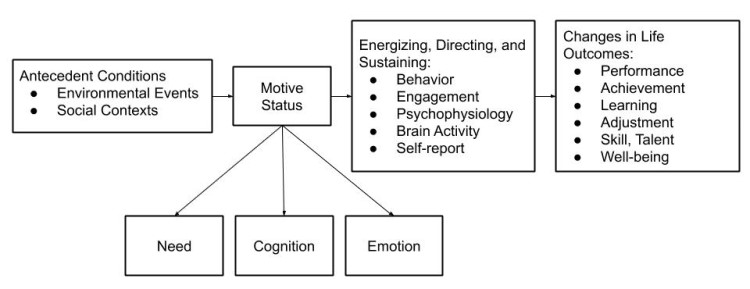
Motivation is the desire to act in service of a goal. It’s the crucial element in setting and attaining our objectives.

Motivation is one of the driving forces behind human behavior. It fuels competition and sparks social connection. Its absence can lead to mental illnesses such as depression. Motivation encompasses the desire to continue striving toward meaning, purpose, and a life worth living.

Motivation is the process that initiates, guides, and maintains goal-oriented behaviors. It is what causes you to act, whether it is getting a glass of water to reduce thirst or reading a book to gain knowledge.

Motivation involves the biological, emotional, social, and cognitive forces that activate behavior. In everyday usage, the term “motivation” is frequently used to describe why a person does something. It is the driving force behind human actions.

Motivation doesn’t just refer to the factors that activate behaviors; it also involves the factors that direct and maintain these goal-directed actions (though such motives are rarely directly observable). As a result, we often have to infer the reasons why people do the things that they do based on observable behaviors.1

What exactly lies behind the motivations for why we act? Psychologists have proposed different theories of motivation, including drive theory, instinct theory, and humanistic theory (such as Maslow’s hierarchy of needs). The reality is that there are many different forces that guide and direct our motivations.

Motivation Definition in Psychology

The study of motivation in psychology revolves around providing the best possible answers to two fundamental questions: what causes behavior, and why does behavior vary in its intensity?

Motivational science is a behavioral science that seeks to construct theories about what constitutes human motivation and how motivational processes work.

Motivation, when seen in the real world, and when measured by science, becomes visible and detectable through behavior, level of engagement, neural activation, and psychophysiology. Some would also include self-report in this list, but studies show that self-reports have proven to be highly unreliable sources of information.

Types of Motivation

Different types of motivation are frequently described as being either extrinsic or intrinsic:

  • Extrinsic motivations are those that arise from outside of the individual and often involve rewards such as trophies, money, social recognition, or praise.
  • Intrinsic motivations are those that arise from within the individual, such as doing a complicated crossword puzzle purely for the personal gratification of solving a problem.
Reasons to ExerciseType of MotivationReal-Life Examples
Fun, enjoymentIntrinsic motivationChildren run, jump, and chase simply for the sheer fun of it.
Personal challengeFlowPerformers get “in the zone” when their pursuits optimally challenge their skills.
Forced to do soExternal regulationAthletes exercise because their coach tells them to do so.
Accomplish a goalGoalRunners strive to run a mile in six minutes or less.
Health benefitsValuePatients exercise to lose weight or to strengthen the heart.
InspirationPossible selfPeople watch others exercise and become inspired to do the same.
Pursuit of a standard of excellenceAchievement strivingsSnow skiers race to the bottom of the mountain, trying to beat their previous best time.
Satisfaction from a job well doneCompetenceAs exercisers make progress, they feel more competent, more effective.
An emotional kickOpponent processVigorous jogging can produce a runner’s high, a euphoric rebound to the pain.
Good moodPositive affectBeing in nature can induce a good mood such that people exercise spontaneously, skipping along without even knowing why.
Alleviate guiltIntrojectionPeople exercise because they think that is what they should or ought to do to please others or to relieve their sense of guilt.
Relieve stress and anxietyPersonal controlAfter a stressful day, people go to the gym, which they see as a structured and controllable environment.
Spend time with friendsRelatednessExercise is often a social event, a time to enjoy hanging out with friends.

Sources of Motivation

People often have multiple motives for engaging in any one behavior. Motivation might be extrinsic, whereby a person is inspired by outside forces—other people or rewards. Motivation can also be intrinsic, whereby the inspiration comes from within—the desire to improve at a certain activity. Intrinsic motivation tends to push people more forcefully, and the accomplishments are more fulfilling.

One framework used for understanding motivation is the hierarchy of needs proposed by American psychologist Abraham Maslow in 1943. According to Maslow, humans are inherently motivated to better themselves and move toward expressing their full potential—self-actualization—by progressively encountering and satisfying several levels of need from the most fundamental, such as for food and safety, to higher-order needs for love, belonging, and self-esteem.

Eventually, Maslow extended the theory to include a need for self-transcendence: People reach the pinnacle of growth and find the highest meaning in life by attending to things beyond the self. Although the universality of Maslow’s theory has been challenged, many believe it captures fundamental truths about human motivation.

Where does motivation come from?

Motivation can stem from a variety of sources. People may be motivated by external incentives, such as the motivation to work for compensation, or internal enjoyment, such as the motivation to create artwork in one’s spare time. Other sources of motivation include curiosity, autonomy, validation of one’s identity and beliefs, creating a positive self-image, and the desire to avoid potential losses.

Uses

There are many different uses for motivation. It serves as a guiding force for all human behavior, but understanding how it works and the factors that may impact it can be important in a number of ways.

Understanding motivation can:

  • Help improve the efficiency of people as they work toward goals
  • Help people take action
  • Encourage people to engage in health-oriented behaviors
  • Help people avoid unhealthy or maladaptive behaviors such as risk-taking and addiction
  • Help people feel more in control of their lives
  • Improve overall well-being and happiness

Impact

Anyone who has ever had a goal (like wanting to lose 20 pounds or run a marathon) probably immediately realizes that simply having the desire to accomplish something is not enough. Achieving such a goal requires the ability to persist through obstacles and endurance to keep going in spite of difficulties.

There are three major components of motivation: activation, persistence, and intensity.3

  • Activation involves the decision to initiate a behavior, such as enrolling in a psychology class.
  • Persistence is the continued effort toward a goal even though obstacles may exist. An example of persistence would be taking more psychology courses in order to earn a degree although it requires a significant investment of time, energy, and resources.
  • Intensity can be seen in the concentration and vigor that goes into pursuing a goal.4 For example, one student might coast by without much effort, while another student will study regularly, participate in discussions, and take advantage of research opportunities outside of class. The first student lacks intensity, while the second pursues their educational goals with greater intensity.

The degree of each of these components of motivation can impact whether or not you achieve your goal. Strong activation, for example, means that you are more likely to start pursuing a goal. Persistence and intensity will determine if you keep working toward that goal and how much effort you devote to reaching it.

Behavior

So how does motivation behave? With presence, intensity, and quality. Motivation is visible through gestures and facial expressions, intense effort, immediacy (or as psychologists like to call it short latency).

The presence of motivation can also be inferred from the levels of persistence and decisiveness in choosing one goal over another, which taken together make for a high probability of occurrence (Atkinson & Birch, 1970; 1978; Bolles, 1975; Ekman & Friesen, 1975).

Engagement

Motivation can also be inferred from the level of engagement.

For example, in a coaching scenario or a motivational interview, a competent practitioner will enthusiastically and generously contribute to the flow of conversation (agentic engagement), express interest and enjoyment (emotional engagement), process deeply and pay attention (cognitive engagement), and persist in these efforts as if time and the outside world didn’t exist (behavioral engagement). And yes, for many of us, we don’t have those kinds of conversations often.

Psychophysiology

There are five psychophysiological expressions of motivation:

Psychophysiological Expressions
Hormonal activityChemicals in saliva or blood, such as cortisol (stress) or catecholamines (fight-or-flight reaction).
Cardiovascular activityContraction and relaxation of the heart and blood vessels (as in response to an attractive incentive or a difficult/challenging task).
Ocular activityEye behavior—pupil size (extent of mental activity), eye blinks (changing cognitive states), and eye movements (reflective thought).
Electrodermal activityElectrical changes on the surface of the skin (as in response to a significant or threatening event).
Skeletal activityThe activity of the musculature, as with facial expressions (specific emotion), bodily gestures, or shifting one’s weight from side to side during a boring hallway conversation (desire to leave).

Brain Activations

Just like changes in behavior, engagement, and psychophysiology, brain activations mark the rise and fall and maintenance of motivational states. A different pattern of neural activity is present with each motivation and emotion. For example, the hypothalamus is active when we are thirsty, and when we feel disgusted, there is a rise in insular activity.

Researchers use sophisticated equipment like electroencephalography (EEG) and functional magnetic resonance imaging (fMRI) to observe, detect, monitor, and measure brain-based neural activity.

See our blog post on Motivation Science for more information on the neuroscience of motivation.

Putting all this together to answer the perennial question of what motivation is, but most importantly what it does, we define motivation as rising and falling of needs, cognition, and emotions expressed through patterns of behavior, levels of engagement and neural and psychophysiological activity directed toward realizing essential life outcomes.

Motivation Model

In a nutshell, motives are internal experiences in the form of needs, cognitions, and emotions and are the direct and proximal causes of motivated action. Social contexts and external events act as antecedents to motives that cause or trigger motivational states. Our motives express themselves through behavior, engagement, psychophysiology, brain activations, and self-report.

The model below illustrates the framework for how motivational psychologists study the process of motivation and its elements and try to find the answer to the questions about what causes motivation. It also shows why the study of motivation is so relevant to people’s lives and how motivation contributes positively to significant life outcomes like achievement, performance, and wellbeing, to name a few (Reeve, 2015).

Motivational Model

Potential Pitfalls

There are a few things you should watch for that might hurt your motivation. These include:

  • Quick fixes or all-or-nothing thinking. It’s easy to feel unmotivated if you can’t fix something immediately or if you can’t have it all at once. Remind yourself that reaching your goals takes time.
  • Thinking that one size fits all. Just because an approach or method worked for someone else does not mean that it will work for you. If something isn’t helping you reach your goals or is making you feel unmotivated, look for things that will work better for you.

Motivation Process

Our motivation, when it originates from internal motives, as categorized into needs, cognitions, and emotions, is often experienced as more immediate and potent then extrinsic motivation.

Since we don’t exist in a vacuum, however, these inner experiences cannot take place without some degree of the external influence, be it in the form of consequences, incentives, or other forms of pressure arising out of the social context of our environment.

Our physiological and psychological needs drive us, our cognitions direct us, and emotions land intensity and energy to our pursuits. When the combination of antecedent conditions and the internal motives align, they create a ripe environment for engagement, which propels the action behavior.

When these behaviors, in turn, create more positive motivational and emotional states, they reinforce the behavior through a positive feedback loop and increase the likelihood of repetition.

The greatest thief this world has ever produced is procrastination, and he is still at large.

Josh Billings

Consider a motivational problem like procrastination or avoidance

Our needs, cognitions, emotions, environments, and relationships can play a crucial role in procrastination or avoidance.

All needs are born either out of deficiency or need for growth. Physiological needs are a particularly strong force in determining behavior. Our bodies will signal our brain if our wellbeing is threatened, and this can lead to avoidance and procrastination when we are suffering from hunger, thirst, or lack of sleep, for example.

Psychological needs are also significant drivers of motives as they represent inborn needs for the development of a sense of autonomy, competence, and relatedness. When we try to force ourselves to do something that contradicts those needs, these innate forces can be tough to overcome.

The conflict between chosen behavior and the need for satisfaction of psychological needs like autonomy can create dissonance, which can lead to avoidance or procrastination. While the fulfillment of physiological needs is about preserving wellbeing, satisfying psychological needs is about thriving and growing as a person

When we are no longer able to change a situation, we are challenged to change ourselves.

Viktor E. Frankl

There are also implicit needs which are acquired from our environment through socioemotional development. They vary from person to person as our experiences vary, and unlike inborn psychological needs, implicit motives are acquired.

Implicit here means unconscious. These needs occur without conscious awareness and are trait-like and enduring. Implicit needs motivate us toward the pursuit and attainment of specific social incentives (Schultheiss & Brunstein, 2010).

An implicit motive is a psychological need that arises from situational cues that cause emotional reactions, which then predict, guide, and explain people’s behavior and lifestyle. They can be inferred from the person’s characteristic thoughts, emotions, and behaviors. What a person “needs” within an implicit motive is to experience a particular pattern of affect or emotion.

For example, if we have little or no need for achievement, we may experience negative affect, such as anxiety, shame, and embarrassment while engaging in that challenging task and will avoid or procrastinate as a result. Implicit motives predict our behavior far more accurately than do explicit motives, which are basically what we tell others about what motives us (McClelland, Koestner, & Weinberger, 1989).

Our cognitions can also influence our tendency to avoid or procrastinate. Cognitions are mental constructs like goals, mindset, expectations, beliefs, and self-concept, to name a few that influence our motivation. If we have conflicting goals, for example, we may be more likely to avoid or procrastinate.

Change the way you look at things and the things you look at change.

Wayne W. Dyer

Emotions, although closely linked to cognitions and psychological needs, in and of themselves can motivate or demotivate. They can signal the importance of particular behavior. We may feel joy or pride at the possibility of goal attainment through engagement in particular behavior, or we can be afraid of failure and choose to avoid or procrastinate.

Our environment can also be either ideal and supportive or an obstacle to staying motivated and achieving our goals (Reeve, 2015). It can be full of distractions or lack optimal conditions that allow for sustained motivation.

Finally, our relationships can be supportive and empowering when it comes to change. This can be explained through a concept like the Michelangelo phenomenon, where our relationships support our potential. They can also be demotivating as in the Blueberry phenomenon, where the relationship brings out the worst in us and can contribute to procrastination and avoidance.

Motivation Cycle

Motivation is a dynamic process, and our motives vary over time. Raising and falling as circumstances change, and as time passes, motives contribute to the ongoing stream of behavior. To further complicate matters, we are driven by a multitude of different motives at any one point in time.

One motive, usually the one most situationally appropriate, will be strongest and dominate our attention while other motives will be subordinate and lie relatively dormant. Although typically the strongest motive will have the most considerable influence on our behavior, as circumstances change, each subordinate motive can become dominant.

The below example shows how a student’s motivation to read varies over time in strength, starting relatively strong then weakening when compared to the need to hang out with friends or to eat a snack (Reeve, 2015).

Motivation Cycle

The awareness of how motivation varies over time is particularly important when it comes to goal setting.

When we differentiate the motivational and the performance-based advantages versus disadvantages for those who adopt a short-term goal, as in eating less than 2000 calories today, versus performers who adopt a long-term goal, as in losing 20 pounds this year, we must consider the type of activity they are engaging in before making recommendations.

Short term goals work better for uninteresting activities as they boost commitment by providing feedback on progress more often, which further reinforces the effort to persist (Reeve, 2015).

Motivation to perform routine or boring activities can be improved; however, by providing clarity of goals and choice in how to perform a task. Clarity and choice can fuel a sense of mastery and autonomy, and both, in combination, can increase overall motivation as they satisfy basic psychological needs.

REQUEST AN APPOINTMENT OR BOOK A CONSULANT – Sargam.dange.18@gmail.com
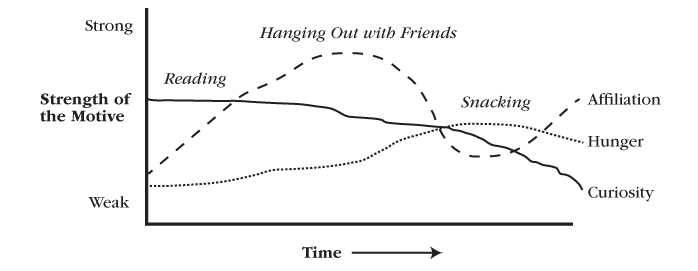
When it comes to interesting tasks, or as Mihaly Csíkszentmihályi (1990) calls them autotelic activities, long-term goals work better as they often provide for greater flexibility and more autonomy in how to pursue them. Short terms milestones can feel intrusive for interesting activities. Autotelic activities are already engaging, and we are often intrinsically motivated to perform them because they produce enjoyment. But most importantly, we are motivated to pursue them in the absence of external rewards or incentives.

′Autotelic′ is a word composed of two Greek roots: auto (self), and telos (goal). An autotelic activity is one we do for its own sake because to experience it is the main goal.

Mihaly Csíkszentmihályi

We also need to keep in mind that motivation to act on the goals is often higher when the goal is based in the near future, while far off goals do not create the tension of immediacy that would motivate us to act right away (Reeve, 2015).

To learn more about the types of motivation that exist, see our article on Motivation and What Really Drives Human Behavior.

You can also find many different approaches to increase motivation in the below list of self-help books published on the subject. Some are more philosophical, others biographical, and a few present recent research in motivation psychology.

Motivation Theories: Top 8 Theories of Motivation – Explained!

Some of the most important theories of motivation are as follows: 1. Maslow’s Need Hierarchy Theory 2. Herzberg’s Motivation Hygiene Theory 3. McClelland’s Need Theory 4. McGregor’s Participation Theory 5. Urwick’s Theory Z 6. Argyris’s Theory 7. Vroom’s Expectancy Theory 8. Porter and Lawler’s Expectancy Theory.

From the very beginning, when the human organisations were established, various thinkers have tried to find out the answer to what motivates people to work. Different approaches applied by them have resulted in a number of theories concerning motivation.

These are discussed in brief in that order.

1. Maslow’s Need Hierarchy Theory:

It is probably safe to say that the most well-known theory of motivation is Maslow’s need hierarchy theory Maslow’s theory is based on the human needs. Drawing chiefly on his clinical experience, he classified all human needs into a hierarchical manner from the lower to the higher order.

In essence, he believed that once a given level of need is satisfied, it no longer serves to motivate man. Then, the next higher level of need has to be activated in order to motivate the man. Maslow identified five levels in his need hierarchy as shown in figure 17.2.

Maslow's Need Hierarchy

These are now discussed one by one:

1. Physiological Needs:

These needs are basic to human life and, hence, include food, clothing, shelter, air, water and necessities of life. These needs relate to the survival and maintenance of human life. They exert tremendous influence on human behaviour. These needs are to be met first at least partly before higher level needs emerge. Once physiological needs are satisfied, they no longer motivate the man.

2. Safety Needs:

After satisfying the physiological needs, the next needs felt are called safety and security needs. These needs find expression in such desires as economic security and protection from physical dangers. Meeting these needs requires more money and, hence, the individual is prompted to work more. Like physiological needs, these become inactive once they are satisfied.

3. Social Needs:

Man is a social being. He is, therefore, interested in social interaction, companionship, belongingness, etc. It is this socialising and belongingness why individuals prefer to work in groups and especially older people go to work.

4. Esteem Needs:

These needs refer to self-esteem and self-respect. They include such needs which indicate self-confidence, achievement, competence, knowledge and independence. The fulfillment of esteem needs leads to self-confidence, strength and capability of being useful in the organisation. However, inability to fulfill these needs results in feeling like inferiority, weakness and helplessness.

5. Self-Actualisation Needs:

This level represents the culmination of all the lower, intermediate, and higher needs of human beings. In other words, the final step under the need hierarchy model is the need for self-actualization. This refers to fulfillment.

The term self-actualization was coined by Kurt Goldstein and means to become actualized in what one is potentially good at. In effect, self- actualization is the person’s motivation to transform perception of self into reality.

According to Maslow, the human needs follow a definite sequence of domination. The second need does not arise until the first is reasonably satisfied, and the third need does not emerge until the first two needs have been reasonably satisfied and it goes on. The other side of the need hierarchy is that human needs are unlimited. However, Maslow’s need hierarchy-theory is not without its detractors.

The main criticisms of the theory include the following:

1. The needs may or may not follow a definite hierarchical order. So to say, there may be overlapping in need hierarchy. For example, even if safety need is not satisfied, the social need may emerge.

2. The need priority model may not apply at all times in all places.

3. Researches show that man’s behaviour at any time is mostly guided by multiplicity of behaviour. Hence, Maslow’s preposition that one need is satisfied at one time is also of doubtful validity.

4. In case of some people, the level of motivation may be permanently lower. For example, a person suffering from chronic unemployment may remain satisfied for the rest of his life if only he/she can get enough food.

Notwithstanding, Maslow’s need hierarchy theory has received wide recognition, particularly among practicing managers. This can be attributed to the theory’s intuitive logic and easy to understand. One researcher came to the conclusion that theories that are intuitively strong die hard’.

2. Herzberg’s Motivation Hygiene Theory:

The psychologist Frederick Herzberg extended the work of Maslow and propsed a new motivation theory popularly known as Herzberg’s Motivation Hygiene (Two-Factor) Theory. Herzberg conducted a widely reported motivational study on 200 accountants and engineers employed by firms in and around Western Pennsylvania.

He asked these people to describe two important incidents at their jobs:

(1) When did you feel particularly good about your job, and

(2) When did you feel exceptionally bad about your job? He used the critical incident method of obtaining data.

The responses when analysed were found quite interesting and fairly consistent. The replies respondents gave when they felt good about their jobs were significantly different from the replies given when they felt bad. Reported good feelings were generally associated with job satisfaction, whereas bad feeling with job dissatisfaction. Herzberg labelled the job satisfiers motivators, and he called job dissatisfies hygiene or maintenance factors. Taken together, the motivators and hygiene factors have become known as Herzberg’s two-factor theory of motivation

Herzberg’s motivational and hygiene factors have been shown in the Table 17.1

Herzberg's Motivational and Hygiene Factors

According to Herzberg, the opposite of satisfaction is not dissatisfaction. The underlying reason, he says, is that removal of dissatisfying characteristics from a job does not necessarily make the job satisfying. He believes in the existence of a dual continuum. The opposite of ‘satisfaction’ is ‘no satisfaction’ and the opposite of ‘dissatisfaction’ is ‘no dissatisatisfaction’.

According to Herzberg, today’s motivators are tomorrow’s hygiene because the latter stop influencing the behaviour of persons when they get them. Accordingly, one’s hygiene may be the motivator of another.

However, Herzberg’s model is labeled with the following criticism also:

1. People generally tend to take credit themselves when things go well. They blame failure on the external environment.

2. The theory basically explains job satisfaction, not motivation.

3. Even job satisfaction is not measured on an overall basis. It is not unlikely that a person may dislike part of his/ her job, still thinks the job acceptable.

4. This theory neglects situational variable to motivate an individual.

Because of its ubiquitous nature, salary commonly shows up as a motivator as well as hygine.

Regardless of criticism, Herzberg’s ‘two-factor motivation theory’ has been widely read and a few managers seem untaminar with his recommendations. The main use of his recommendations lies in planning and controlling of employees work.

3. McClelland’s Need Theory:

Another well-known need-based theory of motivation, as opposed to hierarchy of needs of satisfaction-dissatisfaction, is the theory developed by McClelland and his associates’. McClelland developed his theory based on Henry Murray’s developed long list of motives and manifest needs used in his early studies of personality. McClelland’s need-theory is closely associated with learning theory, because he believed that needs are learned or acquired by the kinds of events people experienced in their environment and culture.

He found that people who acquire a particular need behave differently from those who do not have. His theory focuses on Murray’s three needs; achievement, power and affiliation. In the literature, these three needs are abbreviated “n Ach”, “n Pow”, and “n Aff” respectively’.

They are defined as follows:

Need for Achievement:

This is the drive to excel, to achieve in relation to a set of standard, and to strive to succeed. In other words, need for achievement is a behaviour directed toward competition with a standard of excellence. McClelland found that people with a high need for achievement perform better than those with a moderate or low need for achievement, and noted regional / national differences in achievement motivation.

Through his research, McClelland identified the following three characteristics of high-need achievers:

1. High-need achievers have a strong desire to assume personal responsibility for performing a task for finding a solution to a problem.

2. High-need achievers tend to set moderately difficult goals and take calculated risks.

3. High-need achievers have a strong desire for performance feedback.

Need for Power:

The need for power is concerned with making an impact on others, the desire to influence others, the urge to change people, and the desire to make a difference in life. People with a high need for power are people who like to be in control of people and events. This results in ultimate satisfaction to man.

People who have a high need for power are characterized by:

1. A desire to influence and direct somebody else.

2. A desire to exercise control over others.

3. A concern for maintaining leader-follower relations.

Need for Affiliation:

The need for affiliation is defined as a desire to establish and maintain friendly and warm relations with other people’. The need for affiliation, in many ways, is similar to Maslow’s social needs.

The people with high need for affiliation have these characteristics:

1. They have a strong desire for acceptance and approval from others.

2. They tend to conform to the wishes of those people whose friendship and companionship they value.

3. They value the feelings of others.

Three Need Theories of Motivation

summary chart of the three need theories of motivation just discussed. The chart shows the parallel relationship between the needs in each of the theories. Maslow refers to higher- lower order needs, whereas Herzberg refers to motivation and hygiene factors.

4. McGregor’s Participation Theory:

Douglas McGregor formulated two distinct views of human being based on participation of workers. The first basically negative, labeled Theory X, and the other basically positive, labled Theory Y.

Theory X is based on the following assumptions:

1. People are by nature indolent. That is, they like to work as little as possible.

2. People lack ambition, dislike responsibility, and prefer to be directed by others.

3. People are inherently self-centered and indifferent to organisational needs and goals.

4. People are generally gullible and not very sharp and bright.

On the contrary, Theory Y assumes that:

1. People are not by nature passive or resistant to organisational goals.

2. They want to assume responsibility.

3. They want their organisation to succeed.

4. People are capable of directing their own behaviour.

5. They have need for achievement.

What McGregor tried to dramatise through his theory X and Y is to outline the extremes to draw the fencing within which the organisational man is usually seen to behave. The fact remains that no organisational man would actually belong either to theory X or theory Y. In reality, he/she shares the traits of both. What actually happens is that man swings from one set or properties to the other with changes in his mood and motives in changing .environment.

5. Urwick’s Theory Z:

Much after the propositions of theories X and Y by McGregor, the three theorists Urwick, Rangnekar, and Ouchi-propounded the third theory lebeled as Z theory.

The two propositions in Urwicks’s theory are that:

(i) Each individual should know the organisational goals precisely and the amount of contribution through his efforts towards these goals.

(ii) Each individual should also know that the relation of organisational goals is going to satisfy his/her needs positively.

In Urwick’s view, the above two make people ready to behave positively to accomplish both organisational and individual goals.

However, Ouchi’s Theory Z has attracted the lot of attention of management practitioners as well as researchers. It must be noted that Z does not stand for anything, is merely the last alphabet in the English Language.

Theory Z is based on the following four postulates:

1. Strong Bond between Organisation and Employees

2. Employee Participation and Involvement

3. No Formal Organisation Structure

4. Human Resource Development

Ouchi’s Theory Z represents the adoption of Japanese management practices (group decision making, social cohesion, job security, holistic concern for employees, etc.)by the American companies. In India, Maruti-Suzuki, Hero-Honda, etc., apply the postulates of theory Z.

6. Argyris’s Theory:

Argyris has developed his motivation theory based on proposition how management practices affect the individual behaviour and growth In his view, the seven changes taking place in an individual personality make him/her a mature one. In other words, personality of individual develops

Argyris's Theory

Argyris views that immaturity exists in individuals mainly because of organisational setting and management practices such as task specialisation, chain of command, unity of direction, and span of management. In order to make individuals grow mature, he proposes gradual shift from the existing pyramidal organisation structure to humanistic system; from existing management system to the more flexible and participative management.

He states that such situation will satisfy not only their physiological and safety needs, but also will motivate them to make ready to make more use of their physiological and safety needs. But also will motivate them to make ready to make more use of their potential in accomplishing organisational goals.

7. Vroom’s Expectancy Theory:

One of the most widely accepted explanations of motivation is offered by Victor Vroom in his Expectancy Theory” It is a cognitive process theory of motivation. The theory is founded on the basic notions that people will be motivated to exert a high level of effort when they believe there are relationships between the effort they put forth, the performance they achieve, and the outcomes/ rewards they receive.

The relationships between notions of effort, performance, and reward are depicted in

Vroom's Expectancy Model of Motivation

Thus, the key constructs in the expectancy theory of motivation are:

1. Valence:

Valence, according to Vroom, means the value or strength one places on a particular outcome or reward.

2. Expectancy:

It relates efforts to performance.

3. Instrumentality:

By instrumentality, Vroom means, the belief that performance is related to rewards.

Thus, Vroom’s motivation can also be expressed in the form of an equation as follows: Motivation = Valence x Expectancy x Instrumentality

Being the model multiplicative in nature, all the three variables must have high positive values to imply motivated performance choice. If any one of the variables approaches to zero level, the possibility of the so motivated performance also touches zero level.

However, Vroom’s expectancy theory has its critics. The important ones are:

1. Critics like Porter and Lawler lebeled it as a theory of cognitive hedonism which proposes that individual cognitively chooses the course of action that leads to the greatest degree of pleasure or the smallest degree of pain.

2. The assumption that people are rational and calculating makes the theory idealistic.

3. The expectancy theory does not describe individual and situational differences.

But the valence or value people place on various rewards varies. For example, one employee prefers salary to benefits, whereas another person prefers to just the reverse. The valence for the same reward varies from situation to situation.

In spite of all these critics, the greatest point in me expectancy theory is that it explains why significant segment of workforce exerts low levels of efforts in carrying out job responsibilities.

8. Porter and Lawler’s Expectancy Theory:

In fact, Porter and Lawler’s theory is an improvement over Vroom’s expectancy theory. They posit that motivation does not equal satisfaction or performance. The model suggested by them encounters some of the simplistic traditional assumptions made about the positive relationship between satisfaction and performance. They proposed a multi-variate model to explain the complex relationship that exists between satisfaction and performance.

What is the main point in Porter and Lawler’s model is that effort or motivation does not lead directly to performance. It is intact, mediated by abilities and traits and by role perceptions. Ultimately, performance leads to satisfaction,. The same is depicted in the following

The Porter and Lawler Motivation Model

There are three main elements in this model. Let us briefly discuss these one by one.

Effort:

Effort refers to the amount of energy an employee exerts on a given task. How much effort an employee will put in a task is determined by two factors-

(i) Value of reward and

(ii) Perception of effort-reward probability.

Performance:

One’s effort leads to his/her performance. Both may be equal or may not be. However the amount of performance is determined by the amount of labour and the ability and role perception of the employee. Thus, if an employee possesses less ability and/or makes wrong role perception, his/her performance may be low in spite of his putting in great efforts.

Satisfaction:

Performance leads to satisfaction. The level of satisfaction depends upon the amount of rewards one achieves. If the amount of actual rewards meet or exceed perceived equitable rewards, the employee will feel satisfied. On the country, if actual rewards fall short of perceived ones, he/she will be dissatisfied.

Rewards may be of two kinds—intrinsic and extrinsic rewards. Examples of intrinsic rewards are such as sense of accomplishment and self-actualisation. As regards extrinsic rewards, these may include working conditions and status. A fair degree of research support that, the intrinsic rewards are much more likely to produce attitudes about satisfaction that are related to performance.

There is no denying of the fact that the motivation model proposed by Porter and Lawler is quite complex than other models of motivation. In fact motivation itself is not a simple cause-effect relationship rather it is a complex phenomenon Porter and Lawler have attempted to measure variables such as the values of possible rewards, the perception of effort-rewards probabilities and role perceptions in deriving satisfaction.

They recommended that the managers should carefully reassess their reward system and structure. The effort-performance-reward-satisfaction should be made integral to the entire system of managing men in organisation.

REQUEST AN APPOINTMENT OR BOOK A CONSULANT – Sargam.dange.18@gmail.com

Perinatal and maternal mortality

REQUEST AN APPOINTMENT OR BOOK A CONSULANT – Sargam.dange.18@gmail.com

Maternal and perinatal mortality are still unacceptably high in many countries despite steep increases in facility birth. The evidence that childbirth in facilities reduces mortality is weak, mainly because of the scarcity of robust study designs and data. We aimed to assess this link by quantifying the influence of major determinants of facility birth (cluster-level facility birth, wealth, education, and distance to childbirth care) on several mortality outcomes, while also considering quality of care.

About 287 000 women died in 2010 of complications during pregnancy or childbirth. Most of these deaths can be avoided as the necessary medical interventions exist and are well known. The key obstacle is pregnant women’s lack of access to quality skilled care before, during and after childbirth.

Millennium Development Goal 5 (MDG 5), improve maternal health, set the targets of reducing maternal mortality by 75% and achieving universal access to reproductive health by 2015. But, so far progress in reducing maternal mortality in developing countries and providing family planning services has been too slow to meet the targets.

Causes of maternal mortality

The major direct causes of maternal morbidity and mortality include haemorrhage, infection, high blood pressure, unsafe abortion, and obstructed labour. These complications may arise unexpectedly. Investing in health systems – especially in training midwives and in making emergency obstetric care available round-the-clock – is key to reducing maternal mortality.

Addressing the barriers to use of care and creating a environment within households and community that support women in seeking the needed care is also key.

REQUEST AN APPOINTMENT OR BOOK A CONSULANT – Sargam.dange.18@gmail.com

The perinatal period

The perinatal period commences at 22 completed weeks (154 days) of gestation and ends seven completed days after birth. Perinatal and maternal health are closely linked.

Perinatal mortality refers to the number of stillbirths and deaths in the first week of life (early neonatal mortality).

In 2009 there were 2.6 million stillbirths globally with more than 8200 deaths a day. At least half of all stillbirths occurred in the intrapartum period. Among the 133 million babies born alive each year, 2.8 million die in the first week of life. The patterns of these deaths are similar to the patterns for maternal deaths; the majority occurring in developing countries. Quality skilled care during pregnancy and childbirth are key for the health of the baby and the mother.

WHO is supporting countries in delivering integrated, evidence-based and cost-effective care for mothers and babies that begins before conception and goes through pregnancy, childbirth and the postpartum period.

Methods

This paper draws on secondary data from 40 low and middle income countries that conducted emergency obstetric and newborn care assessments over the last 10 years. We reviewed 6.5 million deliveries, surveyed in 15,411 facilities. Most of the data were extracted from reports and aggregated with excel.

Results

Hemorrhage and hypertensive diseases contributed to about one third of institutional maternal deaths and indirect causes contributed another third (given the overrepresentation of sub-Saharan African countries with large proportions of indirect causes). The most lethal obstetric complication, across all regions, was ruptured uterus, followed by sepsis in Latin America and the Caribbean and sub-Saharan Africa. Stillbirth rates exceeded pre-discharge neonatal death rates in nearly all countries, possibly because women and their newborns were discharged soon after birth.

Conclusions

To a large extent, facility-based findings mirror what population-based systematic reviews have also documented. As coverage of a skilled attendant at birth increases, proportionally more deaths will occur in facilities, making improvements in record-keeping and health management information systems, especially for stillbirths and early neonatal deaths, all the more critical.

REQUEST AN APPOINTMENT OR BOOK A CONSULANT – Sargam.dange.18@gmail.com

Design a site like this with WordPress.com
Get started